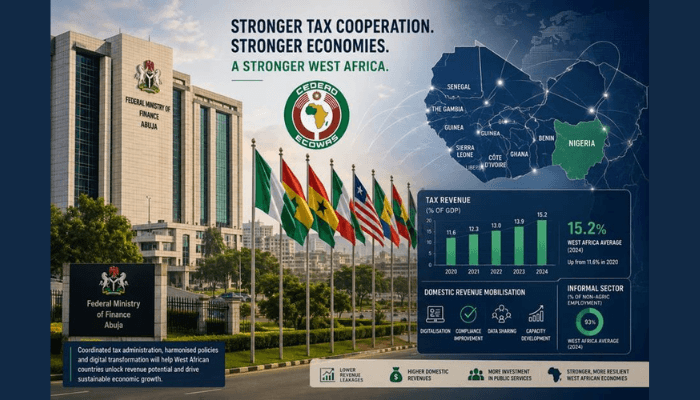
Nigeria’s tax reform agenda is no longer confined to its own borders. Abuja wants West African governments to coordinate tax administration more closely, arguing that stronger regional cooperation could reduce tax leakages, improve revenue collection and make it harder for businesses to exploit differences between national tax systems.
The strategy reflects a broader reality confronting governments across Africa. Businesses, capital and digital services increasingly move across borders, while tax administration remains largely national. As trade expands under the African Continental Free Trade Area (AfCFTA), gaps between tax regimes have made profit shifting, tax avoidance and uneven enforcement easier, limiting how much governments can collect.
For Nigeria, the issue is no longer merely administrative. It has become a fiscal imperative. Despite sweeping tax reforms over the past two years, Nigeria still has one of the world’s lowest tax-to-GDP ratios. Weak revenue mobilisation continues to constrain spending on infrastructure, healthcare and education while forcing the government to rely heavily on borrowing to finance public expenditure.
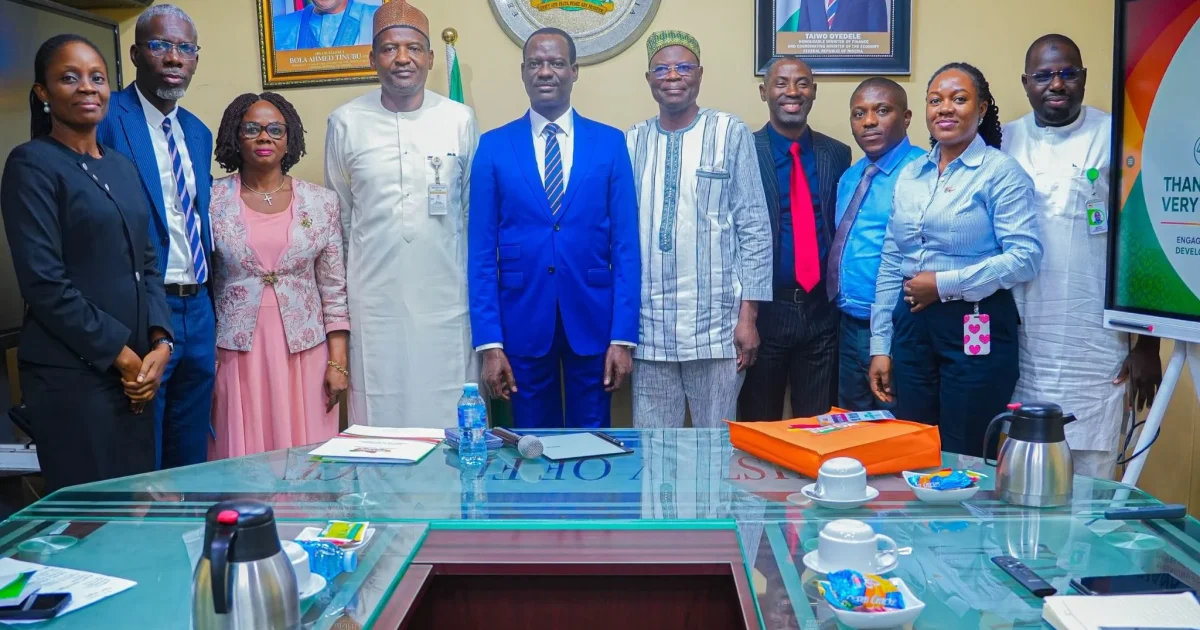
That explains why the government’s attention is shifting beyond domestic legislation. Speaking at a meeting with the leadership of the West African Tax Administration Forum (WATAF) in Abuja on July 14, Finance Minister and Coordinating Minister of the Economy, Taiwo Oyedele, argued that regional tax cooperation must move beyond technical dialogue to measurable implementation.