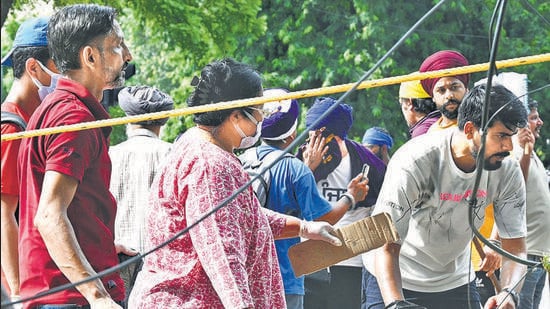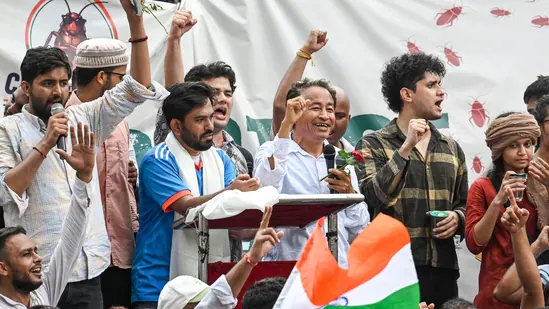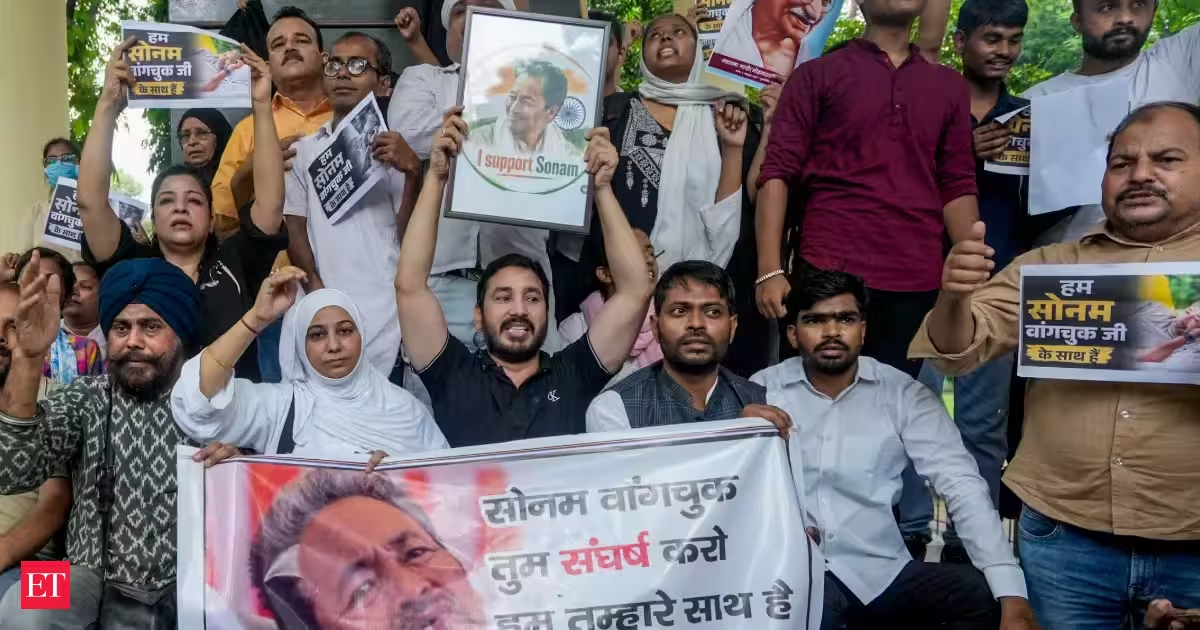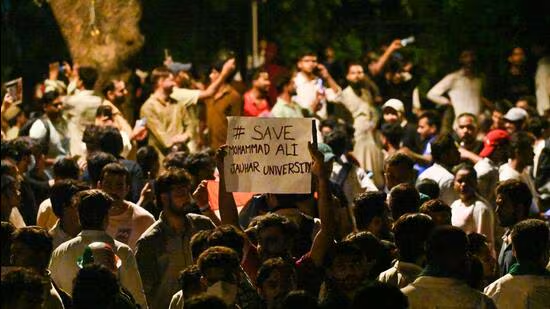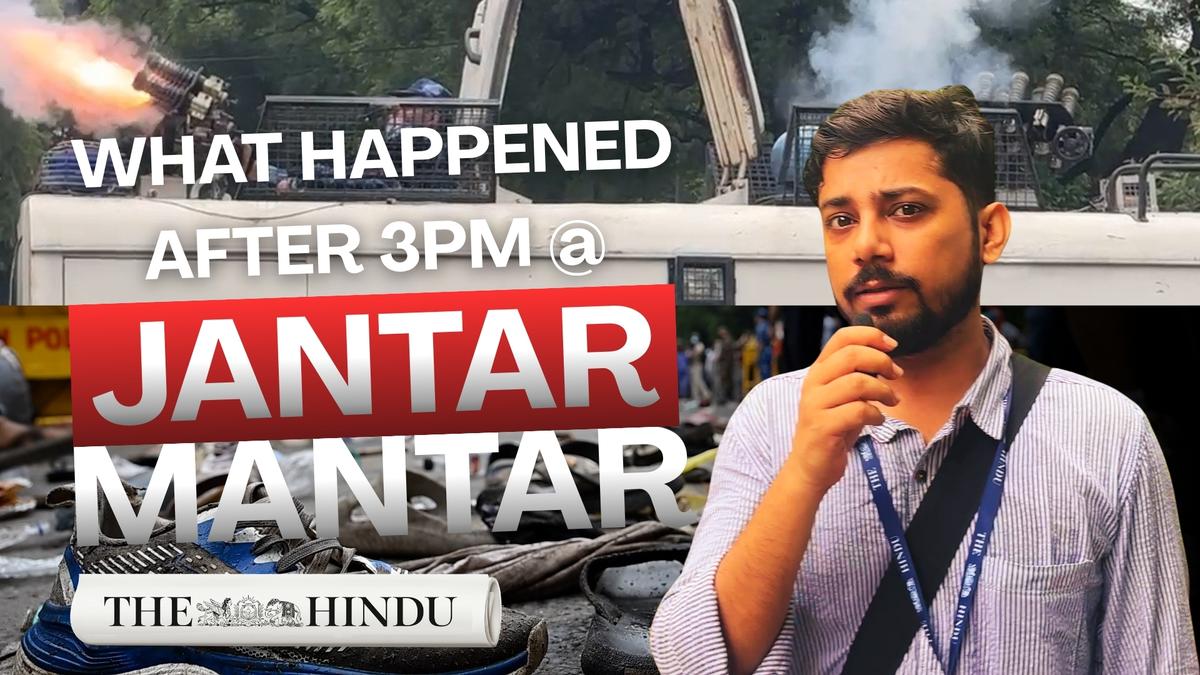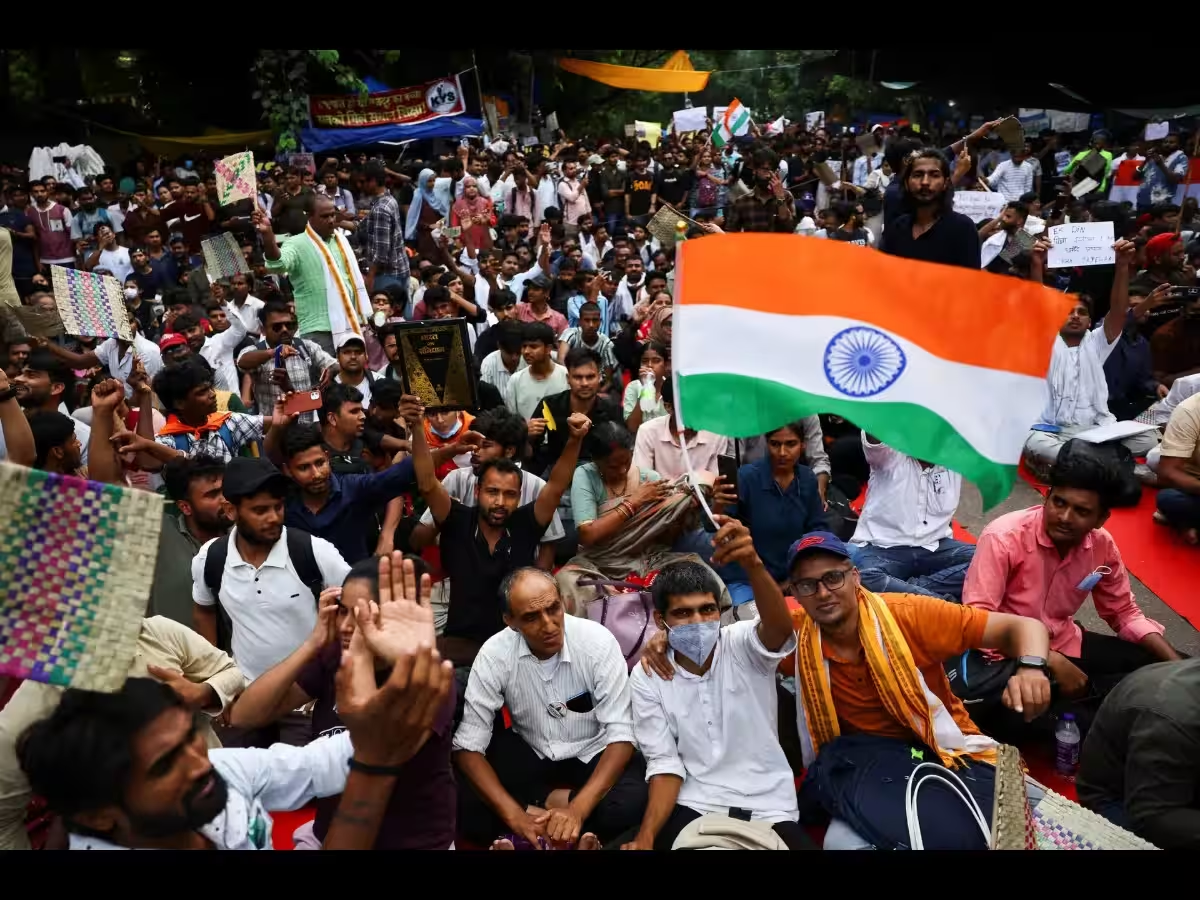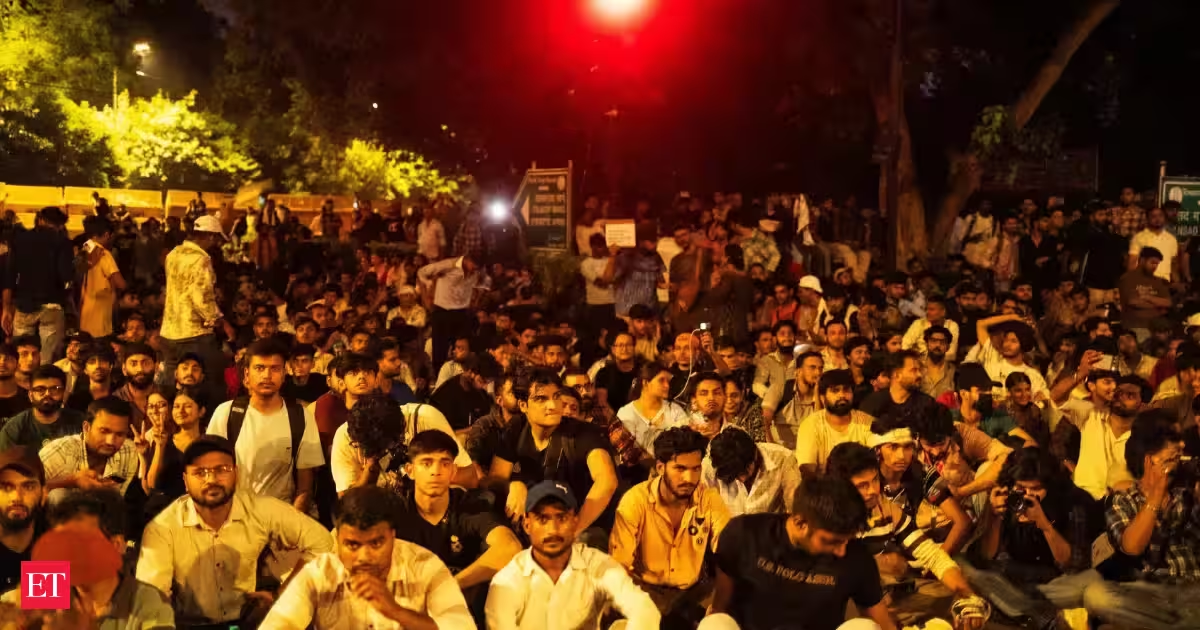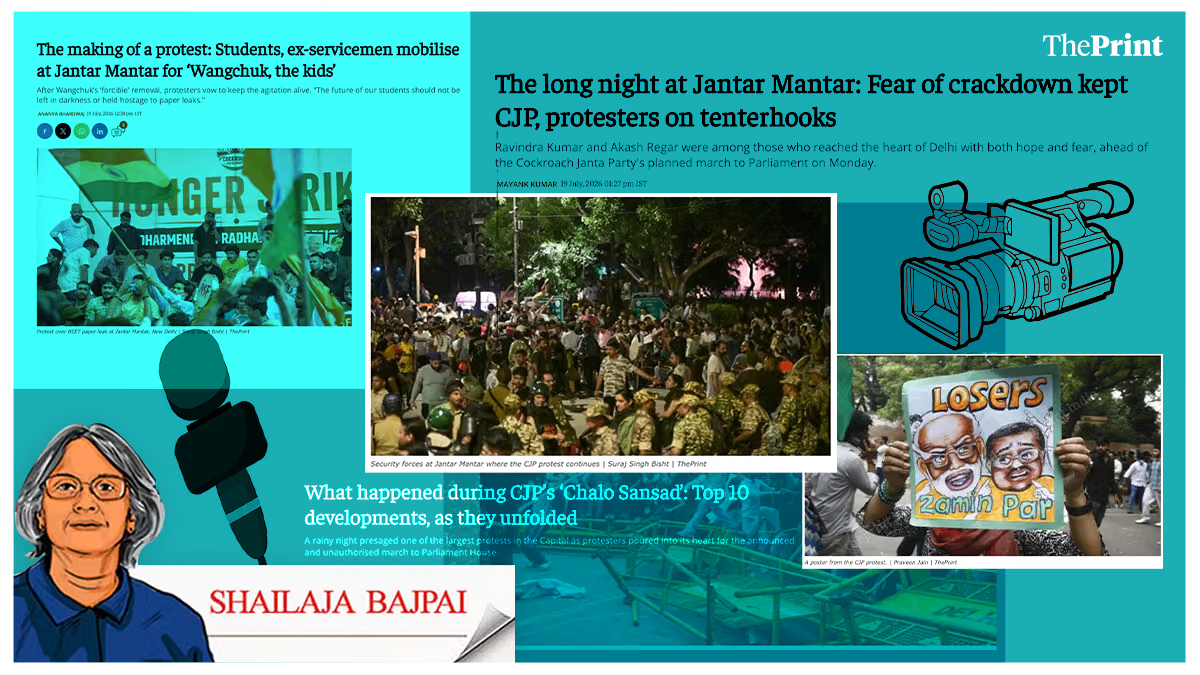
Which is precisely what ThePrint tried to do over the last month. Journalists reported from Jantar Mantar, the site of the protest against the examination paper leaks. As it gained momentum, they went there and stayed day after day, having never seen anything like it before.At no stage did they know what to expect, but it certianly wasn’t a “picnic”.That is how Praveen Jain, National Photo Editor, and Suraj Singh Bisht, Principal Photojournalist, described the scenes they witnessed at Jantar Mantar and the surrounding streets where the protesters spread out.“There was outrage against the government, but there was also a lot of enjoyment. Pizzas were being ordered, they were singing and dancing…In my 45-year career, I have covered many protests but I’ve never before encountered such passion,” Praveen said. “It was unique.”Suraj, who had followed protesters down Delhi’s Sansad Marg during the march to Parliament that Monday morning, said it looked like a “picnic spot”. “There were food stalls—bhel puri, ice-cream vendors, small shops…”Five things that made this protest different
ThePrint’s team of eight to ten reporters, video journalists and photo journalists who covered the protests agreed that there were five standout factors that made this protest different from anything they had experienced before.These were: first, that the protest was “massive”. It’s a word several reporters used to describe the crowds, which simply grew and grew around them.Second, the police action that followed was excessive. “The police miscalculated,” said Ananya Bhardwaj, Senior Associate Editor, who led ThePrint’s reporting team during those heady days. “They were outnumbered, they panicked and reacted in an unprofessional manner,” she added.In several stories, Mayank Kumar, Special Correspondent, recounted the encounters – and the use of pellet guns. “There was no stopping the crowds, I feared there would be a stampede,” said Mayank, who was with the protesters on 20 July.Third, it was “organic”. The reporters encountered people from all over India, varying backgrounds and age groups. People had come from faraway places –villages and cities in Madhya Pradesh, Rajasthan, Bihar, and Jharkhand. There were children from Chhapra, Bihar; a subedar from Kota; a 71-year-old man; a visually-challenged student; and people from Manipur.Fourth, this protest may have begun as a CJP-led demonstration against exam leaks and demanding the resignation of Union Education Minister Dharmendra Pradhan, but it soon became a place where people with grievances against the government came forward.“It was an umbrella for all complaints,” said Mayank Kumar.“It was no longer just about CJP and exams,” said Alisha Dutta, Principal Correspondent. “This was a place where people came to express themselves. The anger was directed towards PM Modi and issues such as unemployment.”Lastly, the reporting team realised that this was not just a street battle. After spending days and some nights at the protests between Saturday, 18 July, when social activist Sonam Wangchuk was removed from Jantar Mantar by Delhi Police, and 25 July, when Pradhan resigned, they learnt that this was being fought digitally, too.The protesters put out a constant stream of short videos, reels, posts from social influencers like Ahir in Mumbai, who stood in front of a police van transporting protesters, innovative memes, and plenty of humour.“It was a new kind of resistance,” explained Manisha Mondal, Senior Multimedia Journalist. “Gen Z is a performance generation. They used social media, humour, parodies on Instagram, and instant reels of latest developments. If there was an encounter with a policeman, it was filmed and released immediately. People dressed up as Spiderman or Batman—who would have thought of Spiderman as the face of a demonstration?” asked Manisha.