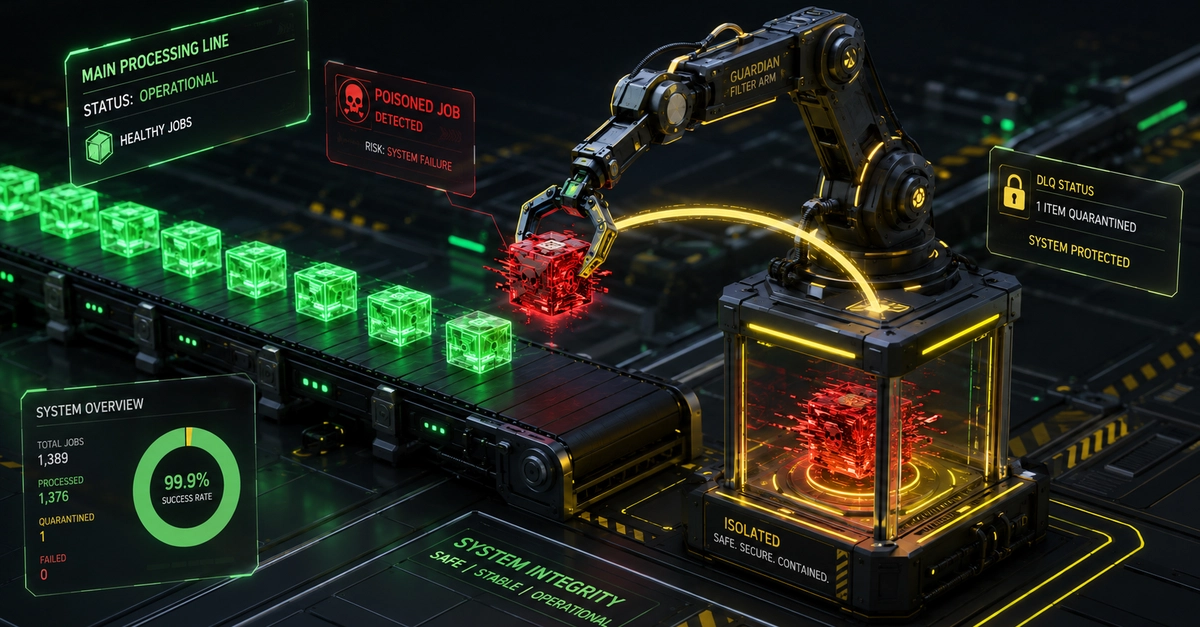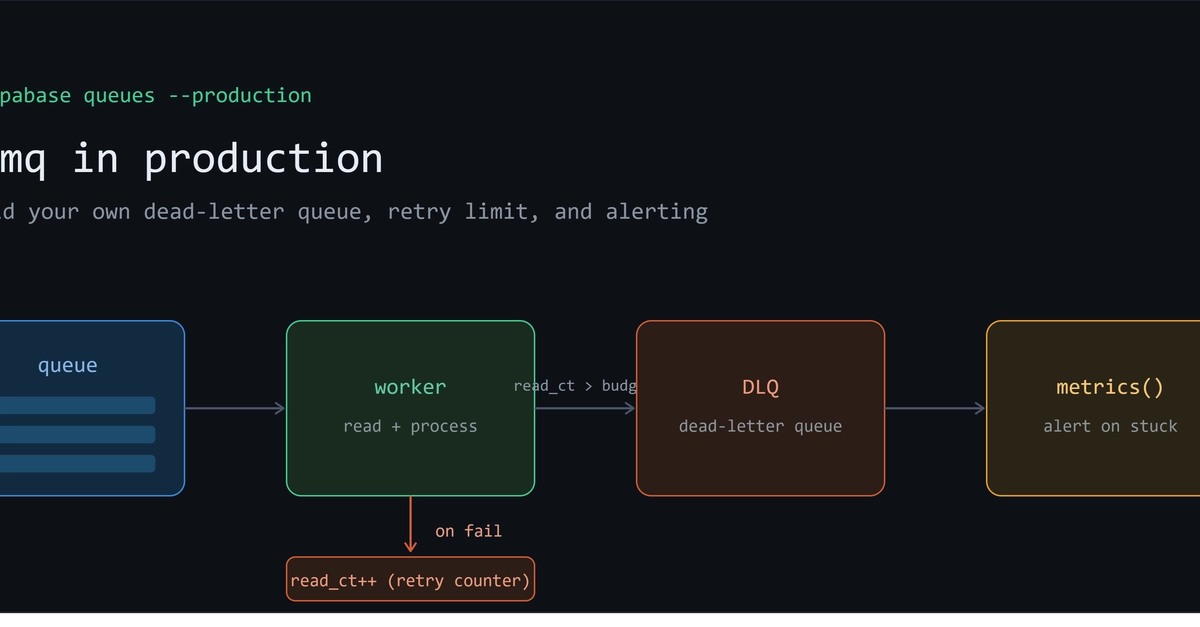
A dead-letter queue is the safety net that catches messages your consumers cannot process, so one broken payload does not block or silently drop everything behind it in the queue.
Every message-driven system eventually receives a message it cannot handle: a malformed payload, a schema that changed underneath the consumer, or a downstream call that fails no matter how many times you retry it. Without a dead-letter queue, that message either blocks the head of the queue forever or gets silently discarded, and both outcomes are worse than knowing about the failure.
A DLQ turns an invisible failure into a visible, inspectable one. It gives you a place to quarantine the message, alert on it, and decide — deliberately, not by accident — whether to fix and replay it or discard it for good.
The mechanics differ across brokers, but the underlying pattern is the same everywhere: a delivery-attempt counter, a threshold, and a destination for messages that cross it. This guide covers what a DLQ actually does, how to tell a poison message from a transient failure, when to retry versus discard, and how to replay safely once you have fixed the root cause. For the broader integration-patterns context this pattern sits inside, see the App Architecture.