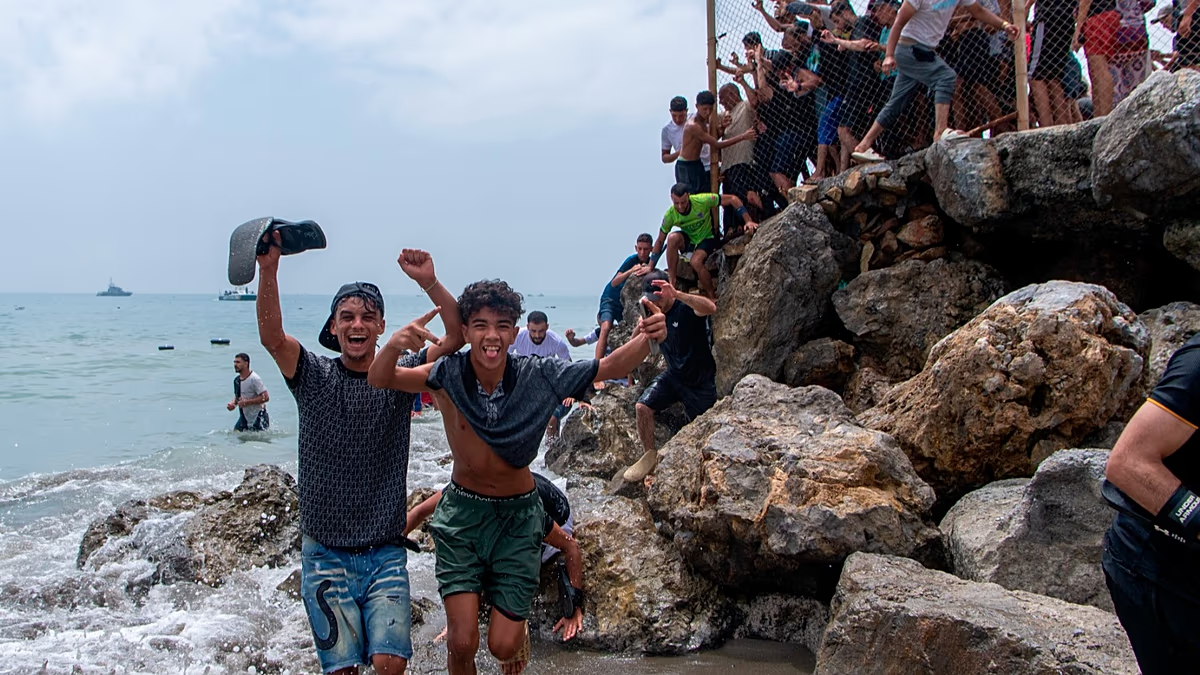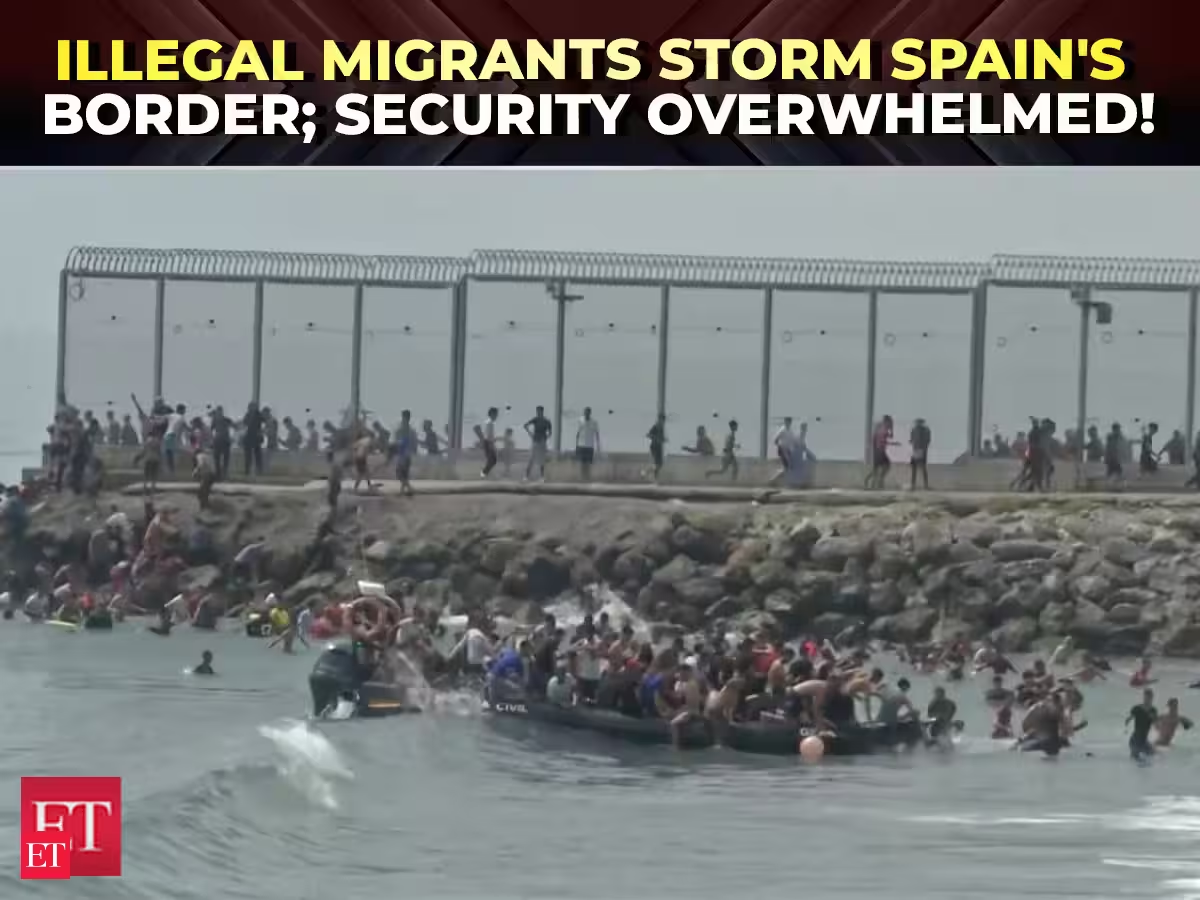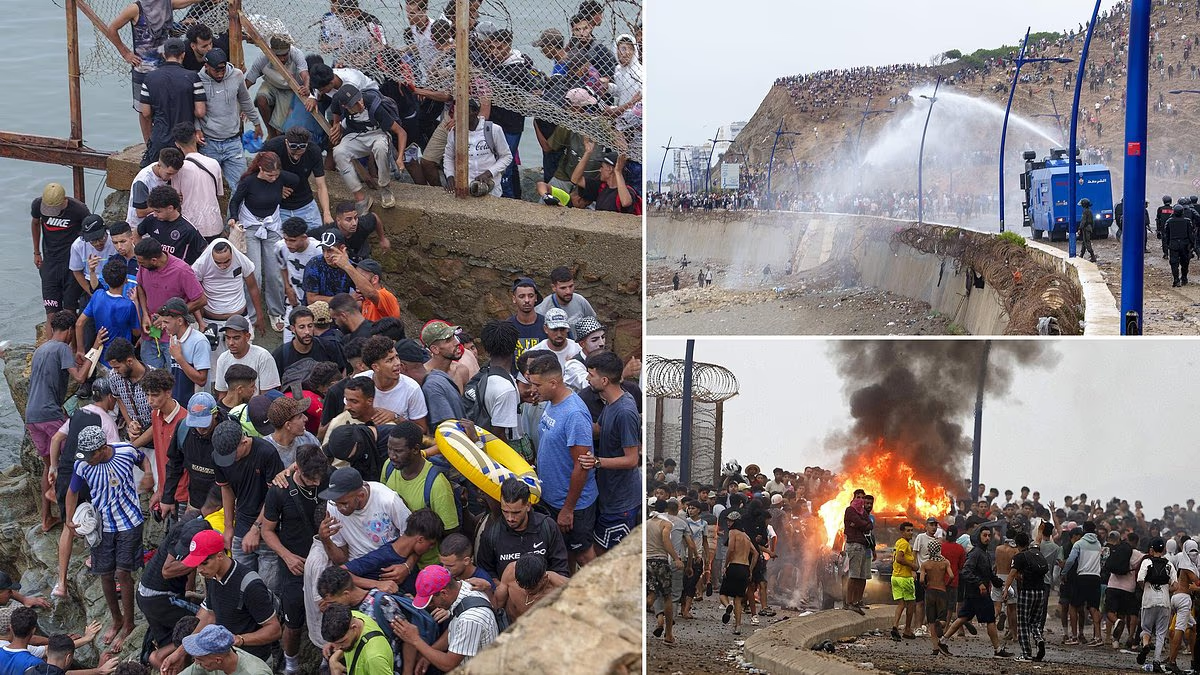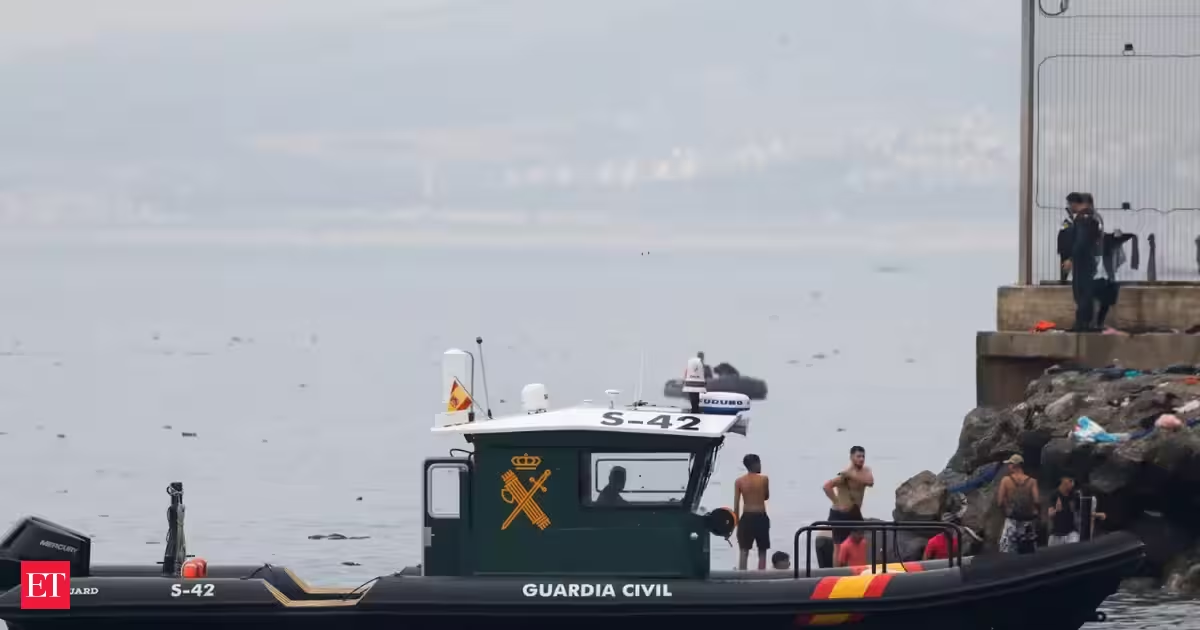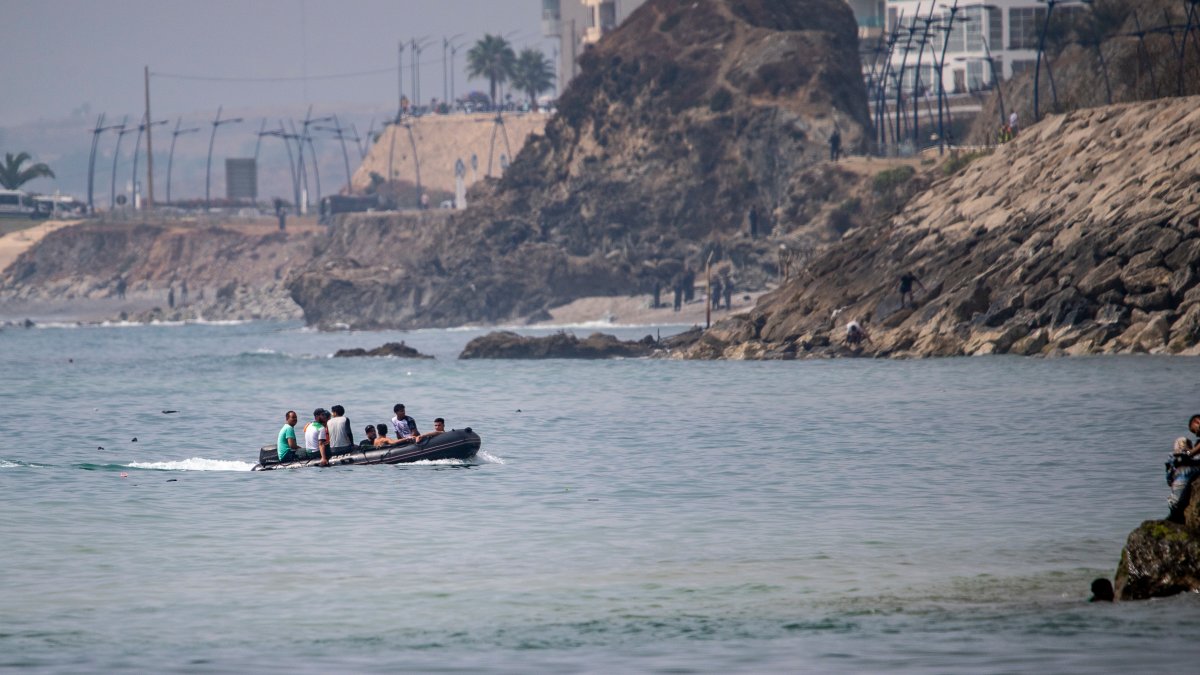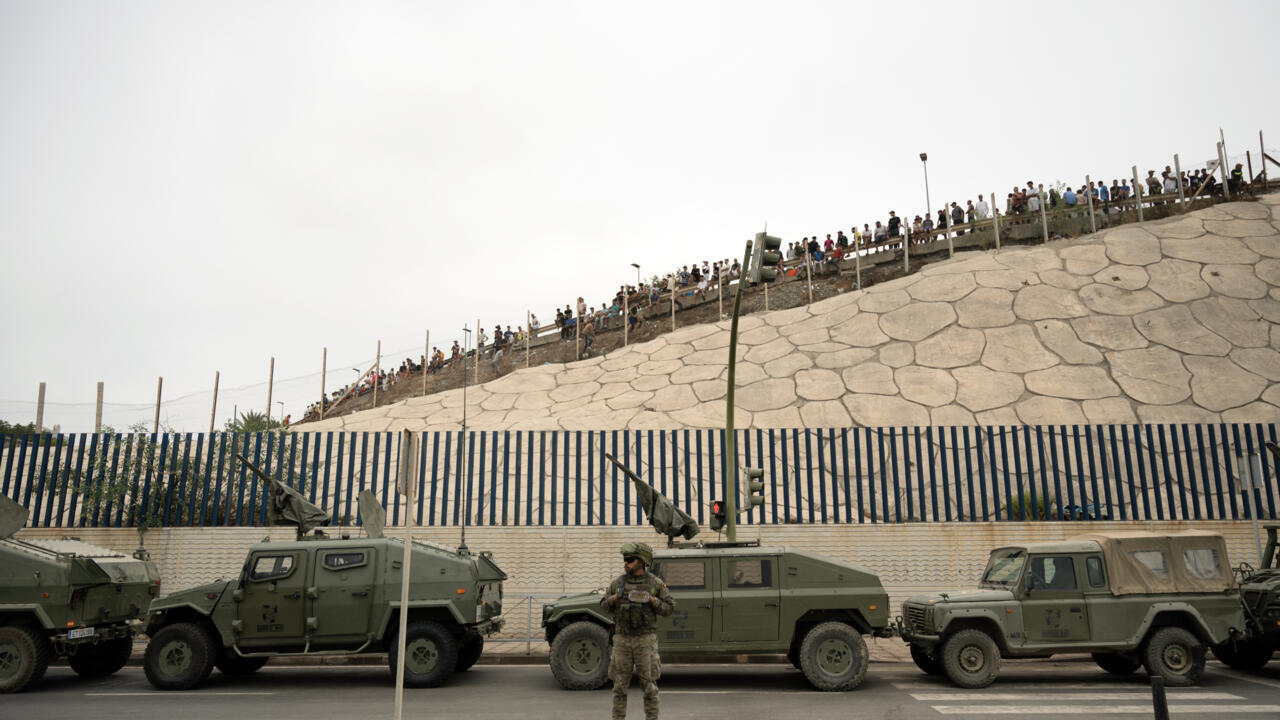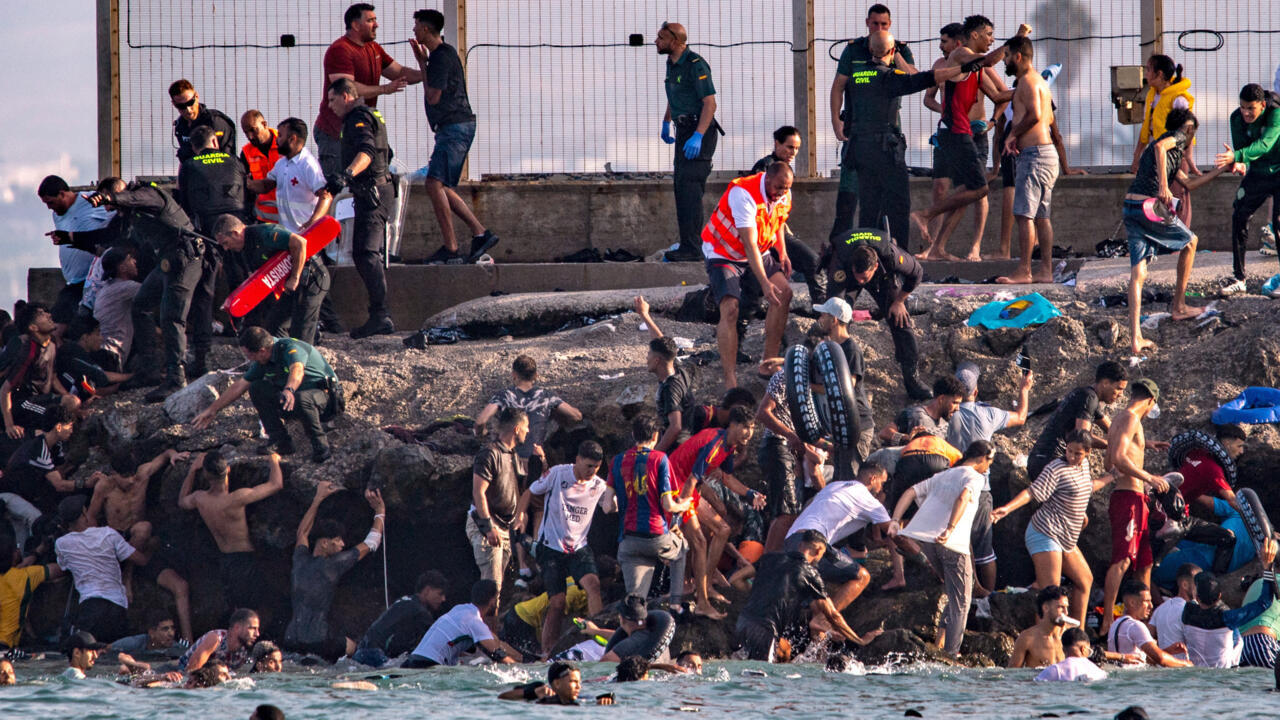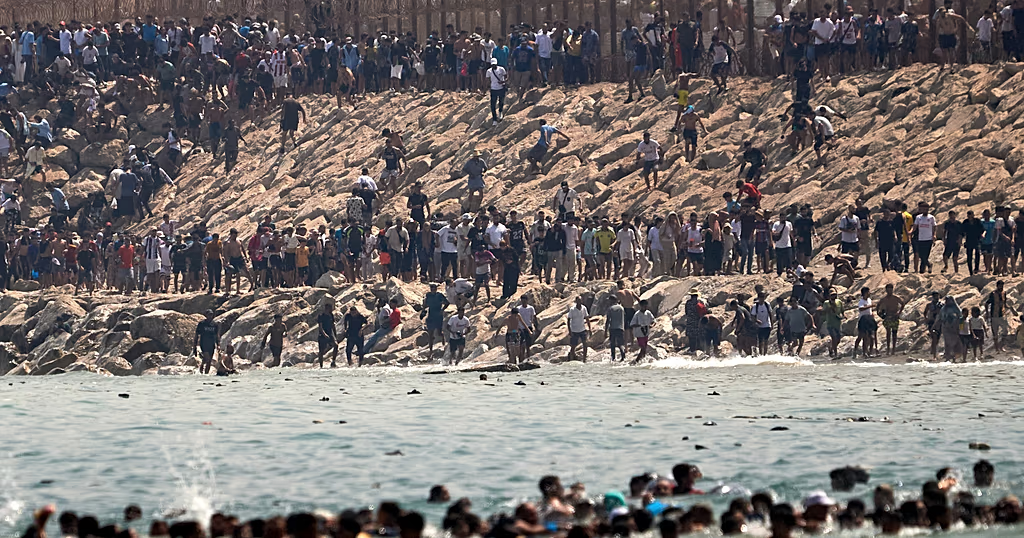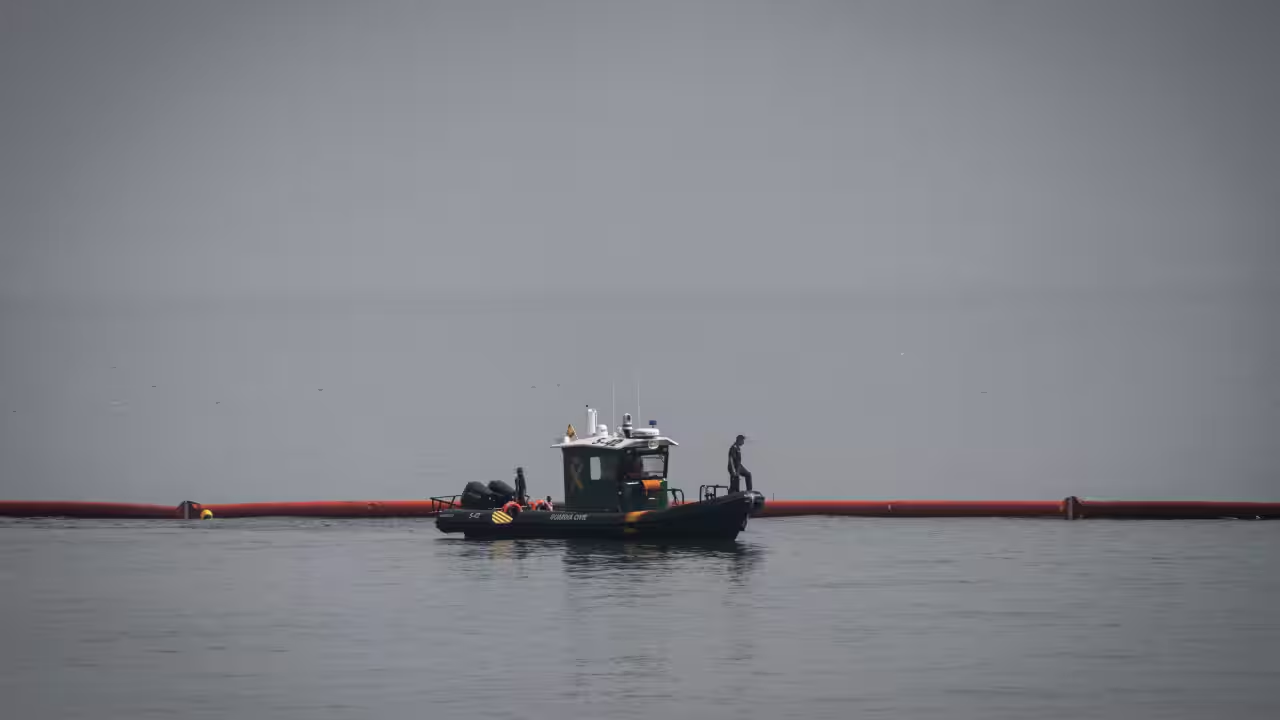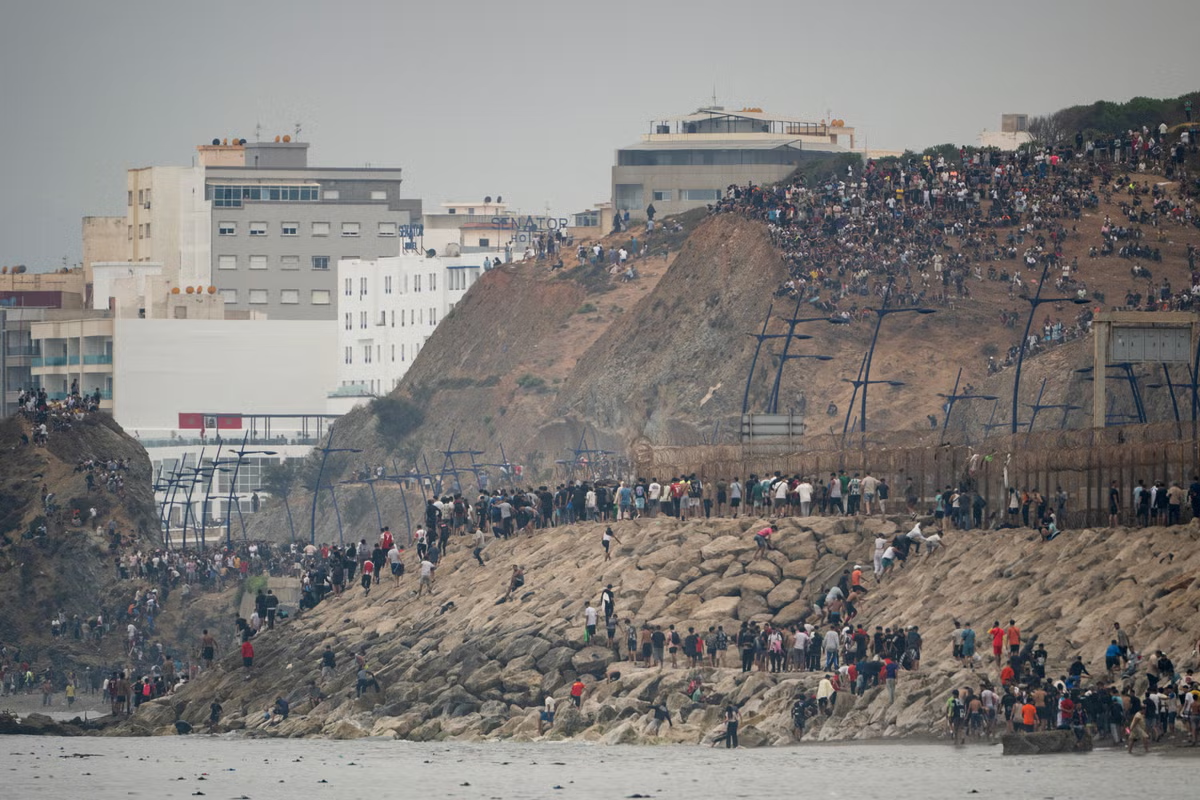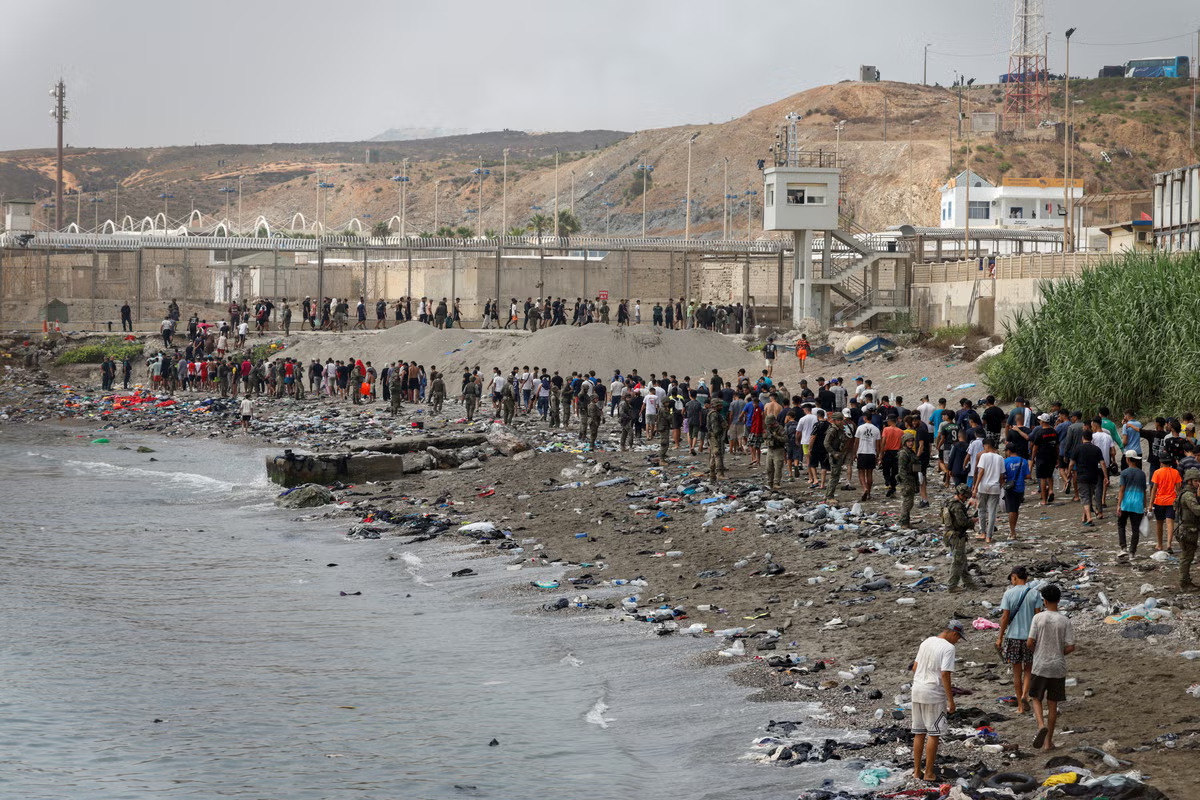
Tens of thousands of migrants have crossed into Spain’s north African enclave of Ceuta from Morocco prompting concern from leaders across Europe about the integrity of their borders. Spain’s prime minister Pedro Sánchez described the inflow of people as “an attack on Spain’s territorial integrity” and promised to “use all the resources of the state to guarantee security and coexistence”. Leaders across Europe, including president of the EU commission Ursula von der Leyen, have called for swift returns of migrants back to Morocco. UK prime minister Andy Burnham described the chaotic scenes of migrants scrambling onto the shores as a “cause for concern” and said the UK had contacted Madrid to understand the implications and provide support.Ceuta, which shares a land border with Morocco, is separated from mainland Spain by the Strait of Gibraltar. Though it is part of Spain it has a carve-out from the usual requirements of the Schengen free travel area - meaning it is not possible for migrants in Ceuta to simply sail across the Strait and be allowed into mainland Europe as they will face additional border checks. Under normal circumstances, migrants who claim asylum in Ceuta should be able to have their claims processed, however the arrival of some 50,000 people at once threatens to overwhelm the system. Spanish Prime Minister Pedro Sanchez speaks in Ceuta, Spain, amid mass crossings of migrants on foot and by sea from Morocco into Spanish territory (Reuters)It is yet to be seen how the Spanish authorities will deal with this; whether they will arrange for migrants’ asylum claims to be processed or whether they will try and return some people to Morocco without allowing them to claim asylum. Ms von der Leyen said on Friday that she was confident the EU’s “close partnership with Morocco will help deliver concrete results”. Finland’s minister of foreign affairs Elina Valtonen said “returns must be swift”, adding: “With the help from the EU, we are counting on Spain to protect our external border”. Magnus Brunner, the EU’s commissioner for migration, said that Europe’s border force Frontex was ready to support Spain to control the situation. Chancellor of Germany Friedrich Merz said he supported “Spain’s intention not to allow illegal migrants onto the European continent”, adding: “The EU’s return directive must now be implemented without delay”. Thousands of people cross into Ceuta from Morocco (Reuters)The UK’s Shadow home secretary Chris Philp said Spain should expel the migrants back to Morocco and “certainly not allow any onto the Spanish mainland”. With fears that the migrants could travel on to mainland Europe and later the UK, The Independent spoke to immigration experts to understand how likely this is: What could the Spanish response to Ceuta crisis be and how would it affect Europe? Dr Mihnea Cuibus, a senior researcher at the Migration Observatory at the University of Oxford, told The Independent that it was “way too early to tell”.He explained: "There are some questions that will hopefully be answered in the next few days. A lot of what happens next depends on what the Spanish government is planning to do in response to the situation. I think a key question is whether, and to what extent, these people make their way into mainland Europe. “That depends on what they do with processing, or whether Spain is successful in returning some of these people back to Morocco."If these people don't make it to mainland Spain, then the situation remains contained to Ceuta and won't have much of an effect.”Dr Cuibus said that he believes there is just one migrant processing centre in Ceuta, which has the capacity for around 500 people – a "drop in the ocean of the number of people". He added: "They might try to return at least some of these people back to Morocco. One of the factors that might have played a part, although we don't know, is the Supreme Court decision in Spain, which said that under Spanish law, pushing back people who arrived by sea into Morocco without processing their applications is illegal."In theory, that judgement will constrain the Spanish government to some extent, but we haven't been in this situation before so it is hard to see how it is going to develop.People enter Spain by sea, amid mass crossings of migrants from Morocco into Spanish territory, in Ceuta (Reuters)“It really highlights the challenge shared by all EU countries and the UK and that is the reliance on your neighbours in order to be able to control some of these flows. We don't know exactly what happened, but a few years ago when there was a similar flow into Ceuta it was tied to a diplomatic dispute between Spain and Morocco about the Western Sahara.”Speaking about whether there will be any impact on the UK, Dr Cuibus added: "We don't even know if they will end up in mainland EU. Based on anecdotal reports, it seems that there are different nationalities e.g. Moroccans and Algerians than those nationalities that would come to the UK via small boats.”Could migrants be sent back to Morocco? Judith Sunderland, senior director in the refugee and migrants rights division at Human Rights Watch, told The Independent that the numbers of people coming into Ceuta will be difficult for local authorities and NGOs to handle. She said: “49,000 is a lot for Ceuta alone to handle, so from the perspective of the obligation on Spain to provide adequate care and individual assessments for everyone, that is going to be difficult to do in Ceuta.People gather at the site of clashes near Fnideq, on the Morocco-Spain border, on July 31, 2026 (AFP/Getty)“One rational thing to do would be to transfer a bunch of people to mainland Spain. I know that local NGOs are already calling for that, I would suspect that the Ceuta government would want that to happen. But then you get into all the politics of that".“Ideally everyone should get an individual assessment and those that have no claim to remain, they don't need asylum, they don't have a right to protection, they should be returned. That’s clear."She explained that Ceuta, while part of Spain, has a carve-out from the usual requirements of the Schengen free travel area that includes 29 European countries. “There is no freedom of movement between Ceuta and mainland Spain, so none of these people are going to easily get on ferries to go to mainland Spain.”Referring to the policing of the border with Morocco, she added: “Spain has been often violently controlling the enclaves for years now, they are extremely expert at blocking people from entering. Summarily expelling those who do, and preventing anyone who does actually make it, from travelling onward into Spain. It is clearly a very challenging situation and the Spanish government does need to be careful in how it responds, they are sending military and they need to be careful that that doesn’t involve violence.”While the situation is challenging, Ms Sunderland explained that this is a crisis that the Spanish government should be prepared for. She said: “They should have systems in place to handle it in a way that is rational and humane and respects the rights of those arriving, and responds to the concerns of the local population. This is a big test, and I think is fair to demand that they rise to the challenge.”
How arrival of migrants into Ceuta could affect mainland Europe and UK
Spain and the EU are working with Morocco to agree a response to sudden influx of some 50,000 migrants into north African enclave of Ceuta
1,224 words~6 min read