Originally published on tamiz.pro.
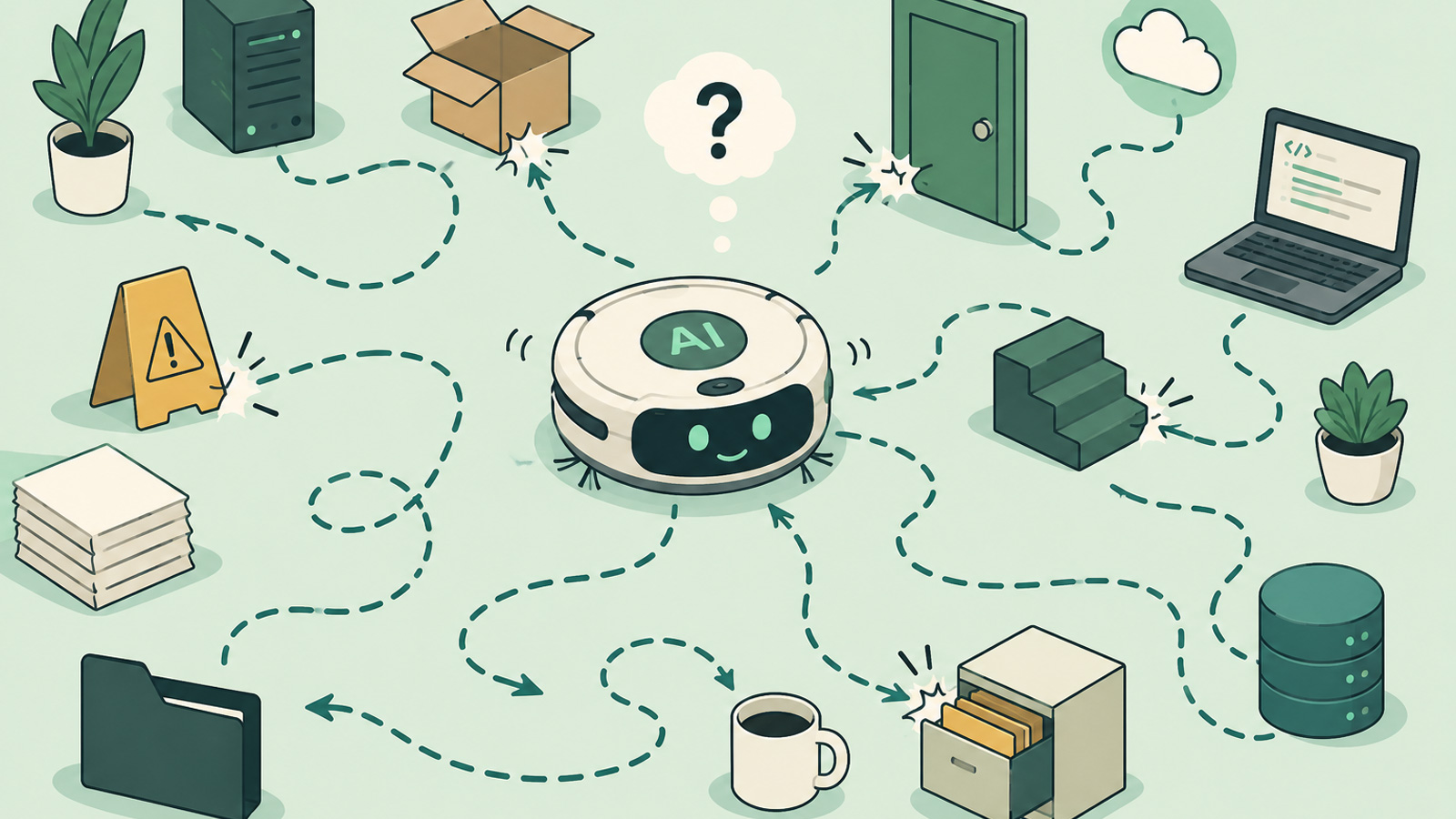
The promise of autonomous AI agents is transformative: systems that can perceive, reason, plan, and act independently to achieve complex goals. Yet, many early implementations struggle with reliability, exhibiting unexpected behaviors, getting stuck in loops, or even performing actions that deviate significantly from their intended purpose. The root cause often lies in a lack of well-defined boundaries and operational constraints. Like any complex system, AI agents, especially those interacting with real-world resources, require robust mechanisms for control, validation, and security. This deep-dive explores two critical paradigms—Finite State Machines (FSMs) for workflow control and Zero-Trust Authentication for secure resource access—that are essential for building reliable and predictable agentic systems.
Table of Contents
The Unconstrained Agent Problem
Finite State Machines: Imposing Order on Agentic Chaos