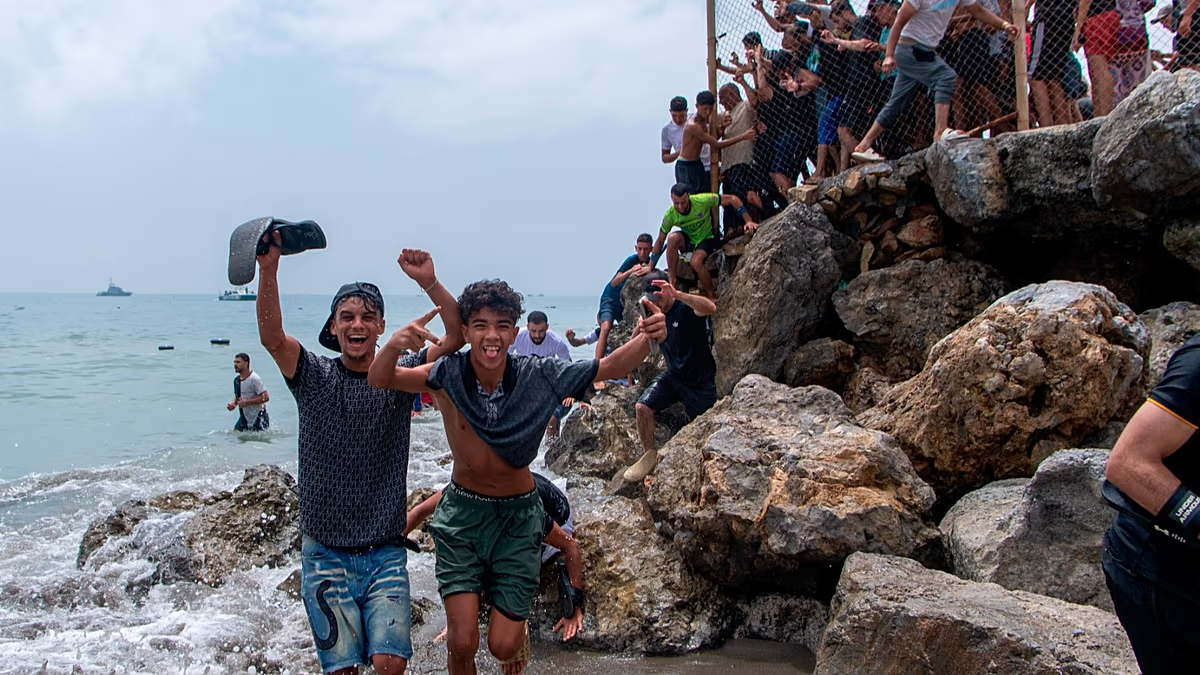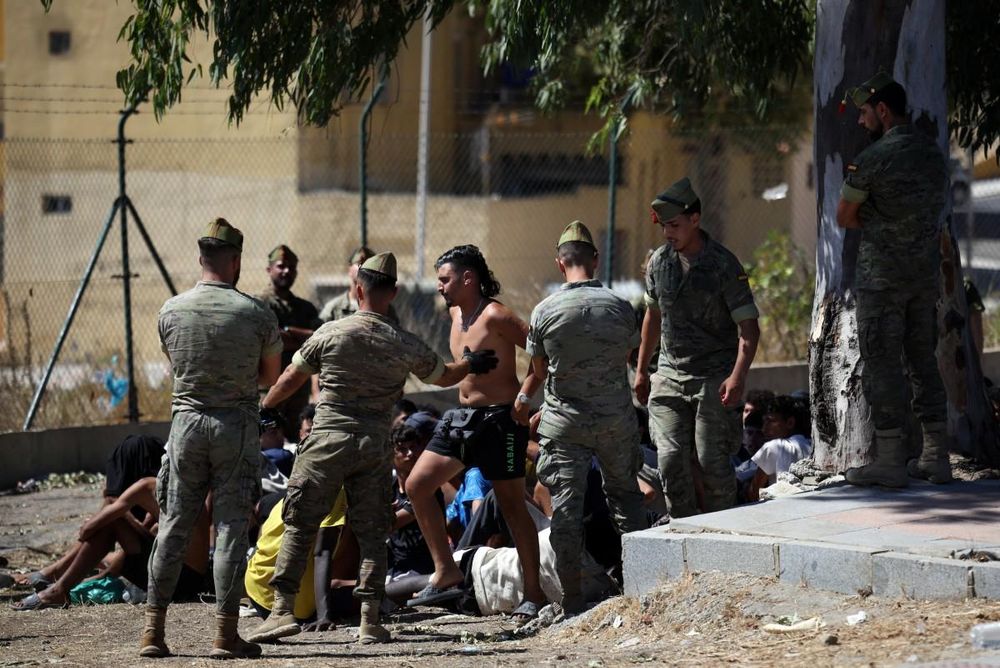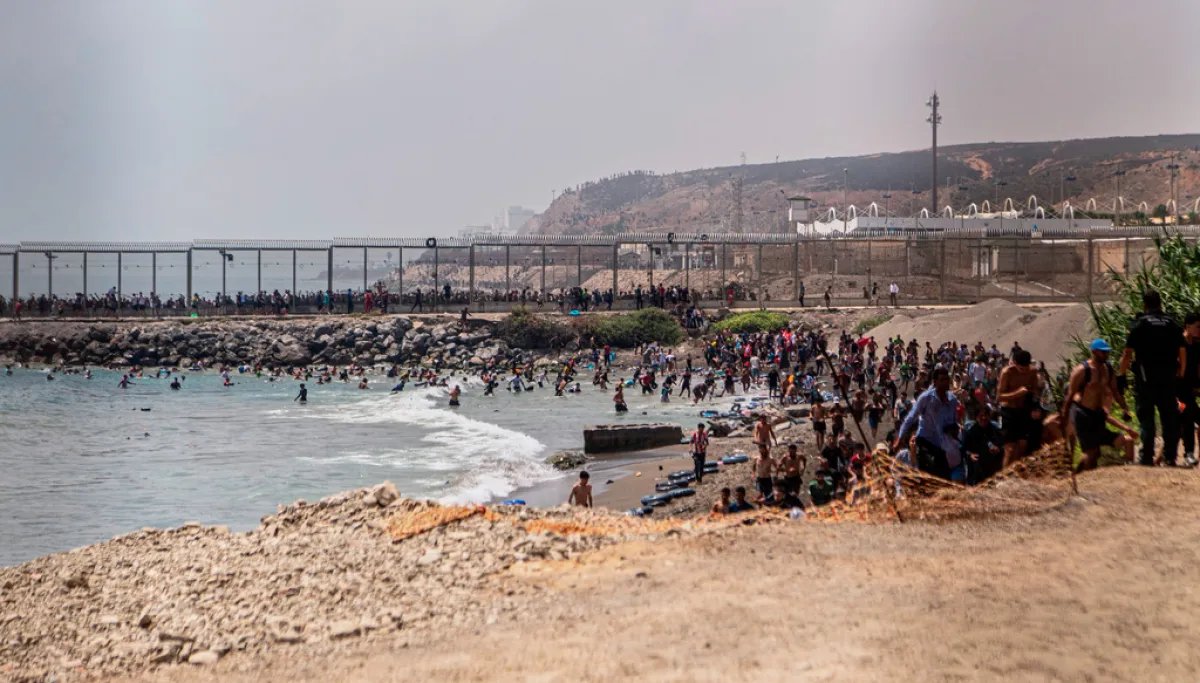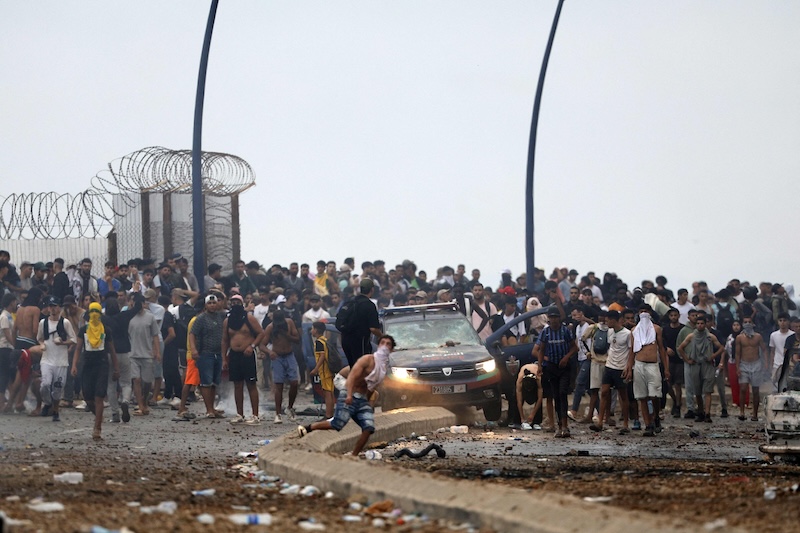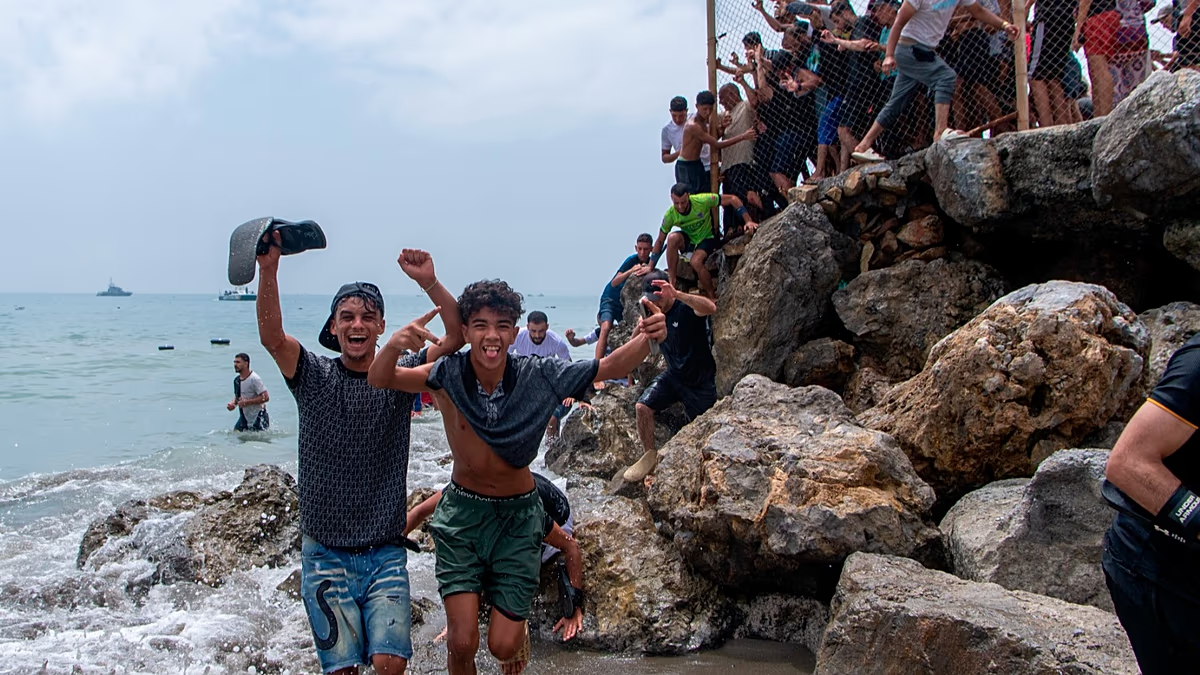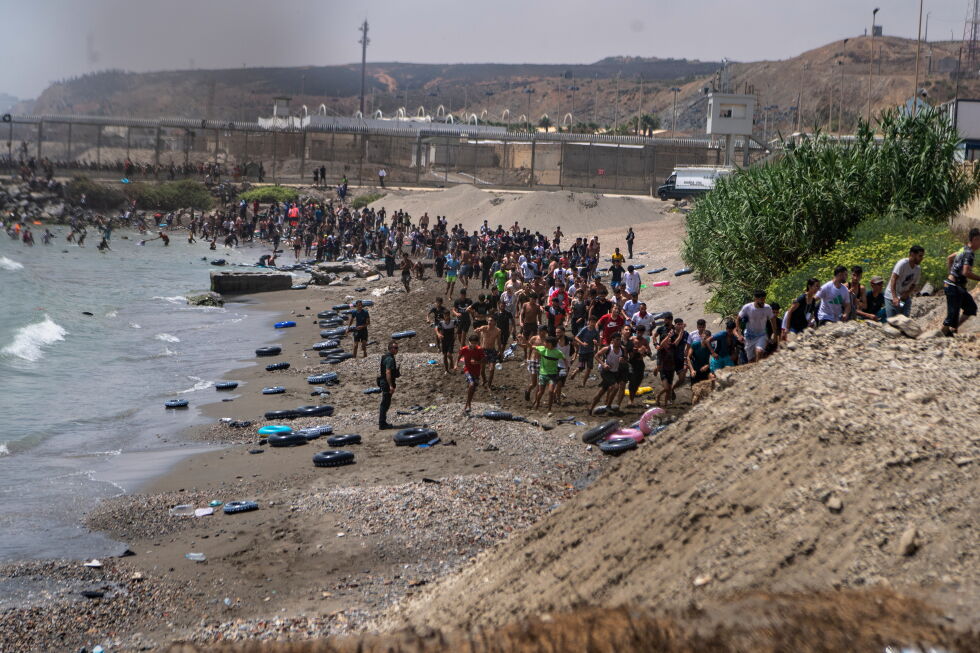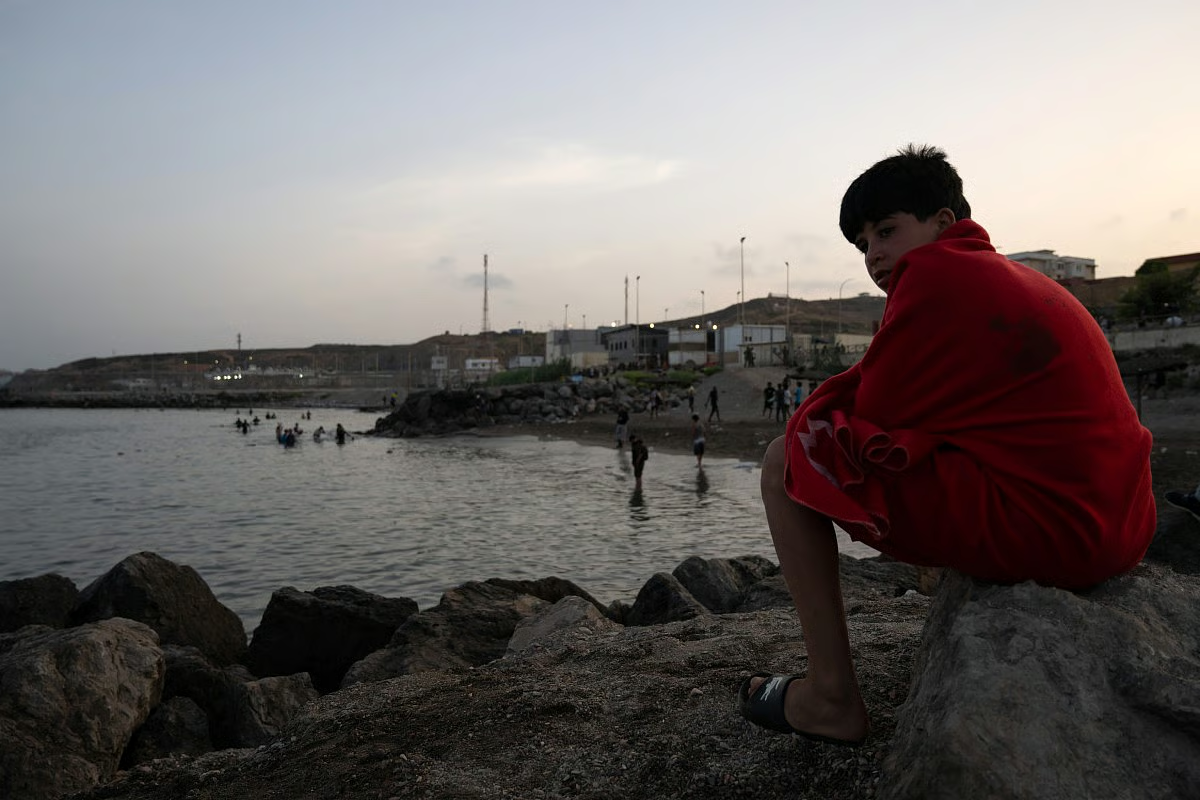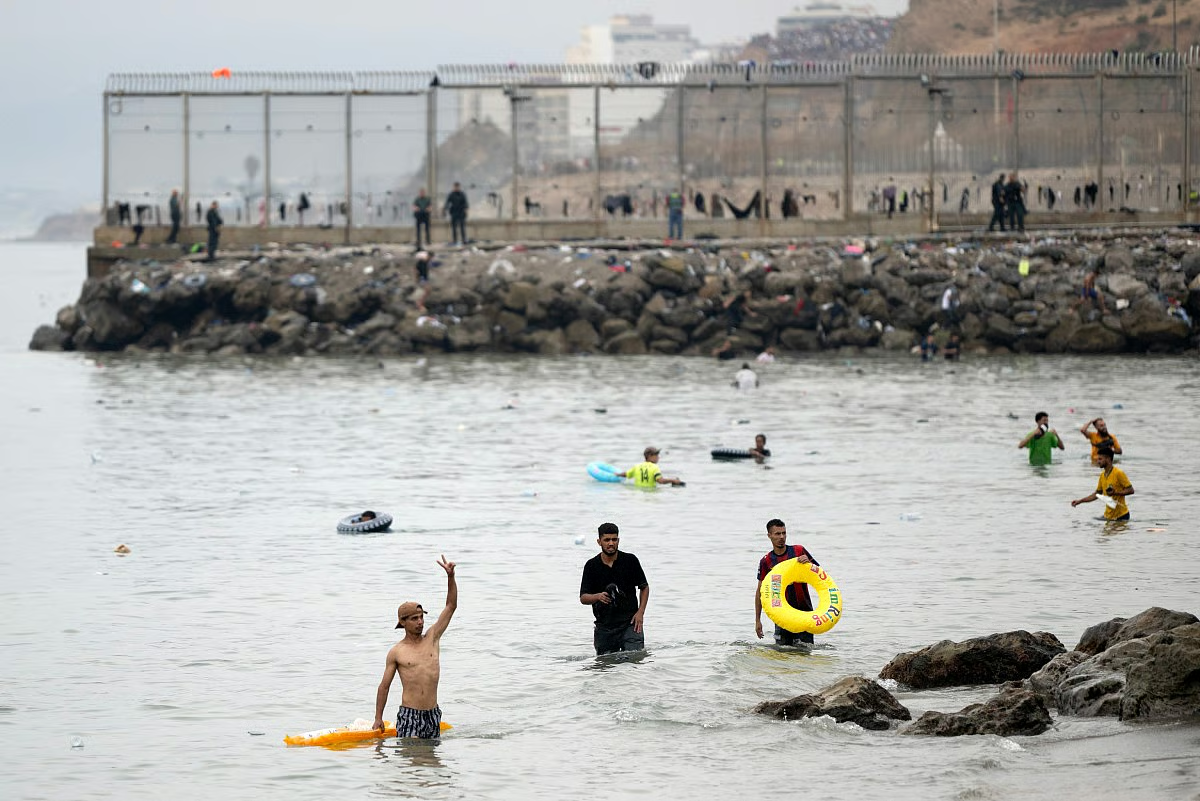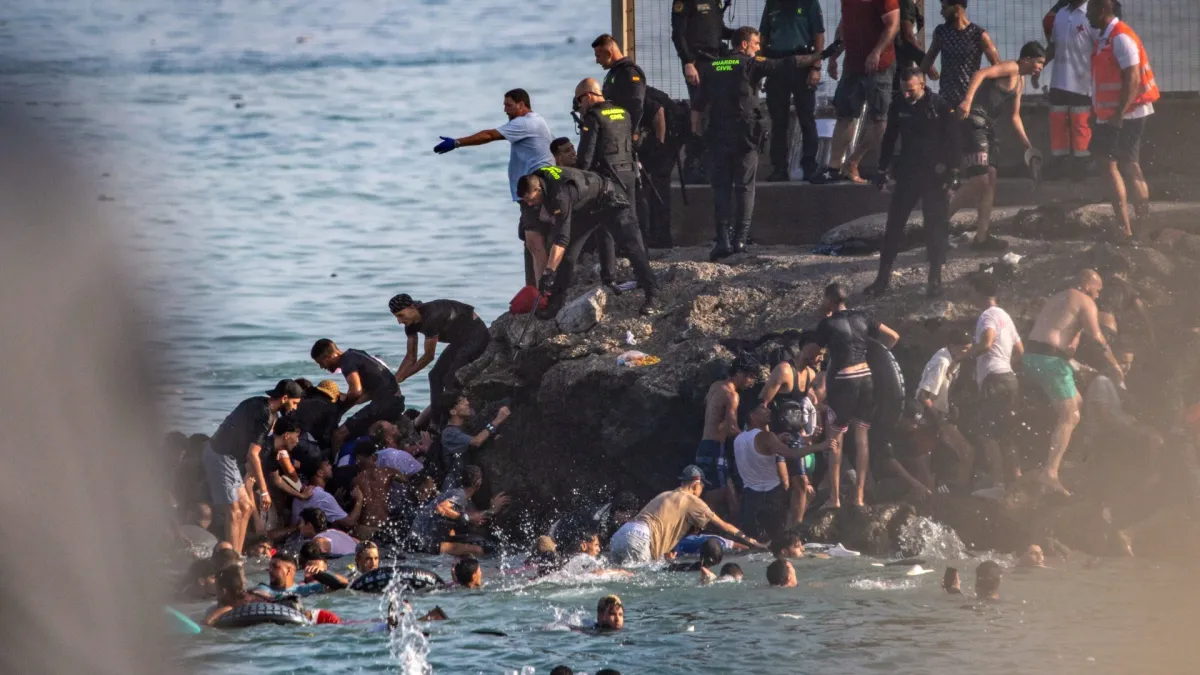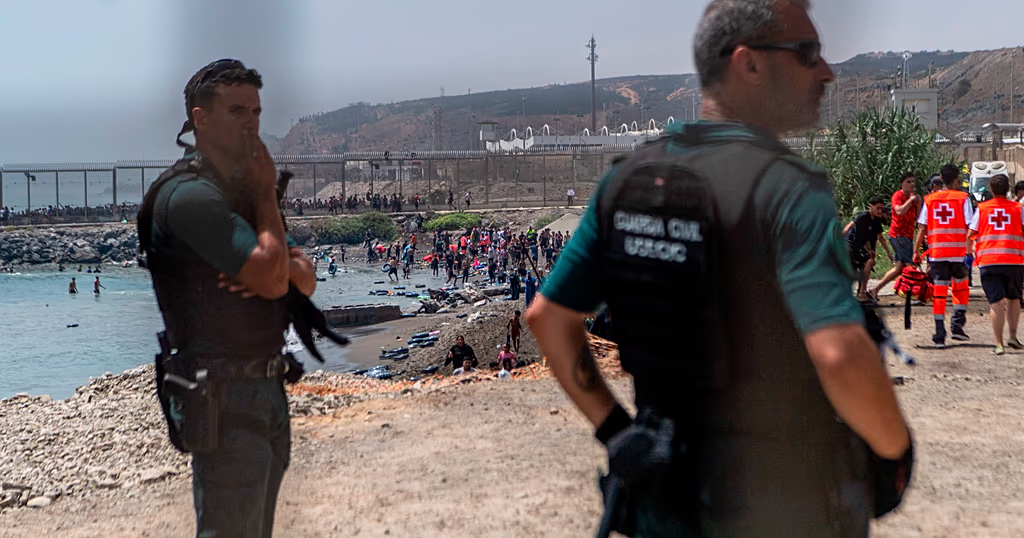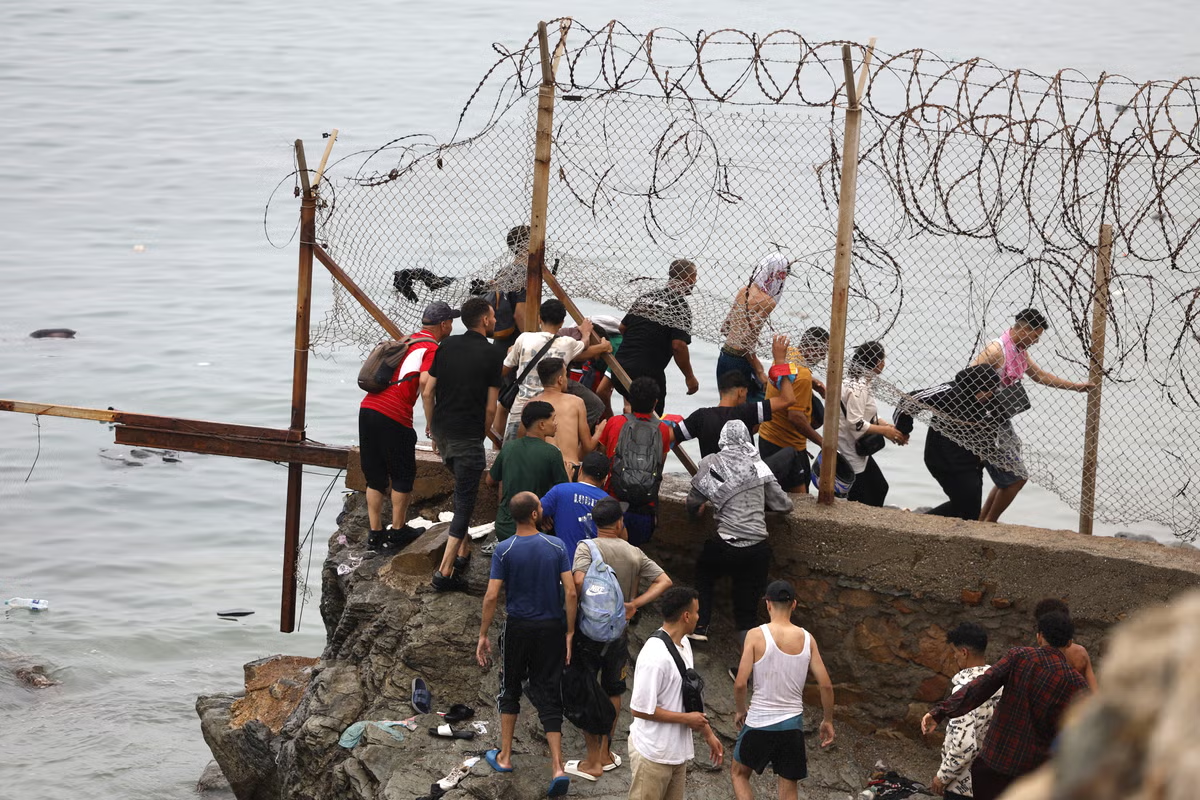
An estimated 49,000 migrants have crossed illegally into the Spanish enclave of Ceuta from Morocco in the last 24 hours, throwing the city in North Africa into disarray and causing a major headache for Pedro Sanchez’s government.At least 19 people have been found dead in the water since the mass movement by land and sea into the tiny Spanish-held spit in North Africa on Thursday, and security forces are still wrestling to re-establish control of the border.At the gates into Ceuta, Moroccan authorities had deployed water cannon trucks and pushed people back. The charred remains of a bus and seven cars could be seen nearby from clashes with the crowds.The military has been drawn out to help police the border after thousands of people crossed by land and sea on Thursday (AFP/Getty)Ceuta and Melilla, another Spanish autonomous city in North Africa, both periodically experience surges in attempted crossings by migrants seeking to reach Europe, but the scale of Thursday's rush had little precedent.Both hold the European Union’s only land border with Africa and, as such, the mass crossing has caused shock and division in Europe.Here’s what the figures say about the burgeoning crisis on Europe’s southern frontier:What is happening in Ceuta?On Thursday, thousands of people attempted to enter Ceuta in a sudden mass movement, in one of the most significant breaches of the territory’s border in years.Many attempted to reach the enclave by sea, swimming around coastal barriers and using inflatable rings and other flotation devices. Migrants crossed through water to enter the Spanish territory (Reuters)Others tried to force their way through land-border infrastructure.Rachid Sbihi, head of the association representing Guardia Civil officers in Ceuta, described the scene as “absolute chaos” and said the border had “totally collapsed”.About 49,000 migrants have crossed into Spain's North African enclave of Ceuta from Morocco in the last 24 hours, officials estimate.Spain has deployed additional police and military personnel to the enclave as authorities attempt to regain control of the border.Ceuta and the larger Spanish territory of Melilla that is some 400 kilometers (250 miles) east, are located on the northern shores of the Mediterranean coast at the tip of Africa.Thousands of migrants have crossed into the territory (AFP/Getty)Both autonomous cities belong to Spain and share the European Union's only land borders with Africa.Why is Ceuta not part of Morocco?The territory has been under Spanish control since 1580, centuries before modern Morocco existed as an independent state.As a result, the Spanish government considers Ceuta to be part of Spain — meaning that the North African city sits on the EU’s external border.This makes the city significant migration route into Europe, where for people in northern Morocco, reaching the enclave Ceuta offers a route into EU territory without having to risk the notoriously deadly sea crossings to mainland Spain.What are the reasons for the crisis?The immediate trigger for the sudden surge remains unclear.While neither country has identified a reason for the sudden influx in people approaching the territory, Moroccan officials have blamed criminal networks for encouraging or organising the crossings, while Spanish authorities have pointed to a recent Supreme Court ruling on the treatment of people intercepted while attempting to reach Ceuta by sea. Vehicles burn at the site of clashes near Fnideq, on the Morocco-Spain border (AFP/Getty)Territorial policy minister Angel Victor Torres said on Friday that the surge may have been influenced by a supreme court ruling earlier this month that a migrants intercepted at sea while attempting to reach Ceuta or Melilla cannot be summarily returned under special rules.The ruling has made it more difficult for Spain to immediately return some people intercepted at sea, according to the Spanish government.The scale of Thursday’s movement may also have created its own momentum: once groups began successfully reaching the enclave, news of the breach could have encouraged others to attempt the crossing.How many people cross each year?The number of people entering Ceuta irregularly has reached record levels.1,238 irregular entries were recorded in 2022, followed by 1,071 in 2023 and 2,531 in 2024. In 2025, the number rose again, with 3,523 people entering Ceuta by land, according to figures from Spain's Interior Ministry.The population of Ceuta is roughly 83,500 to 85,000 people.Where is Ceuta?In the week before 30 July, more than 1,500 people reached Ceuta by sea, according to the territory's regional leader — already more than half the number recorded during the whole of 2024.The latest influx is on an unprecedented scale, with the Spanish government’s estimate of 49,000 arrivals in 24 hours dwarfing the numbers normally recorded over an entire year.To reach Ceuta, migrants often swim from the Moroccan town of Fnideq, covering about 5 kilometers (3.1 miles) to reach Spanish territory.Others attempt the crossing from the nearby town of Belyounech, where the distance is shorter.Spain's overall immigrant population has grown considerably in recent decades, with around 10 million people in the country of 50 million having been born elsewhere.Many are from Colombia, Venezuela and Morocco, and work in key sectors of the Spanish economy, including agriculture, tourism and the service sector.How many people have died?At least 19 people are reported to have died while attempting to reach Ceuta.The toll has risen as authorities recovered bodies and assessed the consequences of the mass movement. Earlier reports had put the number of deaths lower.The deaths have added a humanitarian dimension to what is rapidly becoming a major political and security crisis for Spain, Morocco and the wider EU.
What you need to know about Ceuta as deadly migrant crisis hits Spanish enclave
49,000 migrants have crossed into Spain's North African enclave of Ceuta in the last 24 hours
903 words~4 min read