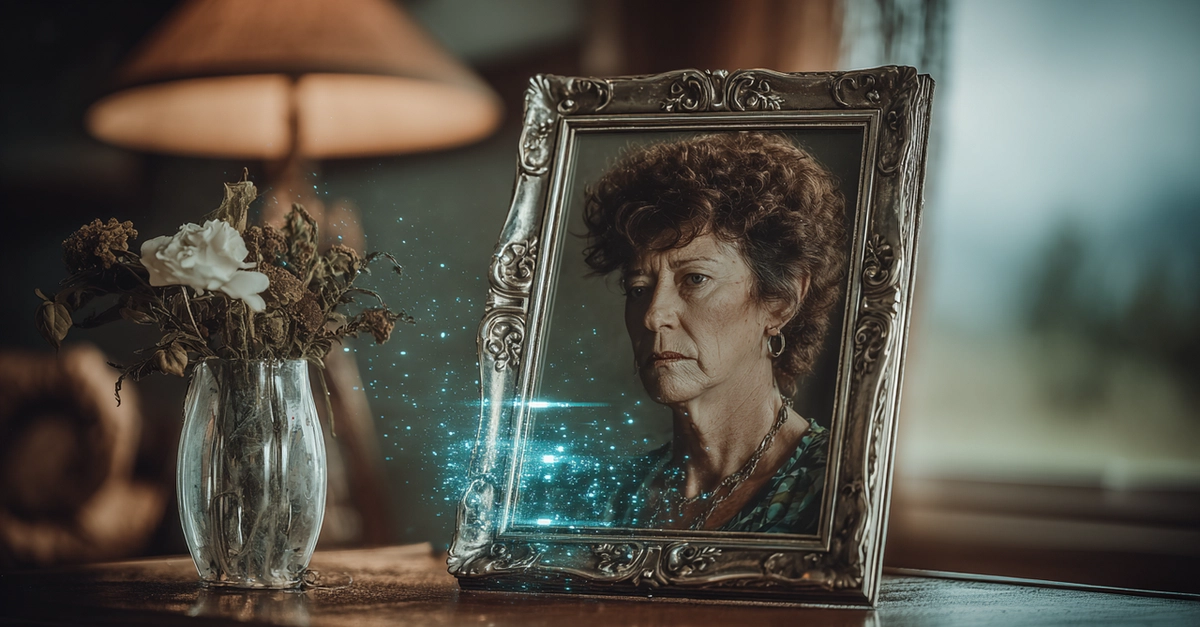
Your mother has been dead for fourteen months. You know this. You were at the funeral, you sorted through her wardrobe, you cancelled her phone contract. And yet here she is, texting you good morning. She asks about your day. She tells you she is proud of you. She even uses the slightly excessive number of exclamation marks that drove you mad when she was alive.
This is not a ghost story. This is a product.
In early 2026, a cluster of investigations by The Atlantic, Christianity Today, and several other major publications converged on the same unsettling phenomenon: a booming industry of AI-generated “deadbots,” services that harvest the digital traces of the deceased, their text messages, voice recordings, social media posts, and email archives, and use them to build chatbots that simulate ongoing conversations with the dead. At roughly the same time, Meta was granted a patent for technology that would keep social media accounts active after the user dies, generating posts, comments, likes, and even direct messages powered by large language models trained on the deceased person's historical activity. The digital afterlife, it turns out, is no longer speculative fiction. It is a subscription service.