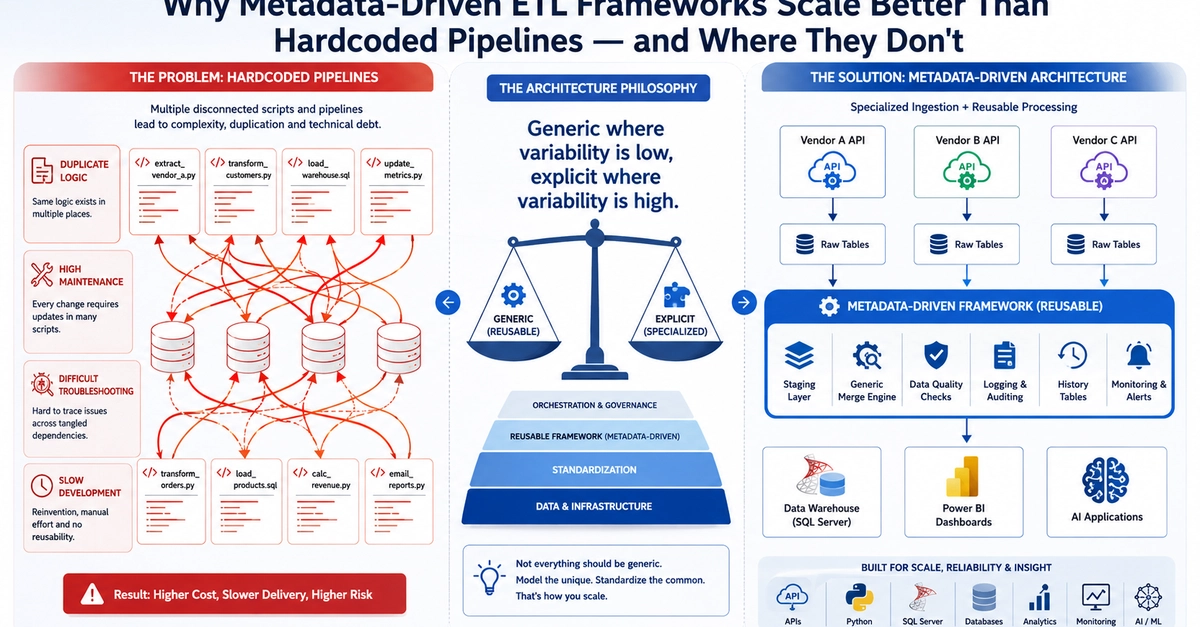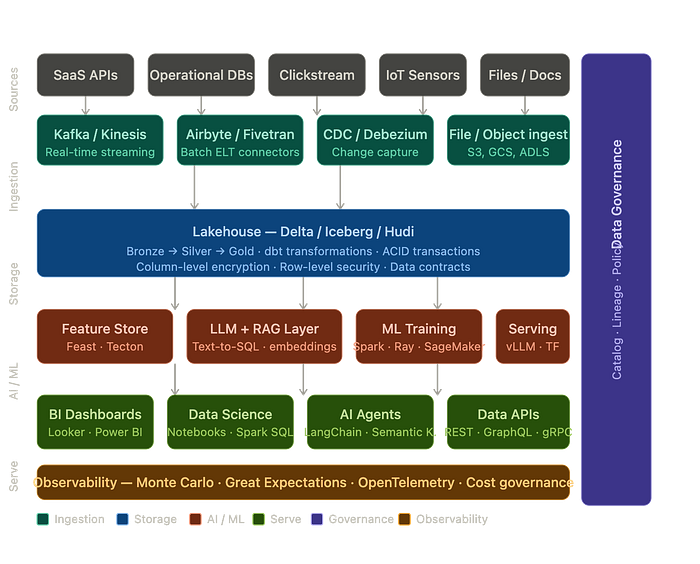
Teams keep forcing their warehouse to do integration work it was never designed for. The result is ballooning costs, opaque failures, and architectures that become harder to maintain the more they ‘succeed.’ Here’s the case for separating data movement from analytics storage.
The expensive truth about modern data stacks
Spend enough time around data platform teams and you hear the same story. A company builds out its "modern data stack" — warehouse, processing layer, orchestrator — and everything looks clean on the architecture diagram. Then the warehouse bill starts to climb. Ingestion jobs fail more often than anyone expected. And every time something breaks, it takes half a day to figure out whether the problem is in the load, the reshape, the orchestrator, or the warehouse itself.
At some point, someone on the team says the quiet part out loud: "I think we built a really expensive integration tool by accident."
They are usually right.