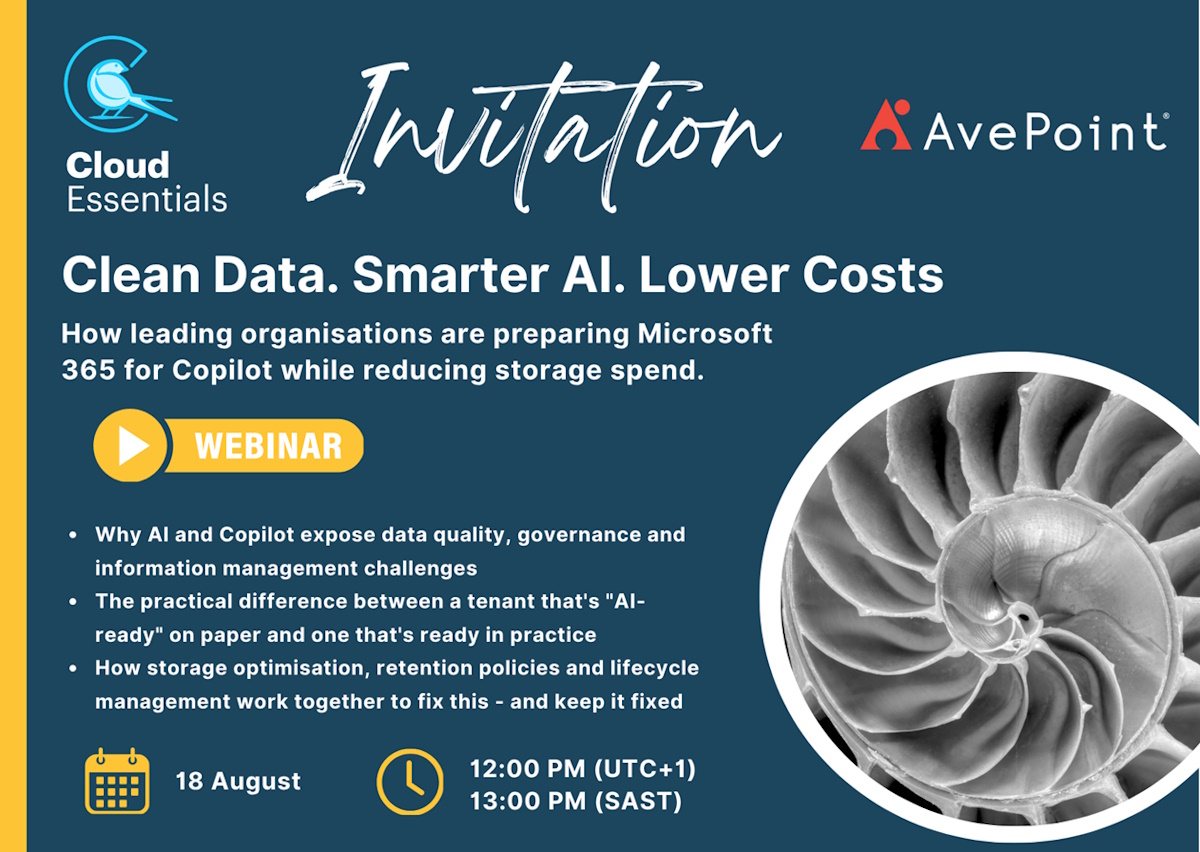
Join the conversation. Every organisation knows its data is growing.New projects generate more content. Collaboration platforms create more versions. Compliance requirements extend retention periods. AI initiatives introduce new expectations around data quality and accessibility.Yet few organisations stop to ask a simple question:For years, storage has been treated largely as a technical issue. If capacity runs low, organisations buy more. If costs increase, they are often accepted as an unavoidable consequence of digital growth.But that mindset is becoming increasingly difficult to sustain.As organisations prepare for AI-driven ways of working, the quality, governance and life cycle of information have become business-critical considerations. The challenge is no longer simply where data is stored. The challenge is understanding what information should be kept, what should be archived and what no longer serves a meaningful purpose.1. Cost controlUnmanaged storage growth can create mounting costs without delivering corresponding business value.2. Governance and complianceInformation must be retained appropriately, protected correctly and disposed of confidently when no longer required.3. AI readinessAI tools can only provide meaningful outcomes when they are supported by clean, well-governed and relevant information.When one of these areas is overlooked, the others are often affected.An organisation may reduce costs but introduce compliance risk. It may retain everything for compliance purposes, but increase complexity and reduce the effectiveness of AI. Or it may invest heavily in AI while overlooking the quality of the data that underpins it.The most successful organisations recognise that these priorities must work together.Many organisations are focused on implementing AI technologies such as Microsoft Copilot.However, AI often exposes challenges that have existed for years:Duplicate files and outdated versionsRedundant, obsolete and trivial (ROT) contentUnmanaged SharePoint sitesInconsistent retention practicesPoor information classificationThese issues may have been manageable when employees searched for information themselves.They become far more significant when AI begins surfacing, analysing and acting on enterprise content at scale.The organisations extracting the greatest value from AI are not necessarily those deploying the most technology. They are often the ones investing in the quality, structure and governance of their information first.Storage optimisation should not be viewed as a once-off project.It is an ongoing discipline that brings together:Information life cycle managementGovernance controlsRetention and labelling strategiesData classificationStorage visibility and optimisation practicesTogether, these capabilities help organisations create an information environment that is more sustainable, compliant and ready for future innovation.Forward-thinking organisations are beginning to view storage differently.Not as an overhead to manage.But as a business asset that can be optimised, governed and aligned to broader digital transformation goals.The outcome is more than reduced storage growth.It is stronger governance, improved information quality and a more reliable foundation for AI.Join Cloud Essentials and AvePoint for a practical discussion on how leading organisations are creating cleaner, better-governed information environments that support both AI readiness and long-term business value.Clean data. Smarter AI. Lower costs.Register now (and if the date has passed, use the link to access the webinar on demand):Cloud Essentials Webinar: Clean Data. Smarter AI. Lower Costs - How leading organisations are preparing Microsoft 365 for Copilot while reducing storage spend.18 August 12pm (UTC+1) 1pm (SAST)
From data growth to data value: Why storage optimisation matters more than ever
As organisations prepare for AI-driven ways of working, the quality, governance and life cycle of information have become business-critical considerations.
TL;DRAI
Storage optimisation becomes critical before Copilot: organisations must govern data lifecycle, not just buy capacity. AI reveals data debt (duplicates, ROT, misclassification); enterprises extracting most AI value invest in governance-first, not technology-first approaches.
503 words~2 min read