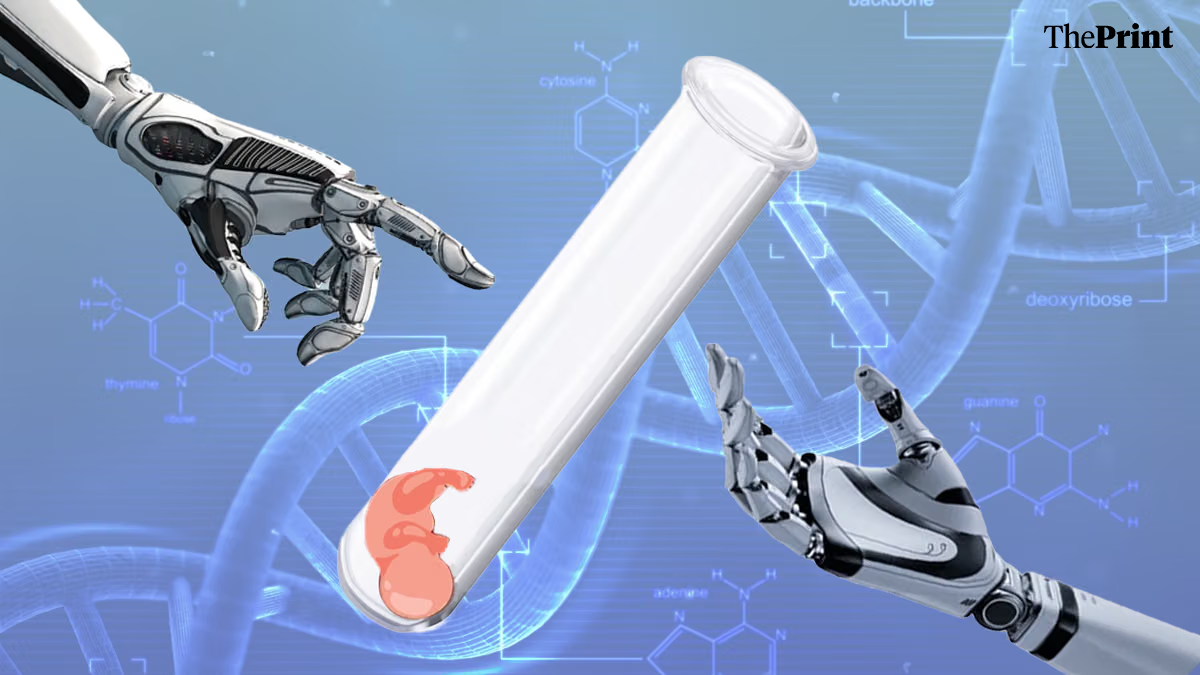
With assisted reproductive technology becoming more common, disputes involving fertility clinics will become more frequent. Some will involve negligence; others may concern improper storage, destruction of embryos, mistaken implantation, or disputes over parentage. Each will require courts to balance medicine, ethics and law in ways that traditional legal principles were never designed to address.The Supreme Court recently took an important step in Vijaya Kumari S. & Another v. Union of India & Others (2025), holding that couples who had frozen embryos before the Surrogacy (Regulation) Act, 2021 came into force could not be deprived of the opportunity to pursue surrogacy merely because they had subsequently crossed the statutory age limit. The judgment recognised that rights lawfully created under the earlier legal regime could not simply disappear because Parliament later introduced age-based restrictions.Is a frozen embryo property? Is it a person? Or does it occupy a legal space of its own, beyond the reach of traditional family and property law?That decision addressed a dispute between intending parents and the State. But what happens when the dispute is between the genetic parents themselves?
The legal dilemma at the heart of IVF
Advances in assisted reproduction have created legal questions about consent, autonomy and parenthood that neither Parliament nor the courts have fully settled.
1,686 words~8 min read