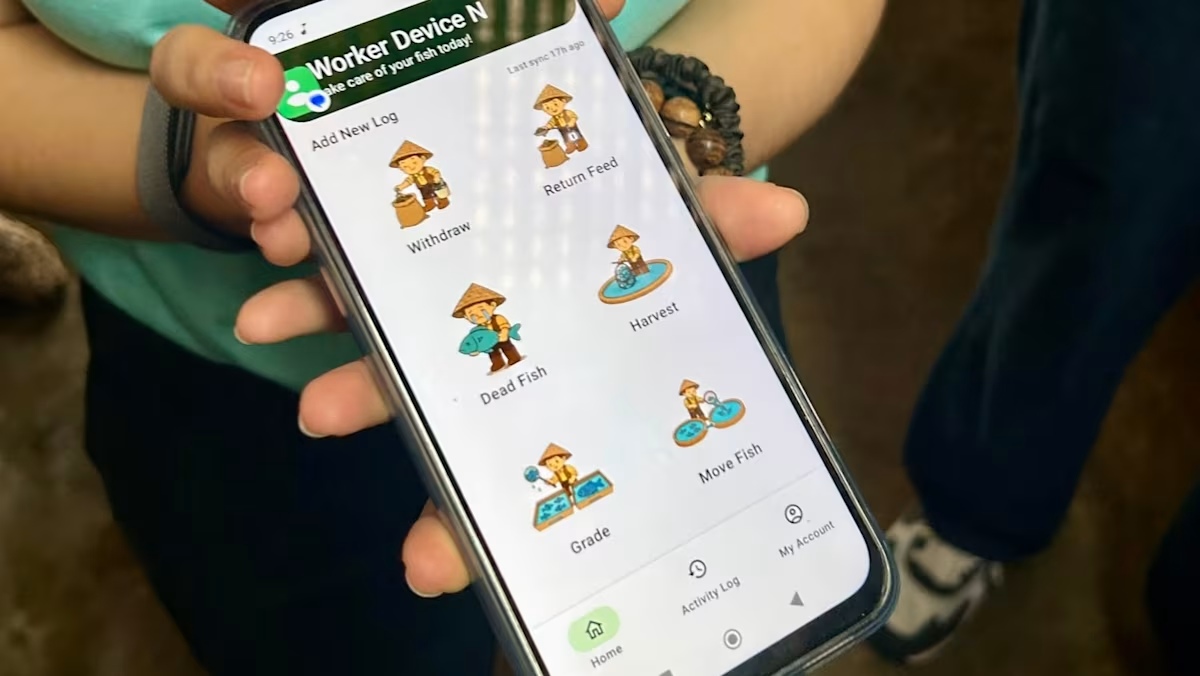
SINGAPORE: Singapore's aquaculture sector is increasingly adopting digital technology and artificial intelligence to improve productivity, modernise farm operations and strengthen the country's food production capabilities. Among the latest initiatives is the SG Farm App, a digital record-keeping platform developed by the Singapore Agro-Food Enterprises Federation (SAFEF) together with DEX, a subsidiary of the Infocomm Media Development Authority (IMDA). The app is designed to replace manual record-keeping, allowing farms to better track production, monitor costs and improve traceability while helping them meet industry standards. The push comes as local farms look for ways to increase production amid manpower constraints and rising operating costs. AI IMPROVES FARM PRODUCTIVITY Farms are also deploying AI-powered technologies to optimise day-to-day operations. At Max Koi Farm, sensors analyse the soundwaves produced by shrimps during feeding to estimate both the shrimp population and how actively they are feeding. The data is then processed by locally developed AI platform AquaEasy, which recommends the optimal amount of feed and feeding schedule. According to SAFEF chief executive Ken Cheong, such technologies significantly reduce the amount of manual work required by farmers. “Traditionally, observing how much the animals are eating is a lot of work (for the farms), in terms of planning, execution and monitoring,” he told CNA. “With digitalisation, with sensors, the system now can independently gauge how much the animals are eating, how many animals are in a pond, and therefore how much feed to be used.” He added that the technology also gives farmers a clearer picture of their stock levels, resource utilisation and operating costs, allowing them to better plan production. DIGITAL RECORDS HELP MEET INDUSTRY STANDARDS The SG Farm App complements these production technologies by digitising farm records. Workers can log information such as feed usage, stocking numbers and harvest volumes, enabling farms to track productivity, monitor expenses and assess the performance of each production cycle in near real time. The platform has been rolled out at two farms so far, including the National Broodstock Centre – which breeds tilapia fingerlings for Singapore's aquaculture industry – and more are set to follow.
Singapore's aquaculture farms get productivity boost through digital technology
From AI-powered shrimp feeding to digital farm records, Singapore's aquaculture sector is embracing technology to improve efficiency and strengthen local seafood production.
680 words~3 min read