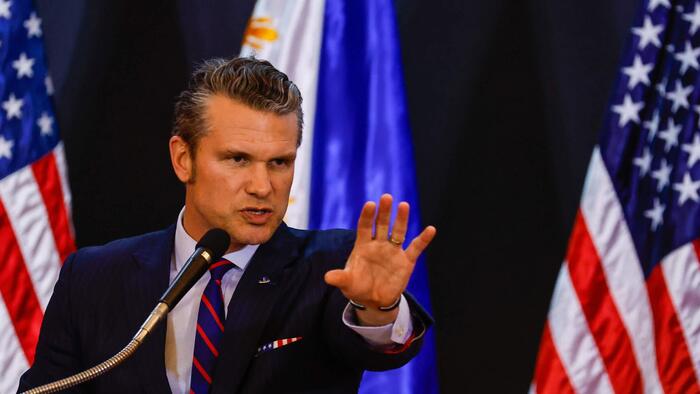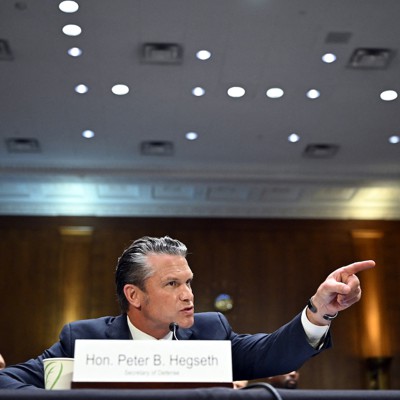
On March 17, 2025, newly appointed C\chief Pentagon spokesman Sean Parnell opened his first briefing with a grandiose pledge of transparency.“In line with the secretary’s vision to make this the most transparent Department of Defense in history, I gave you my personal commitment to make these briefings more routine,” Parnell said on behalf of Defense Secretary Pete Hegseth. “So today, it is the first of many.”It was, in fact, the first of many promises of openness and accountability that would prove to be, to put it politely, “inoperative.”
Parnell briefed reporters one more time in July of that year, six months into President Donald Trump’s second, nonconsecutive term, before ending the practice of routine press briefings, a tradition dating back to World War II, when the Pentagon was built.(Washington Examiner illustration; AFP via Getty Images; Alex Brandon/AP; Getty Images)
In the ensuing 12 months, Hegseth has methodically undermined the Pentagon’s own principles of information, which require the department to make available “timely and accurate information” to “the public, the Congress, and the news media” and that “information will not be classified or otherwise withheld to protect the Government from criticism or embarrassment.”Hegseth has demonized the legacy media as “dishonest, unpatriotic, and Trump-hating,” while, in contrast, instituting restrictions on reporting anything but officially authorized information. It’s a move that prompted most Pentagon reporters to turn in their credentials and give up their desks in the building.Still, independent news organizations, including veteran journalists with decades of experience and deep sources, have been able to report on the good, the bad, and the ugly of the Iran war.Keeping vital information from the public