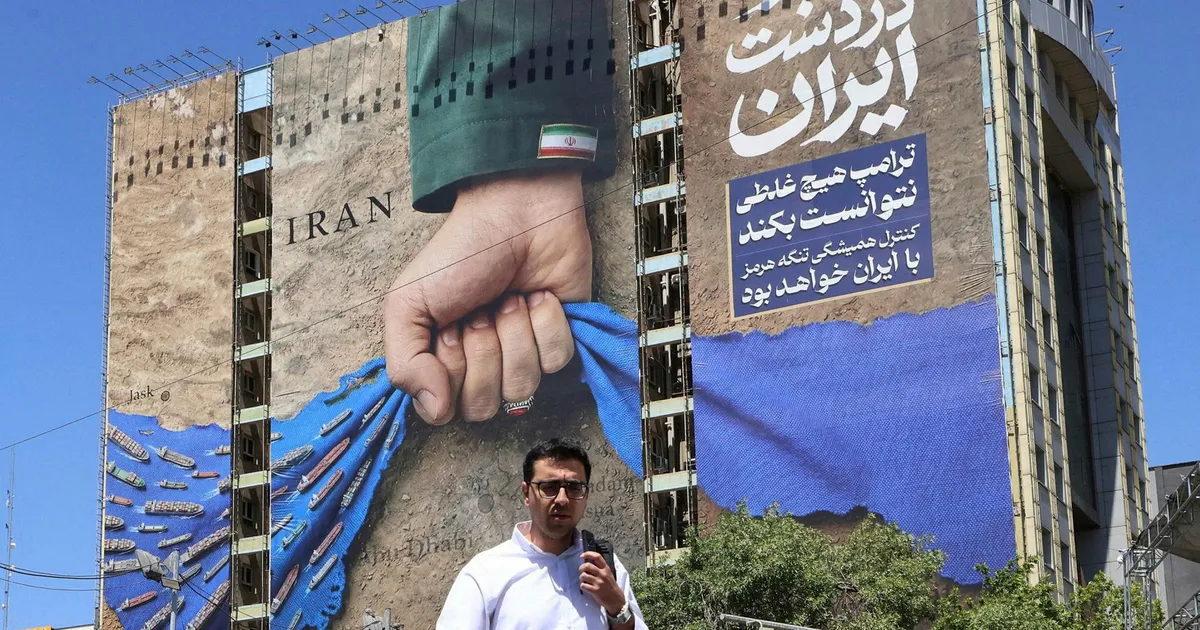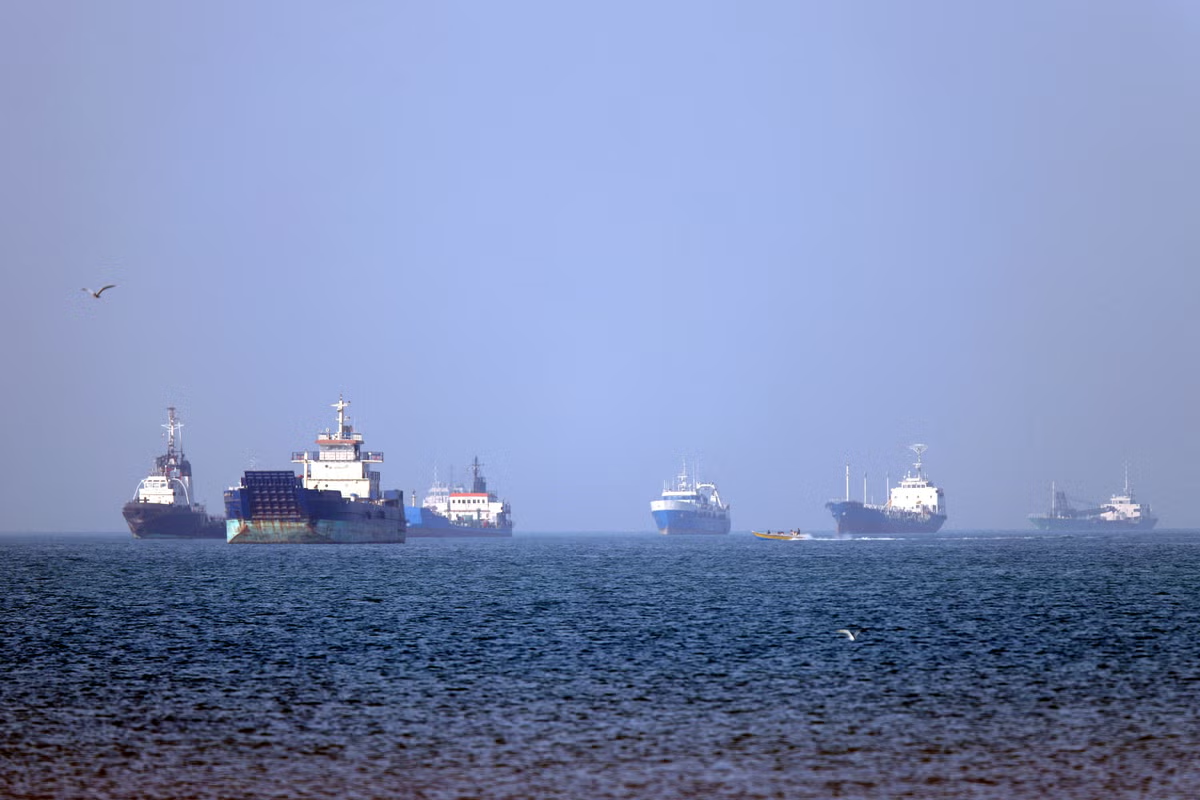
The demise of freedom of navigation across the global commons, a concept rooted in customary international law and codified in the 1982 United Nations Convention on the Law of the Sea, is an unintended consequence of President Donald Trump’s war on Iran, launched on Feb. 28.Iran’s closure on March 2 and the U.S. counterblockade on April 13 of the Persian Gulf chokepoint of the Strait of Hormuz reflected a rare point of agreement: shutting down the free flow of maritime energy trade was the key to inflicting sufficient economic pain to force the other party to negotiate a mutually acceptable resolution of the conflict.The reality is that both Washington and Tehran view freedom of navigation through the prism of their respective vital national interests.
Neither the United States nor Iran is a party to the UNCLOS. Although Iran signed the UNCLOS, it did not ratify the treaty. In fact, at signing, Tehran attached a reservation and declaration stating that it did not accept the UNCLOS formulation of the freedom-of-navigation provisions with respect to territorial waters and international straits. Moreover, the U.S. and Iran have different interpretations of customary international law as it applies to freedom of navigation.Ultimately, any agreement between the U.S. and Iran on the reopening of the Strait of Hormuz will reflect a bilateral understanding outside the framework of international law.The overarching U.S. interest with respect to the Persian Gulf is to ensure exclusive American control over access to the region’s oil and gas resources, not because these energy resources are vital for U.S. economic security but to safeguard Washington’s power to deny U.S. adversaries access to such resources.As the 2025 U.S. National Security Strategy declares, “We want to prevent an adversarial power from dominating the Middle East, its oil and gas supplies, and the chokepoints through which they pass while avoiding the “forever wars” that bogged us down in that region at great cost.”For the foreseeable future, the paramount U.S. adversary is China.According to the Pentagon’s 2024 report on China, despite its efforts to diversify energy suppliers, “Beijing will most likely continue to rely on oil and natural gas imports from Africa and the Middle East to meet energy demands for at least the next 10 years.” In 2023, China relied on imports of 11.3 million barrels per day to satisfy 70% of its oil requirements. The Persian Gulf accounted for 46% or 5.2 million barrels per day of such oil imports. By contrast, U.S. oil imports from the Persian Gulf amounted to a mere 0.5 million barrels per day.Clearly, the U.S. has, at most, a decade to secure exclusive control over access to Persian Gulf oil and gas resources. Albeit unstated, it is for this reason that Trump has rolled the dice in an effort to coerce Iran to submit to American hegemony. Failure will mean that the U.S. will no longer have the ability to credibly threaten China’s energy security.So far, Iran has withstood onerous economic sanctions imposed by the U.S. and its allies since 1979 and the 2026 American military onslaught. Tehran is counting on sufficient support from Moscow and Beijing to ensure a strategic stalemate. China has about $4 trillion of foreign exchange reserves, so Beijing has the capacity to help Iran stay afloat financially and avoid economic strangulation.China’s Achilles’ heel is its current reliance on Persian Gulf oil imports transported via tankers passing through U.S.-controlled maritime chokepoints. Certainly, it is unlikely Beijing will stand aside and allow China’s energy security to be threatened under the cloak of U.S. assertion of freedom of navigation in the Persian Gulf.Indeed, a key strategic rationale of China’s One Belt One Road initiative, launched in 2013, is to ensure secure, land-based energy trade corridors that would circumvent maritime trade corridors under the de facto control of the U.S. The China-Pakistan Economic Corridor, which, when completed, will connect Iran’s oil and gas fields to China via Pakistan, is a critical component of OBOR.IRAN JUST PUT MELANIA AND BARRON TRUMP ON ITS KILL LIST. AMERICA HAS ONLY ONE VIABLE RESPONSEIf the Pentagon assessment is correct, China is likely to achieve substantially its energy security objectives in the next 10 years.Ultimately, the U.S. will have to decide if Iran is an existential threat and whether any of the multiple reasons for launching and continuing the Iran war, including eliminating Tehran’s nuclear ambitions and capability to threaten freedom of navigation in the Persian Gulf, safeguard American vital national interests.Samir Tata is the founder and president of International Political Risk Analytics, an advisory firm based in Reston, Virginia, and the author of the book Reflections on Grand Strategy: The Great Powers in the Twenty-first Century.