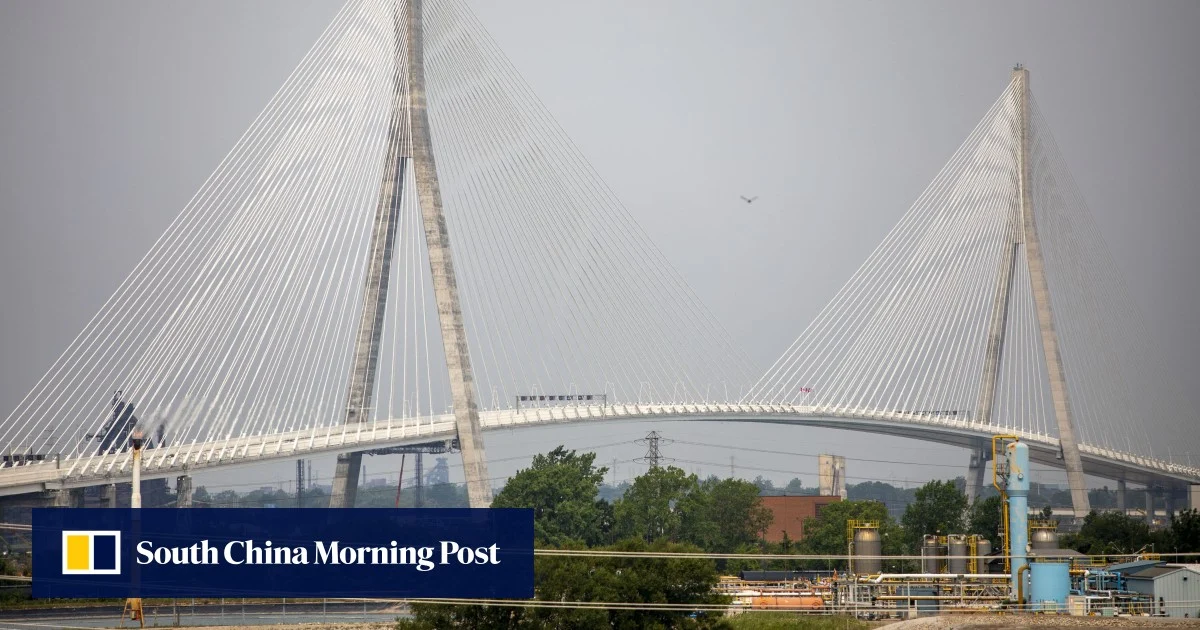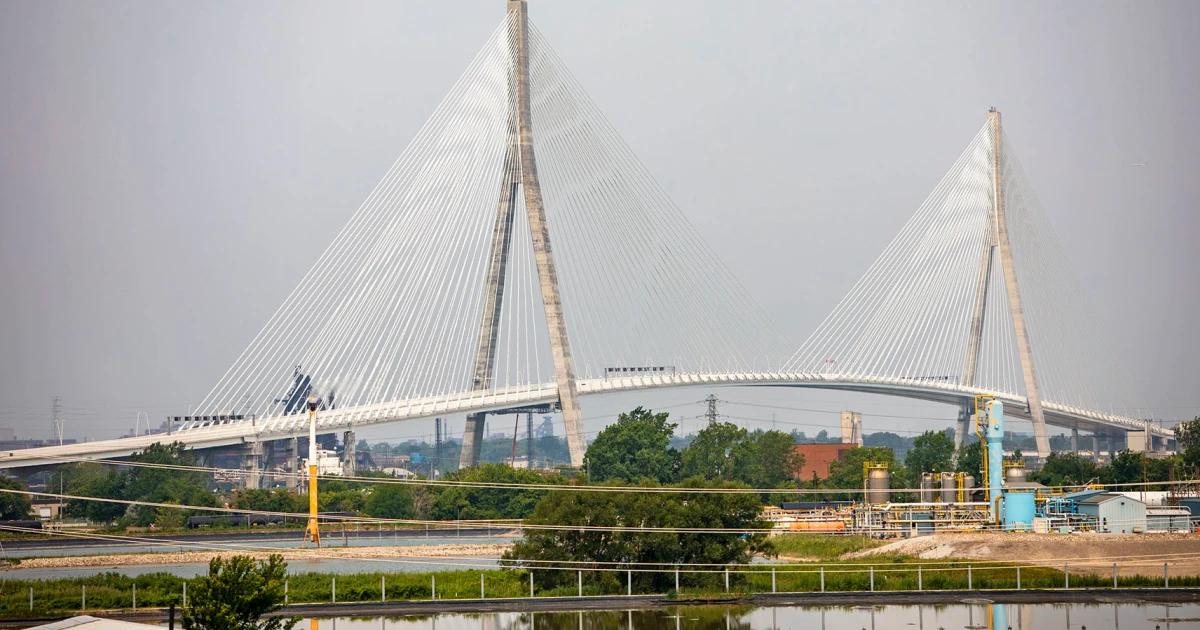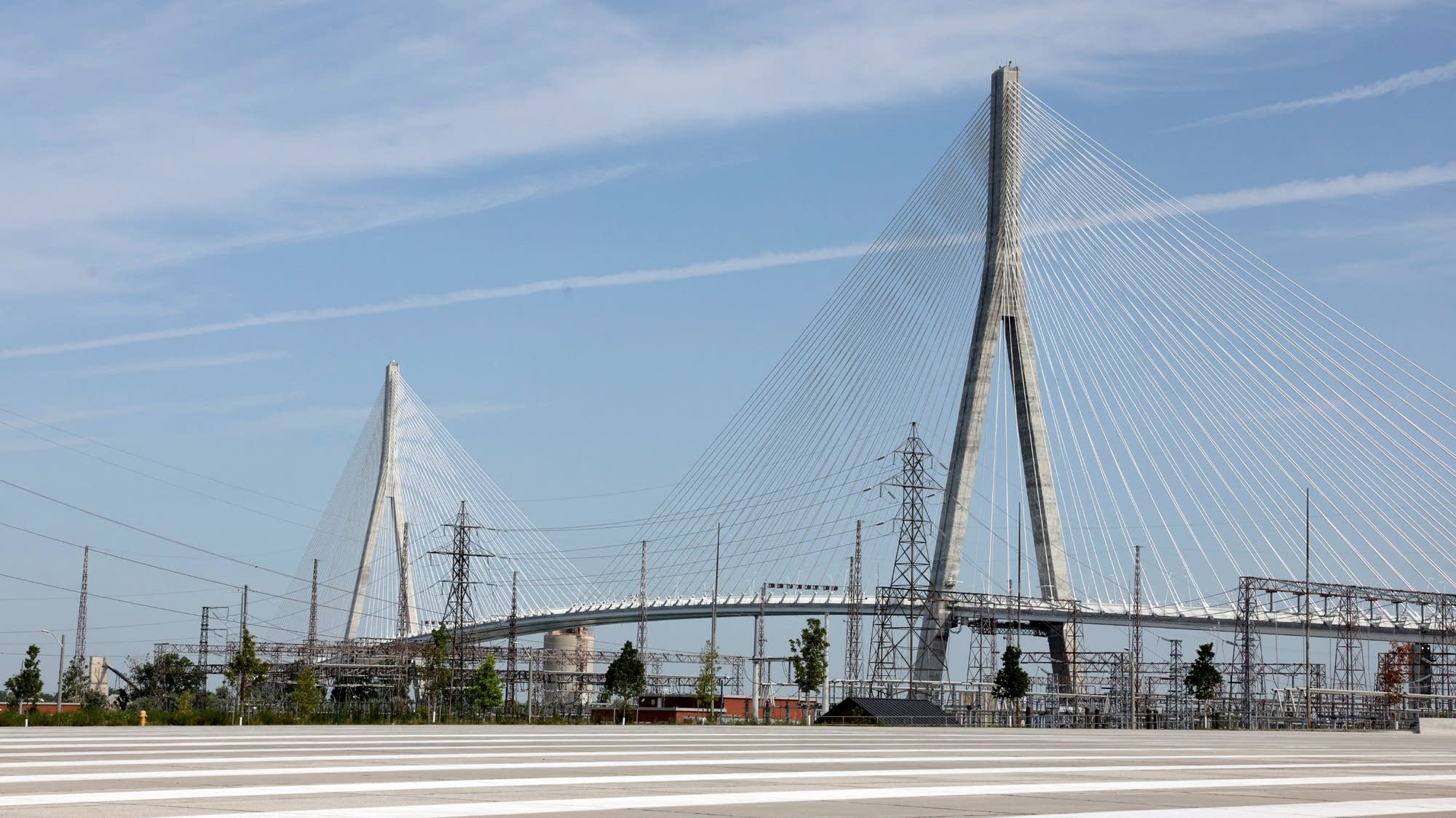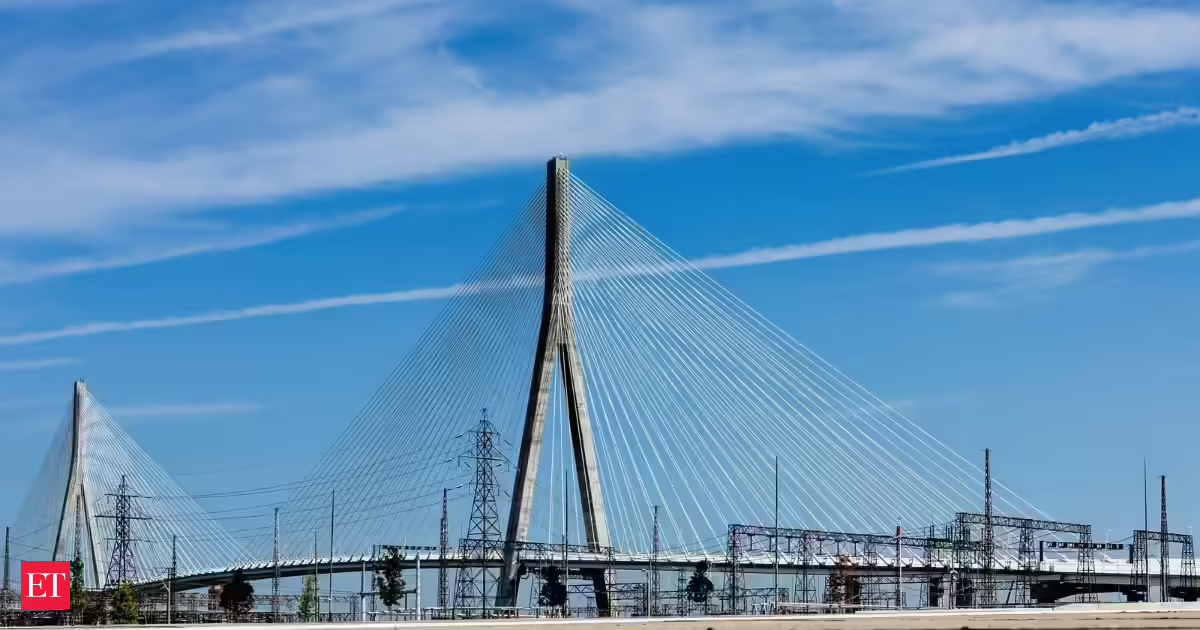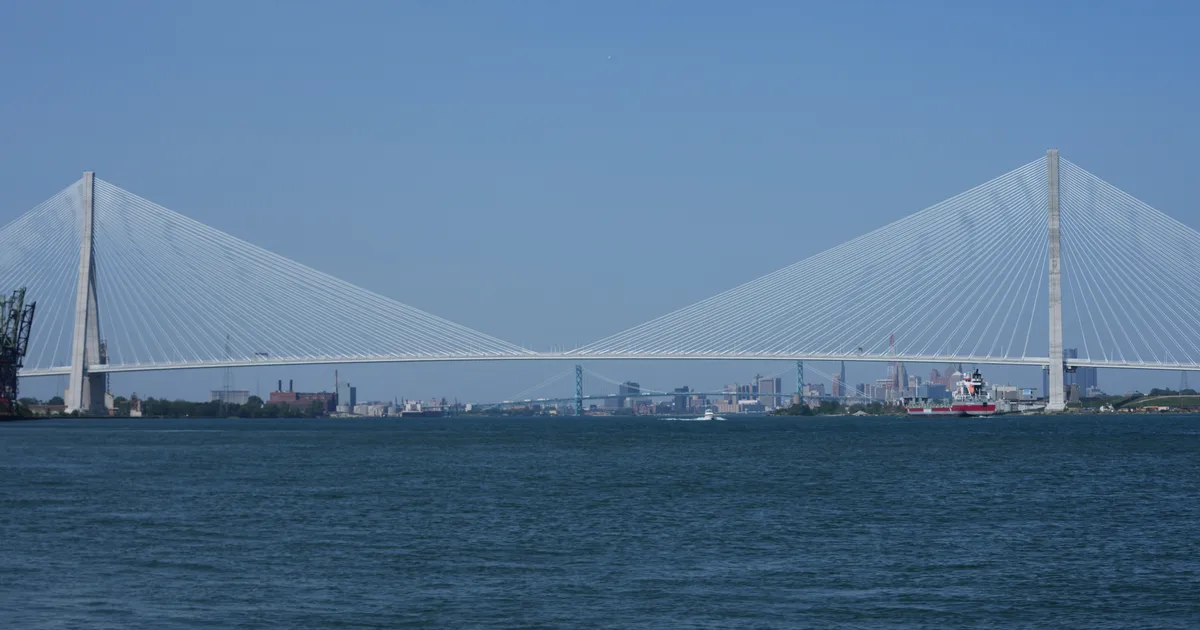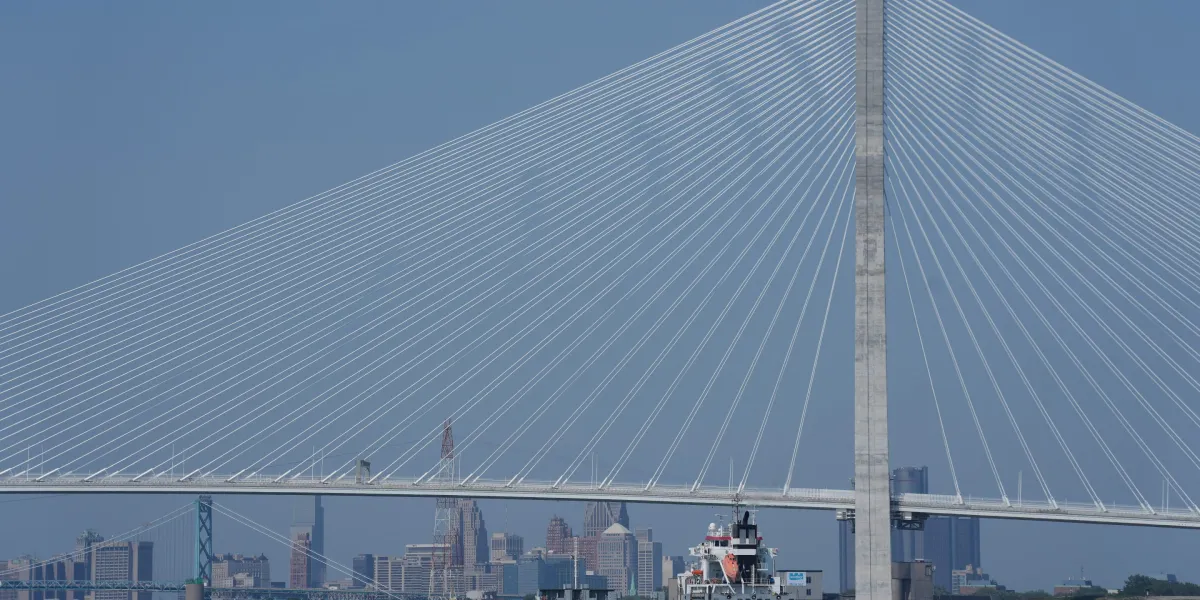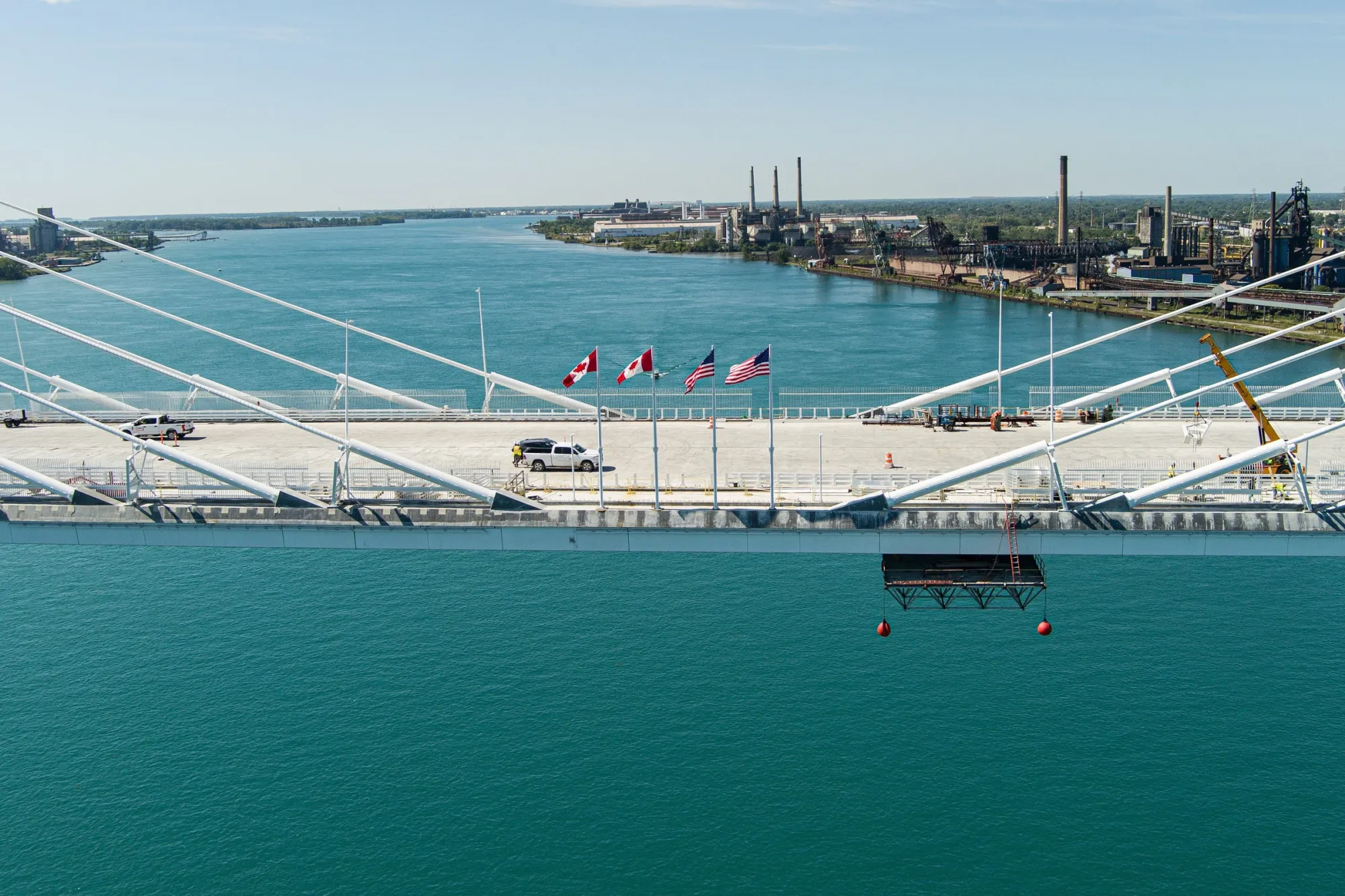
On the northeast edge of Michigan’s Upper Peninsula, nearly 1,100 people gathered in late June for the International Bridge Walk across the long span that links two cities with the same name: Sault Ste. Marie, Michigan, and Sault Ste. Marie, Ontario. Both the sun and the sentiments were bright.
“We don’t like to say there’s a border there, because we’re twin cities. We’re one family, the countries of Canada and the United States,” Don Gerrie, mayor of the Michigan Sault (pronounced “Soo”), told the crowd ahead of the annual walk.
He sported a black ballcap that he said was given to him by his counterpart in the Ontario Sault. It featured flags from both nations with the words “Stronger Together” and “Allies and Friends.”
Canadians in cheerful patriotic attire joined the bridge walk, with maple leaves tagging their scarves and socks, shirts and shorts. Americans came out in star-spangled T-shirts heralding the nation’s 250th birthday. But this lively tradition is clouded by an increasingly hostile relationship between the U.S. and Canada.
Traffic over the bridge is way down. And, in recent weeks, President Donald Trump threatened new tariffs in retaliation for thick wildfire smoke wafting into the U.S. When his administration announced an additional 50% tariff on an array of Canadian products, the White House cited “Canada’s discriminatory treatment of American products.” Then, using a separate mechanism, it hit Canada with a further 10% in tariffs.