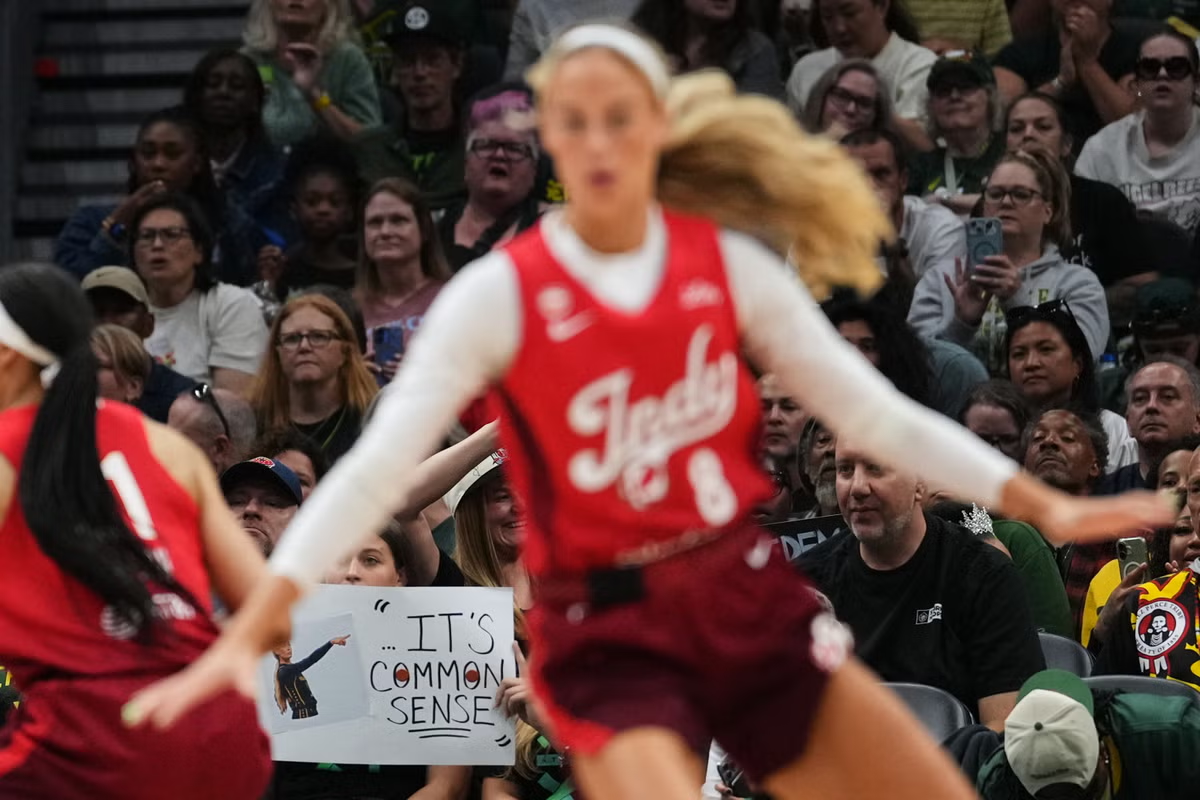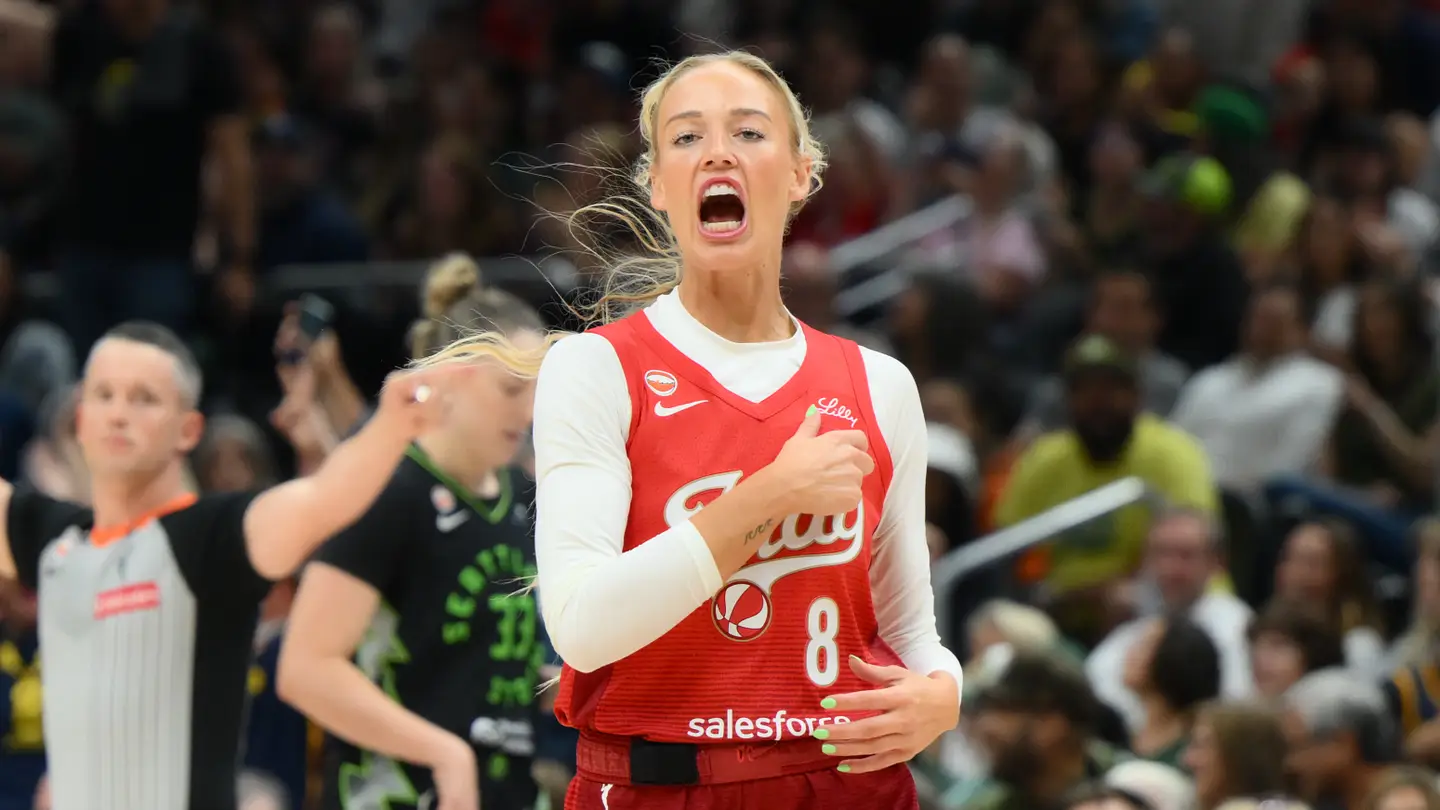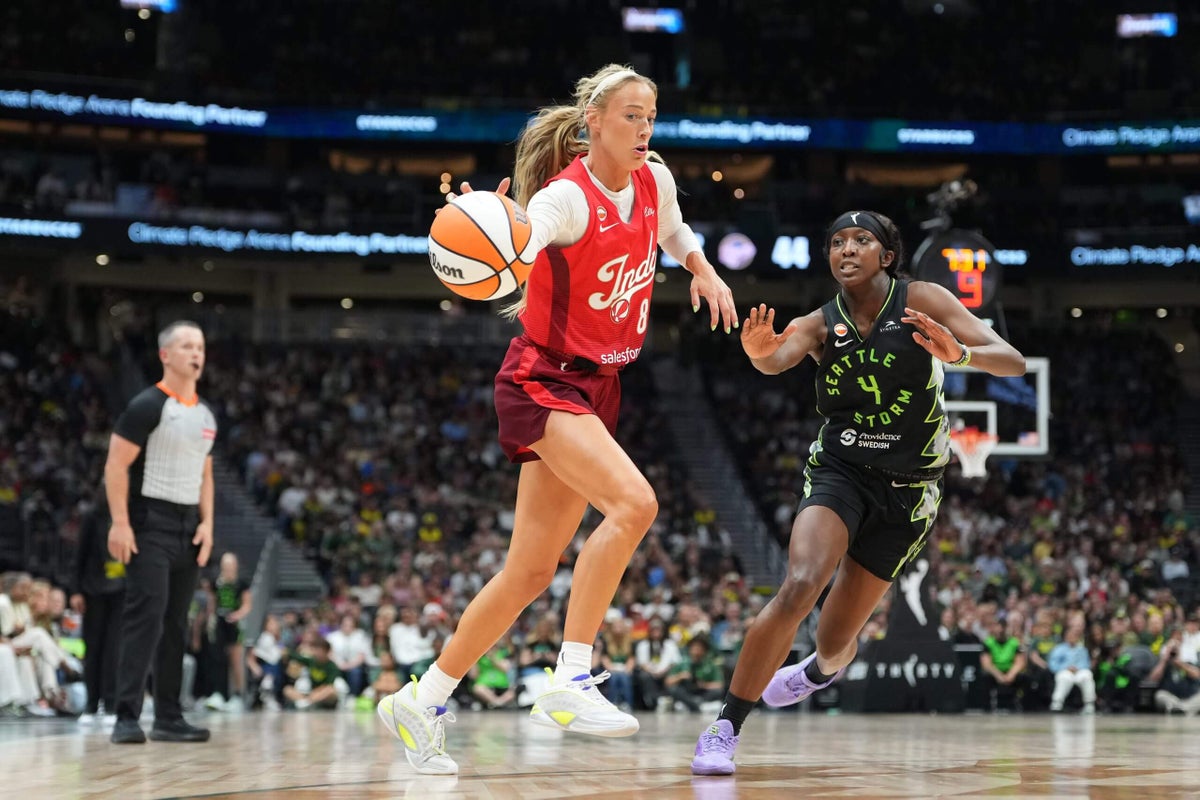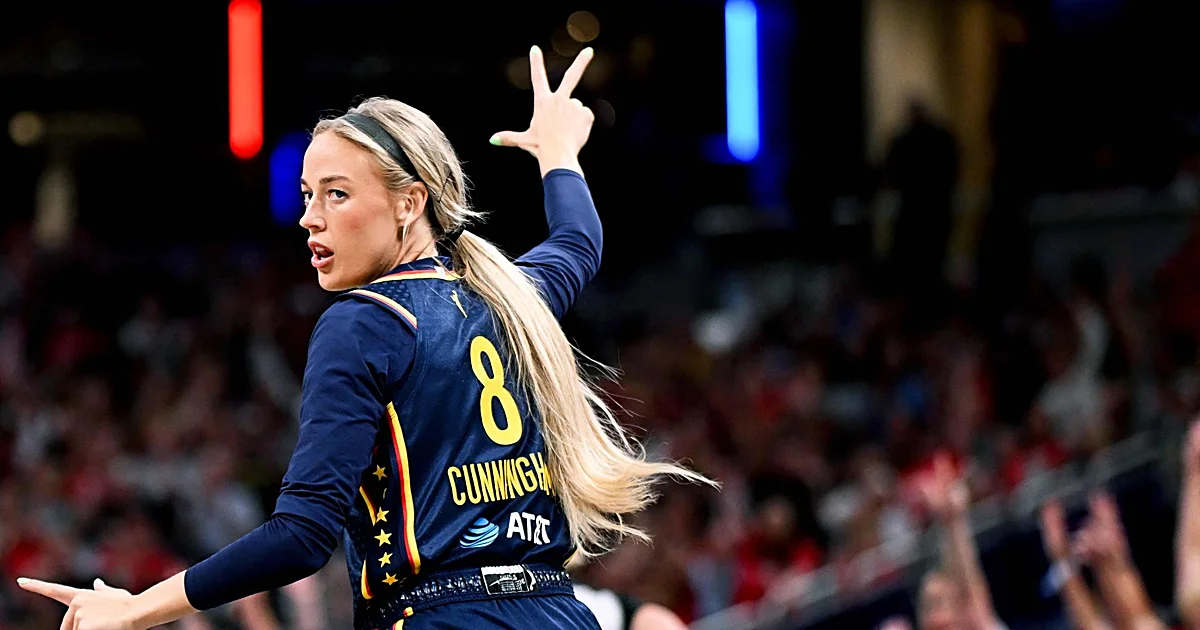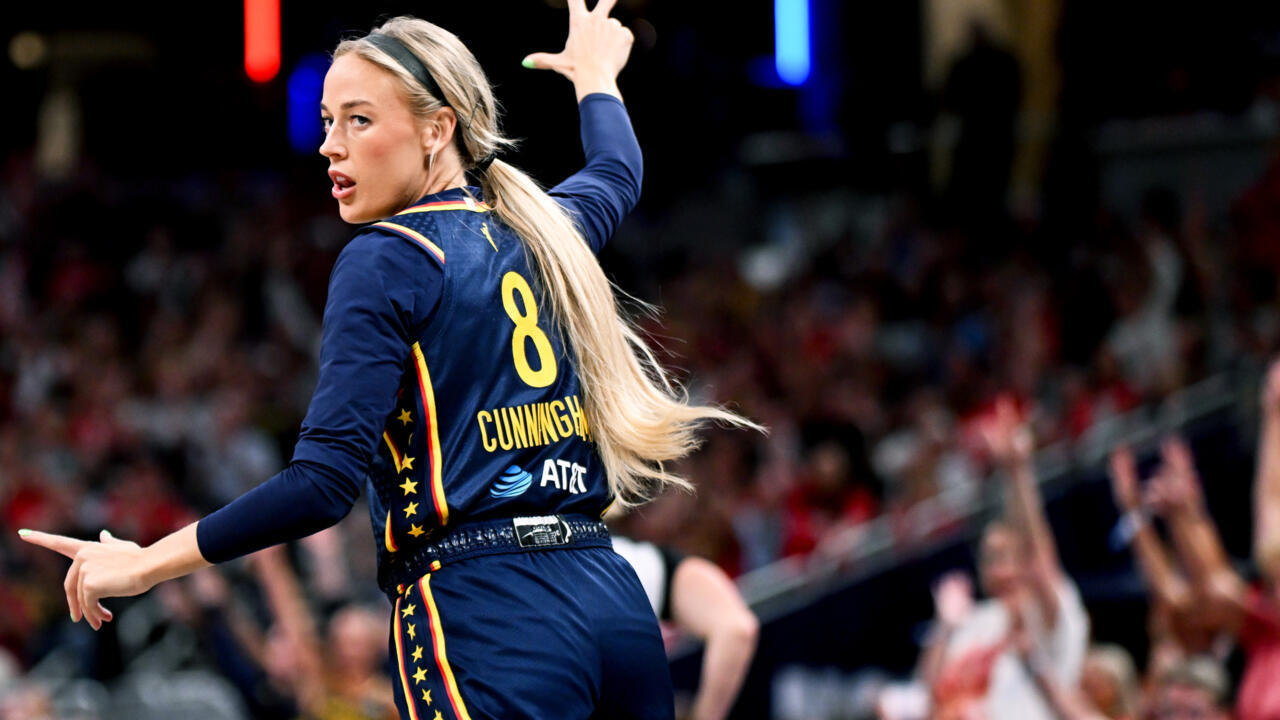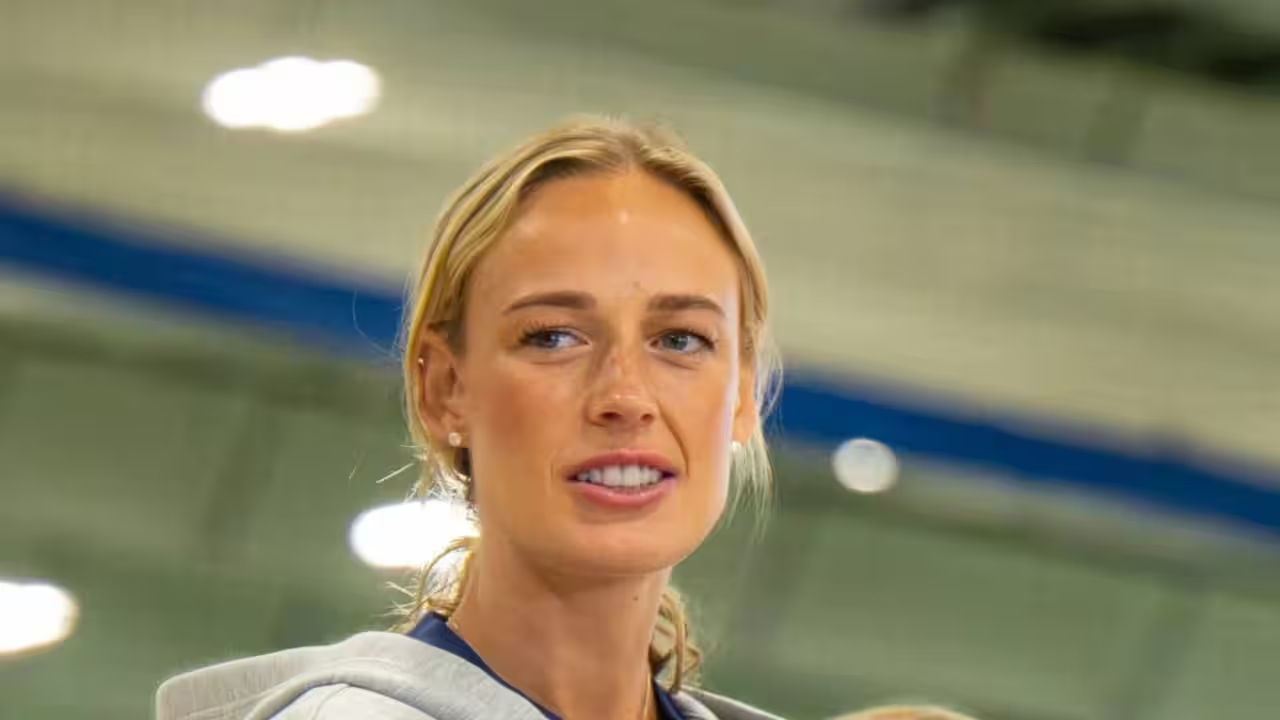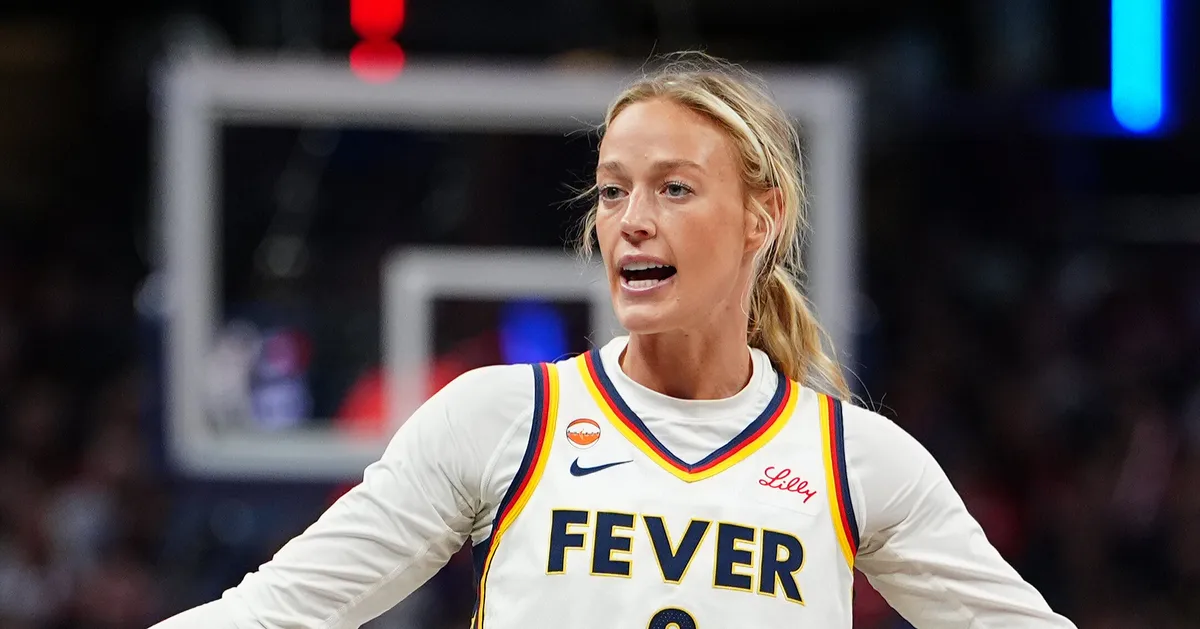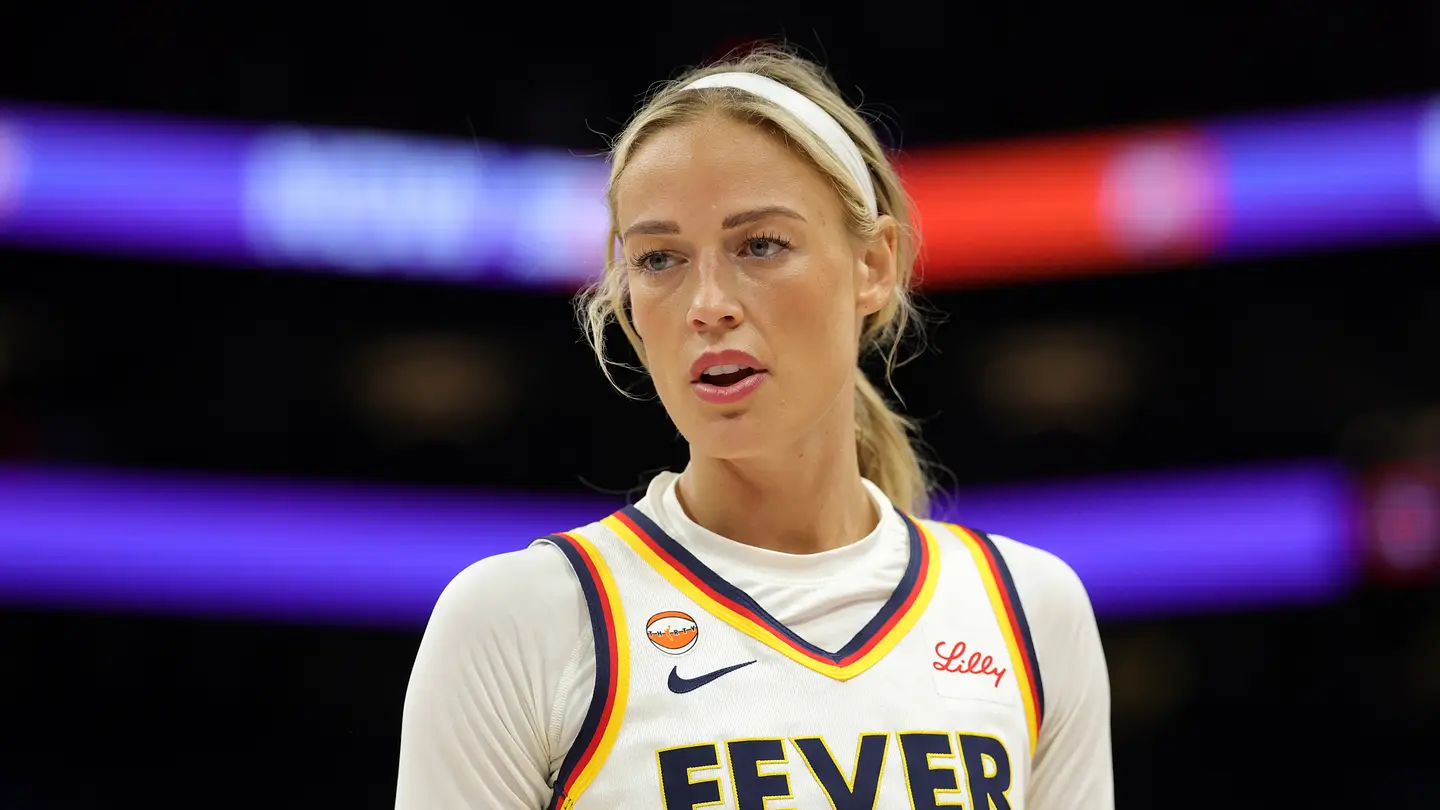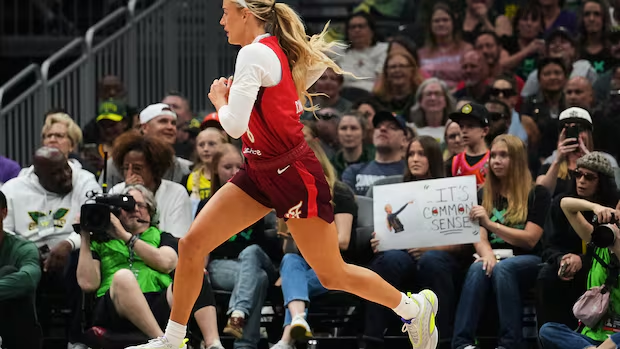
WorldIt started earlier this month, when Indiana Fever sharpshooter Sophie Cunningham ignited an online firestorm after an ESPN profile quoted her voicing support for barring transgender girls and women from women’s sports.League’s collision with U.S. culture wars unsurprising given rise in popularity, experts sayJayme Poisson · CBC News · Posted: Jul 31, 2026 4:00 AM EDT | Last Updated: 1 hour agoListen to this articleEstimated 6 minutesThe audio version of this article is generated by AI-based technology. Mispronunciations can occur. We are working with our partners to continually review and improve the results.Indiana Fever guard Sophie Cunningham runs by a fan holding a sign referencing her comments on transgender athletes and women's sports during the game against the Seattle Storm on Tuesday. (Lindsey Wasson/The Associated Press)The WNBA has been on a meteoric rise the last few years. It's so popular it just signed media rights deals worth $3.1 billion US. But with that explosion in popularity and cultural cache has come the projection of larger culture war issues onto the league.The latest? The debate over trans athletes in sports. It started earlier this month, when Indiana Fever sharpshooter Sophie Cunningham ignited an online firestorm after an ESPN profile quoted her voicing support for barring transgender girls and women from women's sports. "I think that I am here to extend love. But I also think, with that love is truth, being honest. And I want to protect young girls in a locker room, or young girls in sport who shouldn't have to go against biological men," Cunningham said. The issue — which has been a major point of contention in the U.S. for more than a year now after President Donald Trump signed an executive order preventing trans people from participating in women's or girls' sporting events — remained a focal point during Tuesday's matchup between the Fever and Seattle Storm. Poilievre backs J.K. Rowling's support for Olympic ban of transgender women from women's sportsBreaking down the IOC policy banning transgender women from female Olympic eventsRally outside game renews controversyOutside the arena, there was a small rally in support of Cunningham's comments and pushing for a proposal currently on the ballot in the state of Washington that would bar transgender students from competing in girls' athletics at school (the Supreme Court upheld similar laws in Idaho and West Virginia last month). Inside the arena, a Storm player wore a trans rights shirt ahead of playing. Cunningham was booed throughout the game, according to ESPN. And the co-owner of the Storm, Celeste Keaton, got suspended for five home games for allegedly cursing out two fans wearing t-shirts with XX and XY chromosomes in support of Cunningham. The Storm apologized for Keaton's comments and said in a statement: "Everyone who attends a Storm game deserves to feel welcome, and we remain committed to creating an inclusive environment where every fan is treated with respect." People rally to support Cunningham and her comments outside Tuesday's game. (Lindsey Wasson/The Associated Press)Cunningham weighed in as well, posting on social media: "Truly embarrassing of the co-owner. Unfortunately shows the type of leader she is." She also wrote, "I truly believe there is a safe space and love for EVERYBODY. Biological girls, biological boys, trans women, and trans men. Everyone is welcome at my table! You can disagree and still be kind." Scrutiny of WNBA intensifies as mounting discord around the league looms over all-star festivitiesTrump bans transgender female athletes from women's sports in new executive orderThe events at the Tuesday game and Cunningham's initial comments have been fodder on Fox News. White House spokesperson Karoline Leavitt also weighed in, saying it was "astonishing" to see the backlash Cunningham was receiving from "Democrats and left-wing figures across the country." "Men should not be playing in women's sports. It's completely ludicrous that anyone could support that."More people gathered in support of Cunningham outside the game Tuesday. (Lindsey Wasson/The Associated Press)Politics 'a lightning rod'Trans rights has been a longtime pet issue for the Trump White House. In the lead up to the 2024 election Trump ran an ad attacking Kamala Harris's support for gender-affirming care for trans people. The campaign focused on NFL and college football. "I think anything political from an athlete right now, particularly around race, around transgender issues, it's going to become a lightning rod right now," said Molly Yanity, the director of the sports media and communication program at the University of Rhode Island. She said Cunningham is particularly high profile and on social media, including Reddit, has earned the nickname "MAGA Barbie" — fair or not. "[Cunningham] hasn't really come out with any, let's say, progressive, kind of politics. So I think that the absence of her saying anything opens the door to assumptions that she is on the other side of that." U.S. Supreme Court upholds Idaho, West Virginia laws banning transgender women athletes from women's sportsMegan Rapinoe says AI flagged her as a brand 'risk' over trans rights advocacyWhile the Indiana Fever came out saying neither the organization nor Cunningham had any knowledge of the demonstration at the arena Tuesday, Alejandra Caraballo, a clinical instructor at the Harvard Law Cyberlaw Clinic who frequently speaks about trans rights, sees the WNBA's suspension of the Storm's co-owner as a kind of green light for protesters to keep bringing politics to the sport. "They're saying they're there to support Sophie, but what they're really there to do is support a transphobic message," she said. "They're intentionally trying to go to these events to get reactions to film and create content and further this controversy and bring attention."Not WNBA's first brush with controversyThis isn't the first time the WNBA has found itself at the nexus of American culture wars. Phoenix Mercury forward Alyssa Thomas said she had received death threats and been called racial slurs for making contact with star player Caitlin Clark's throat during a game in June. Republican lawmakers have recently fuelled the controversy by writing a letter in early July saying they were concerned by reports that "attacks against Clark may be racially motivated." Attendees at Tuesday's game hold a sign referencing Cunningham's comments. (Steve Bisig/Imagin Images/Reuters)Yanity thinks a lot of the controversy is being drummed up by fans, not the players. And then are being discussed ad nauseum on social media. "It has become a very, very toxic place where threats of violence have been made against specifically the Black players." The league has faced criticism that they are not doing enough to protect players from the online onslaught. Last week, WNBA commissioner Cathy Engelbert called the online abuse "unacceptable," saying "The racism, the misogyny, the homophobia, the harassment, and threats directed to our players, has no place in sport or anywhere else."The WNBA did not immediately respond to a request for comment from CBC.WATCH | Supreme Court upholds U.S. laws banning trans athletes:SCOTUS upholds laws banning trans athletes from women's school sportsJune 30|Duration 1:16The U.S. Supreme Court ruled in favour of overturning the decisions of lower courts that found laws in Idaho and West Virginia banning transgender athletes from competing in women's sports at the school level violated the U.S. Constitution and a federal anti-discrimination law. The 6-3 ruling to uphold the laws in Idaho and West Virginia opens the pathway for as many as 29 other states to pursue laws that limit the participation of trans athletes in women’s sports.Ultimately, said Yanity, this is a league that has seen explosive growth over the last several years. "It used to be that you'd have to search high and low to find the games. [Now] they are all readily available and at your fingertips. … These social aspects of the game are also being analyzed." To add to that, she said politics are inherent to women's sport, pointing to the fact that it took an act of Congress in the U.S. and a president's signature for women to even get on the court and have a somewhat even playing field. "Everything about a woman's existence, and particularly a Black woman's existence, is political."With files from Brian Vinh Trinh
Debate over trans athletes overtakes WNBA | CBC News
It started earlier this month, when Indiana Fever sharpshooter Sophie Cunningham ignited an online firestorm after an ESPN profile quoted her voicing support for barring transgender girls and women from women’s sports.
1,345 words~6 min read