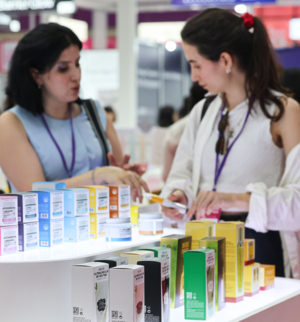
18-month wait looms for K-beauty firms who will still need US-specific formulas Cosmetic products are available to sample at a beauty exhibition in Seoul in May. (Newsis) The US Food and Drug Administration's recent approval of its first new sunscreen ingredient in decades is like a flashing green light for South Korea, long practiced in the art of sunscreen, though it may not be quite as green as it seems.The agency approved bemotrizinol, or BEMT, the first new sunscreen active ingredient since the late 1990s, by amending the existing sunscreen monograph, with the new rules to take effect Aug. 9.In the US, sunscreens are regulated as over-the-counter drugs, and the monograph allows products to reach market without individual approval as long as they comply with the rules set for that drug category."Bemotrizinol has been used safely in Europe for decades, and FDA's action will increase competition and consumer confidence in sunscreen products," Robert F. Kennedy Jr., secretary of the US Department of Health and Human Services, said in a statement. An official from the Korea Cosmetic Industry Institute said bemotrizinol, an organic ultraviolet filter, offers strong UV-A protection and a moisturizing feel that are key to K-suncare's light texture, and that the no-white-cast, lotionlike finish Americans favor comes from filter blends that include the ingredient.But the approval comes with a catch that limits who can actually use it, at least for now.Under the Federal Food, Drug and Cosmetic Act in the US, DSM Nutritional Products, the company that requested the new ingredient, along with its licensees and assignees, is to enjoy 18 months of marketing exclusivity from the effective date.Any company hoping to sell a bemotrizinol-based sunscreen during that window would need to source the ingredient through DSM-Firmenich or secure a license, giving the company practical control over supply and marketing.Alongside the supply chain issue, others noted that even once the exclusivity window closes, many Korean formulas would still fall short of full compliance."The US classifies sunscreen as an OTC drug, not a cosmetic, forcing Korean brands to develop separate, heavier, less protective US-specific formulas," said one industry official. "Approving bemotrizinol alone does not mean Korean sunscreens can now be exported to the US as-is."Korean sunscreens often pair bemotrizinol with other next-generation filters, such as diethylamino hydroxybenzoyl hexyl benzoate and ethylhexyl triazone, which remain unapproved in the US. Even with bemotrizinol's addition, the FDA's approved list will grow to 17 active ingredients, far short of the 31 Korea permits.Despite the hurdles, some analysts see the odds tilting toward major Korean contract manufacturers, all the more so since the US stands as Korea's biggest cosmetics buyer, accounting for more than a fifth of total shipments in the first half of 2026.Korea Kolmar, for instance, sees the approval as a head start, pointing to its existing R&D on bemotrizinol and a second US plant, dedicated to skincare and suncare, that already holds DA OTC manufacturing certification.Earlier in July, Englewood Lab, the American arm of Cosmecca Korea, Korea's third-largest cosmetics original design manufacturer, showcased a bemotrizinol-based suncare formula at a US beauty trade show."BEMT is becoming a key next generation ingredient in US suncare," an Englewood Lab official said. "We will keep building our role as a strategic partner helping clients break into the US market, backed by our domestic manufacturing, OTC experience and R&D capabilities."
US FDA clears new sunscreen ingredient. K-beauty's turn is still ahead
The US Food and Drug Administration's recent approval of its first new sunscreen ingredient in decades is like a flashing green light for South Korea, long prac
554 words~3 min read