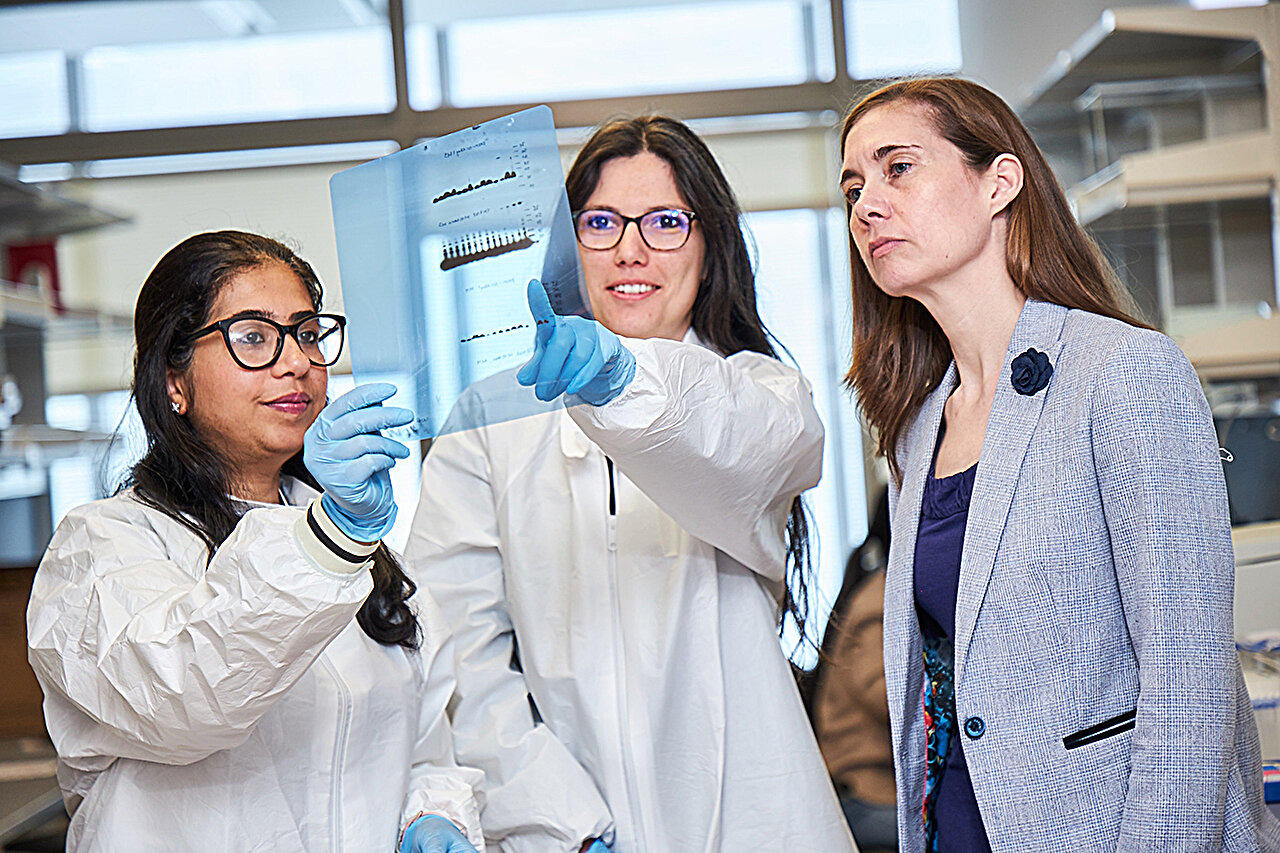
(On Right) Dr. Katherine Aird with members of her lab. Credit: The Wistar Institute
A new study from The Wistar Institute has uncovered an unexpected link between fructose—a common dietary sugar—and the spread of an aggressive form of ovarian cancer. Published in Nature Aging, the study found that cancer cells not killed by chemotherapy send signals to neighboring tumor cells, helping them become more capable of spreading.
The researchers identified fructose as a key messenger in this process, revealing a previously unrecognized way that treatment-surviving cancer cells may promote the spread of cancer.
"Some cancer cells that survive chemotherapy aren't dividing anymore, but they're still biologically active," said Aidan Cole, a postdoctoral fellow in the lab of Katherine Aird at The Wistar Institute and first author of the study. "Instead, they continue to release molecules that send signals to nearby cells. Our study is among the first to show that a nutrient—in this case, fructose—can act as one of those signals."
Ovarian cancer is treated almost universally with platinum-based chemotherapy, and many patients respond well at first. However, the disease recurs in most patients and almost always spreads through the abdominal cavity. That spread, called metastasis, accounts for roughly 90% of deaths from the disease.