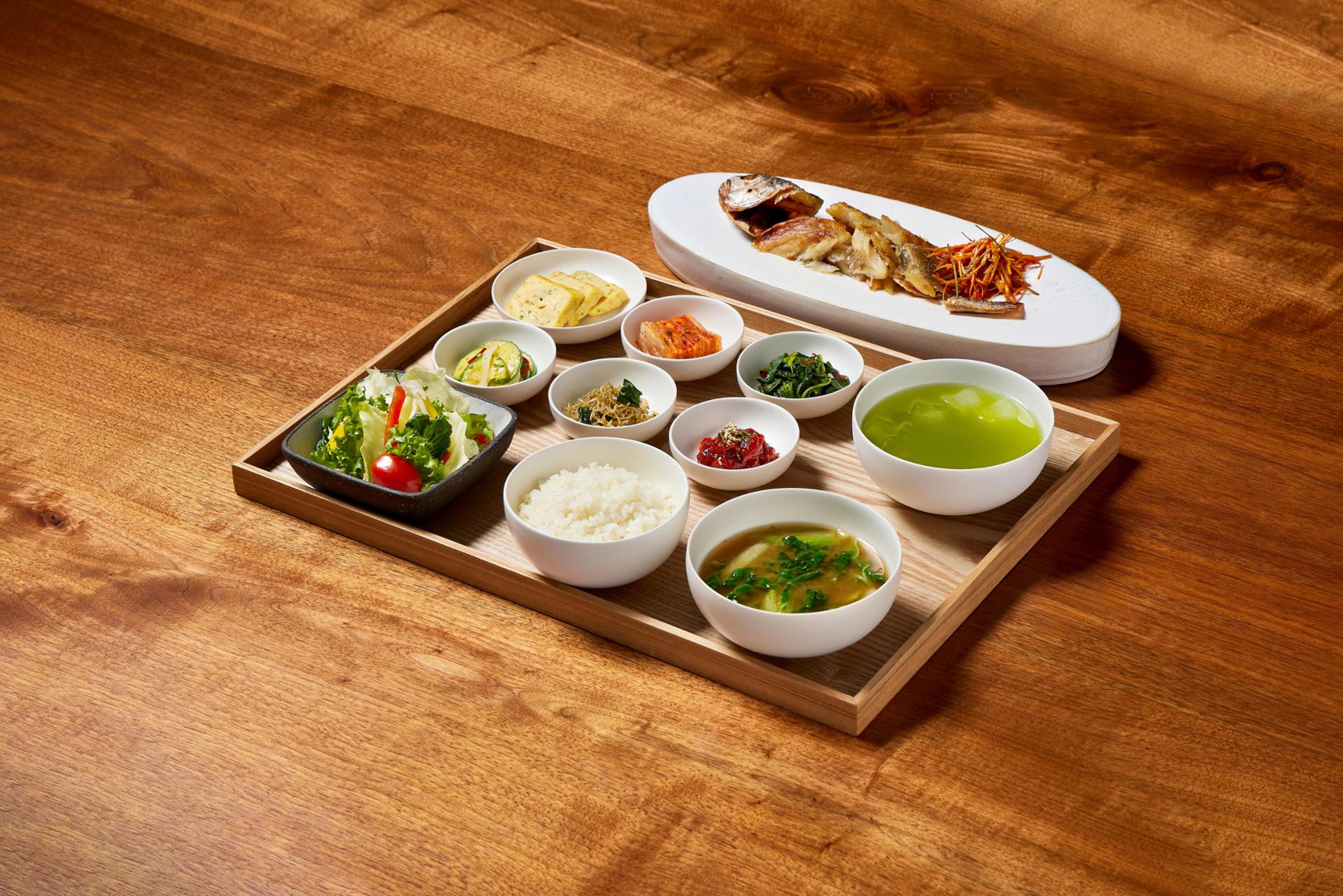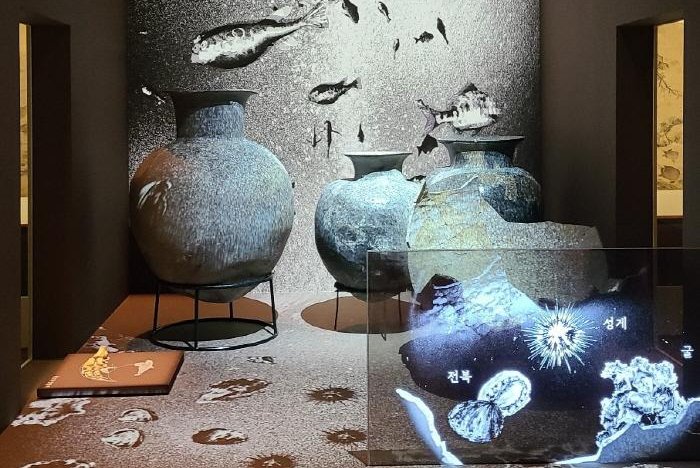
An exhibition traces the history of Korea's most iconic utensil Installation view of "The Korean Table: Food, Nature, and Life" at National Museum of Korea (NMK) Few everyday objects appear as often in Korean expressions as the spoon.Among them are the instruction to “not lift your spoon before the eldest person at the table begins eating,” a well-known rule of dining etiquette, and the saying to “put one’s spoon on (the table),” a reference to placing your spoon on a meal that someone else has prepared, meant as a criticism of someone who jumps in at the last minute to take credit for someone else’s work.More recently, the terms “gold spoon” and “dirt spoon” have become widely used metaphors for the socioeconomic circumstances into which a person is born.Why has an ordinary utensil become so deeply embedded in Korean culture? The answer begins at the dining table. Metal spoons from the 20th century on display at the National Museum of Korea in Seoul (NMK) “Korea developed a dining culture centered on the spoon. Although chopsticks were also used, there was a strong tendency to prioritize the spoon,” said Kim Min-cheol, an associate curator at the National Museum of Korea. Kim curated the museum’s new exhibition “The Korean Table: Food, Nature, and Life,” the first-ever comprehensive exhibition on Korean dining culture.The spoon's role as the primary dining utensil distinguishes Korea from neighboring China and Japan, where rice is commonly eaten with chopsticks and spoons are used mainly for soups or broth-based dishes, according to Kim.“Among East Asian countries, Korea is unique in using a spoon as the primary utensil for eating both rice and soup,” he said.A traditional Korean meal is typically built around rice served on the left, soup on the right, and an array of side dishes. In this setting, both the spoon and chopsticks are used throughout the meal, with the spoon used not only for soup but also for rice.Korean staples such as bibimbap further illustrate the central role of the spoon.Rather than picking up individual ingredients with chopsticks, diners thoroughly mix rice, vegetables, meat and sauce before the spoon becomes the primary utensil for eating the dish. Metal spoons inscribed with "Cheongye Samnyeon," referring to 1623 during the Joseon era, are shown at the National Museum of Korea in Seoul. (NMK) Scholars have proposed various explanations for why a metal spoon became Korea's primary dining utensil.One theory links its widespread use to the country's soup-centered dining culture, in which soup has long been an essential part of the meal.“Few foods are as diverse as the soup in Korean cuisine. They can be broadly divided into animal-based soups made with meat or fish and vegetable-based soups prepared with a wide variety of greens,” Jung Hye-kyung wrote in the exhibition catalogue published by the National Museum of Korea.“Metal spoons were not only more hygienic and durable, but also made it easier to eat hot broth ... their widespread use was ultimately the result of a food culture centered on soup-based dishes,” Jung wrote. A bronze spoon used by Korea’s royal court (middle) and historic spoons are shown at the National Museum of Korea in Seoul. (NMK) The history of the Korean spoon stretches back more than a millennium. Metal spoons have been unearthed from sites dating to the Three Kingdoms period. The design of the Korean spoon evolved over the centuries.While brass spoons were common during the Goryeo and Joseon periods, Goryeo spoons were distinguished by slender, elongated handles, many ending in swallowtail-shaped tips. The bowl curved upward in a gentle S-shape.By the Joseon period, the spoon had taken on a shape more familiar today. In "Yeolha Ilgi" (The Jehol Diary), an 18th-century travelogue by scholar Park Ji-won, the bowl of a Korean spoon was described as resembling a “small willow leaf.” Spoons from the Goryeo period (NMK) In the 20th century, stainless steel gradually replaced brass in many households as it was more affordable, durable and easier to maintain. Today, spoon-and-chopsticks sets are among the most popular gifts for housewarmings and first birthdays.“Although the shape of the spoon has evolved over time, one feature has remained remarkably consistent: its shallow bowl,” Kim said. “That makes it easy to eat not only soup, but also grains of rice with each spoonful.” Modern Korean spoons (National Folk Museum of Korea)
How spoons became part of Korean culture
Few everyday objects appear as often in Korean expressions as the spoon. Among them are the instruction to “not lift your spoon before the eldest person at the
721 words~3 min read