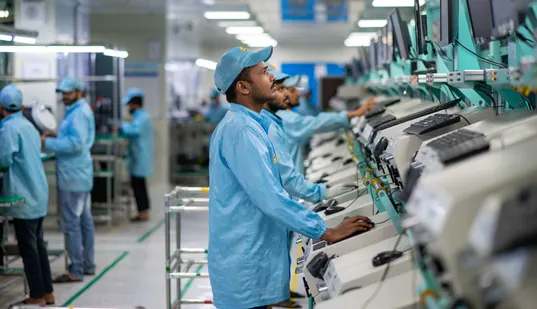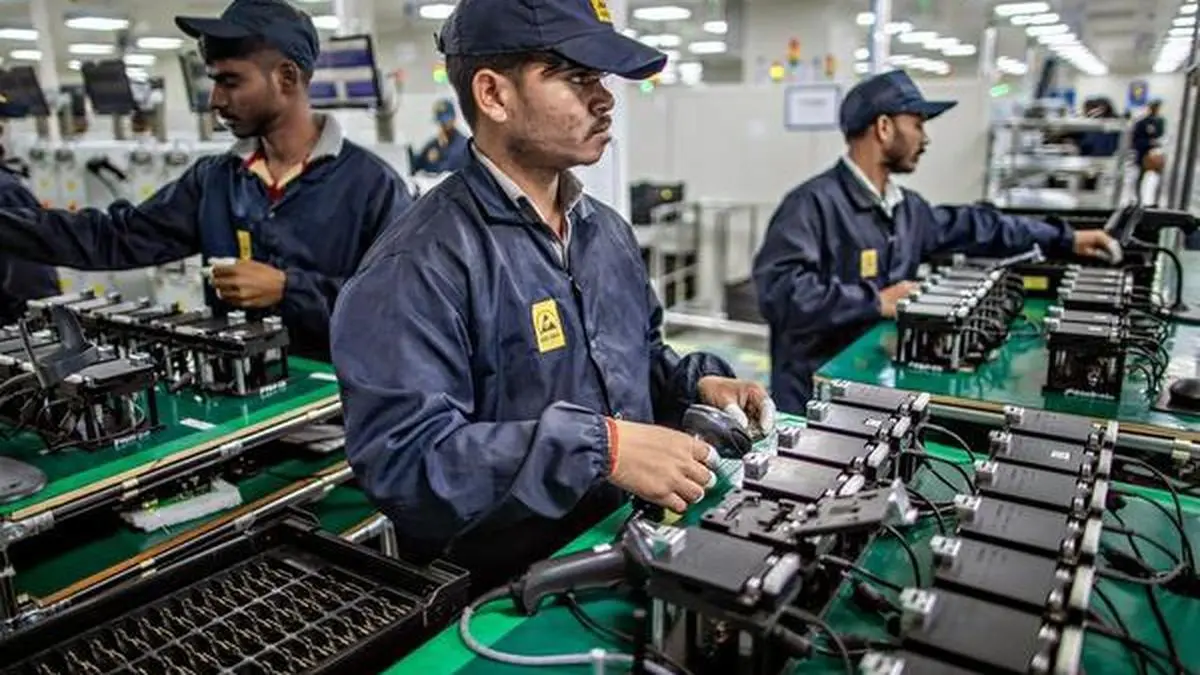
India’s transition into a digital-first economy is a globally lauded achievement in economic democratisation. Powered by robust Digital Public Infrastructure (DPI), unified payments, and direct welfare transfers, we have brought hundreds of millions into the formal economy.Yet a silent crisis is brewing at the structural entry point of this revolution: the humble budget smartphone. Driven by “memflation” — the global surge in the cost of memory modules, display drivers, and raw semiconductor components — the threshold of digital inclusion is shifting rapidly out of reach for the masses.For years, the success of Digital India rested on an unwritten reality that the market could reliably supply capable 5G smartphones for around ₹10,000, and fully equipped entry-level options for ₹12,000. Today, component cost inflation, especially memory, has triggered price increases of up to 40 per cent on specific models, with a steady 20 per cent surge hitting the mass market.A joint study by Trakin Tech and Techarc highlights the severity of this shift, revealing that nearly 54 per cent of consumer demand for upcoming device purchases is at active risk as buyers defer upgrades. This is not a mere consumer grievance. It is a systemic threat to digital equity.The arithmetic of this hardware crunch points to a looming digital divide. Roughly 40 per cent of India’s active smartphone user base depends on devices priced below ₹10,000. By their very nature, these ultra-affordable handsets are built with tight lifespans, rarely lasting beyond three years of intense service. If current inflationary trends hold, market intelligence indicates the floor price for a brand-new, bare-minimum smartphone will hit ₹15,000, while a reliable user experience will demand an investment of at least ₹18,000. For a vast section of the population, the entry ticket to the nation’s digital public infrastructure is becoming an unaffordable luxury.‘Tactical’ fixesWhenever economic friction threatens consumer accessibility, the default policy playbook points to tactical, fiscal adjustments. Calls for GST rationalisation on smartphones, tariff reductions on sub-components, or expanded financing facilities like NBFC-backed micro-loans frequently dominate the discourse.While valuable, these measures fail to solve the underlying problem. Lowering consumption taxes or cushioning upfront device costs through operator bundling simply delays the inevitable. They treat the symptoms of inflation without altering our fundamental vulnerability.The harsh reality is that India remains a master of electronic assembly, not manufacturing. Our local operations run on razor-thin assembly margins, fully exposed to the cyclical price hikes of global foundry utilisation, semiconductor wafer allocation, and foreign proprietary technology.To permanently shield our digital baseline, we must move from policy-level tactical fixes to deep, structural supply chain interventions. We must control and own the component ecosystem.Moving beyond assemblyThe core challenge of the current inflationary wave lies inside the device’s bill of materials (BOM). If India wants to command pricing gravity at the entry-level tier, it must secure deep supply chain ownership across three structural nodes.Accelerating Domestic Silicon and Memory OSAT: The most painful contributor to the current hardware crunch is memory shortages. Building leading-edge semiconductor fabrication plants remains a long-term goal, but India’s immediate operational victory lies in Assembly, Testing, Marking, and Packaging (ATMP) and Outsourced Semiconductor Assembly and Test (OSAT) facilities.Under the India Semiconductor Mission (ISM), our policy focus must prioritise anchoring memory packaging and test lines specifically optimised for budget platforms. By locally packaging imported silicon wafers into finished memory configurations, India can break free from foreign component markups and insulate entry-level hardware from global supply shocks.Deep Component Indigenisation: True electronic independence means moving far beyond plastic back-panels and charging cables. Under localised manufacturing frameworks, the focus must shift aggressively toward complex sub-assemblies.India needs localised production of multi-layered Printed Circuit Boards (PCBs), display driver modules, and complex camera sub-assemblies. The local manufacturing ecosystem must extend the same vertical integration it has achieved in device assembly — where domestic players have steadily narrowed the gap with global giants in scale — down to the component layer itself.Alternative Supply Networks and Regional Sourcing Hubs: Until full domestic production is achieved, India must use its geopolitical and trade leverage to build highly resilient, diversified sourcing networks.Instead of relying on single-source geographic dependencies for vital materials, our trade frameworks should focus on building robust co-dependency agreements with alternative manufacturing corridors across South-East Asia. Securing raw materials and specialised sub-components through diversified, long-term state-to-state supply agreements can effectively buffer local assemblers against sudden price spikes in any single market.Ensuring a sustainable DPIIf we allow the entry threshold for standard hardware to escalate unchecked, the democratic foundation of our entire digital infrastructure begins to fracture. Micro-transactions via UPI power the economic baseline of our informal markets, app-based systems authenticate critical direct welfare transfers, and mobile services deliver vital governance directly to our citizens. These essential national services cannot function without affordable user hardware.Digital inclusion must be fiercely protected as a public utility, not treated as a fluctuating consumer trend. If the basic gateway tool required to access the digital state outpaces the purchasing power of our lowest income quartile, the entire system begins to stall.By pivoting our policy focus away from short-term financial subsidies and steering it toward structural supply chain ownership, India can build a resilient, self-contained electronics ecosystem. Ensuring long-term hardware affordability is no longer just an industrial target — it is an economic necessity to keep the foundation of Digital India secure.The writer is Chief Analyst and Co-founder, TecharcPublished on July 31, 2026
The fragile base of digital India
From being a smartphone assembling nation, we must move towards structural supply chain ownership
889 words~4 min read