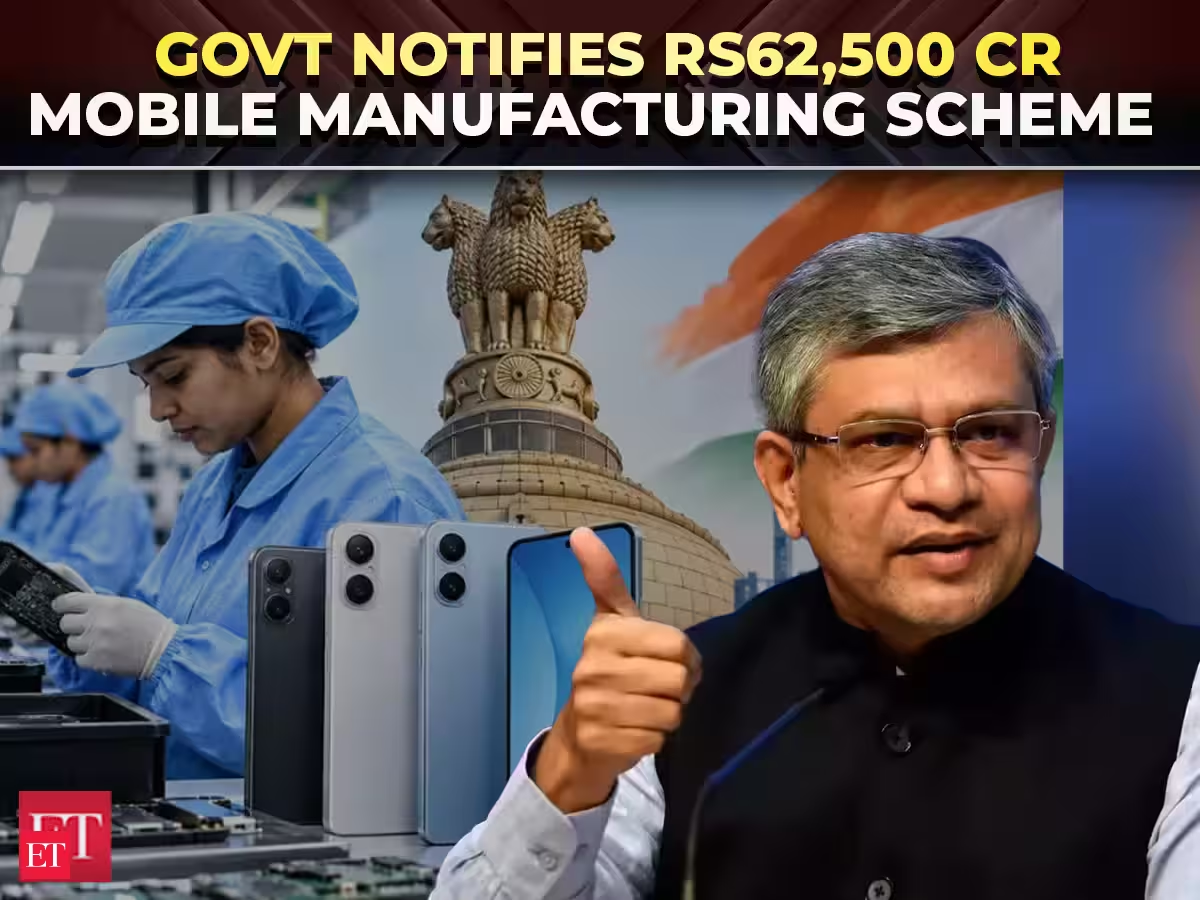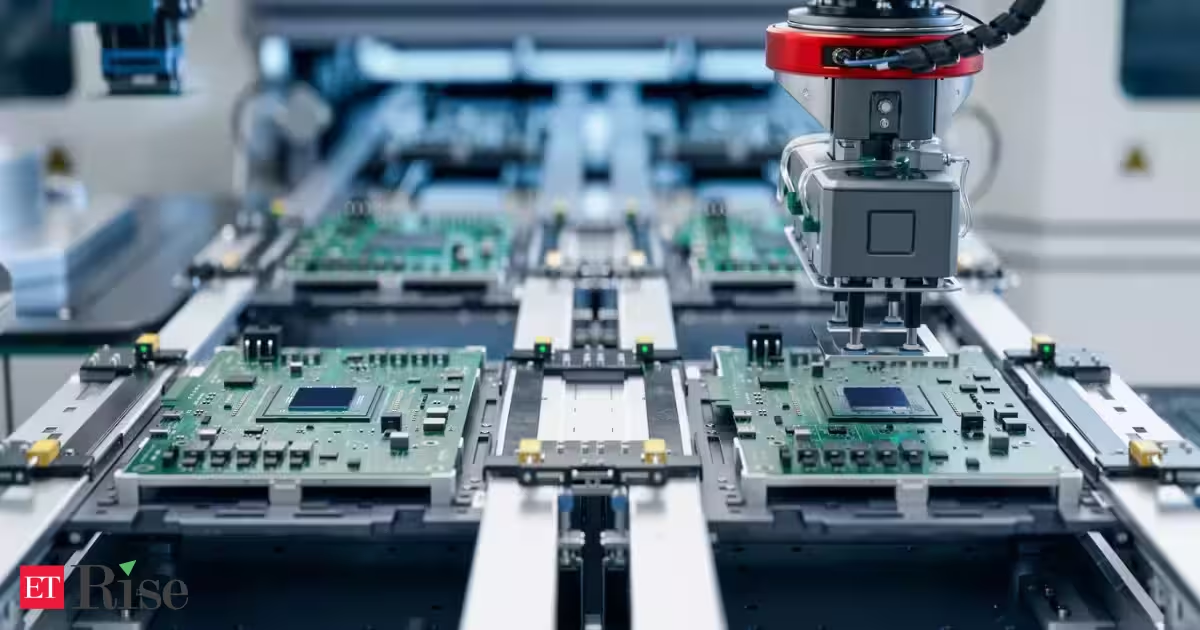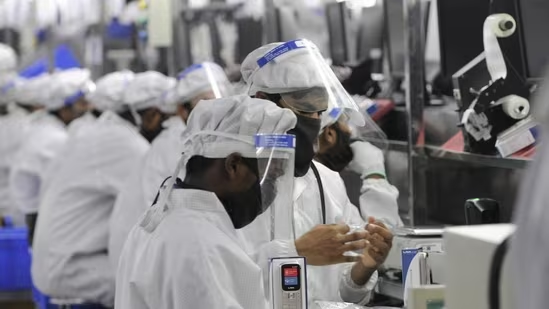
Every successful manufacturing nation has discovered one enduring truth: factories create ecosystems. Suppliers don't arrive first. Neither do research labs or globally competitive component industries. They emerge only after manufacturing achieves scale to make investment commercially viable.That simple insight lies at the heart of India's new Mobile Phone Manufacturing Scheme (MPMS). With a commitment of ₹62,500 cr and a 10-yr horizon, it's far more than an incentive programme. It's a statement of industrial strategy that recognises that in tech-intensive industries, competitiveness is built through sustained manufacturing, expanding exports and deep integration into GVCs. Higher domestic value addition follows naturally.By FY31, GoI expects nearly ₹39 lakh cr of cumulative mobile phone production, and about ₹15 lakh cr of exports. More importantly, it seeks to cement India's position as one of the world's most important electronics manufacturing destinations. This reflects an important shift in thinking.Industrial policy is often judged by one statistic - percentage of domestic value added in every smartphone. While value addition remains an important objective, it shouldn't become the starting point of industrialisation. The more meaningful measure is the total economic value created within the country. A manufacturing ecosystem producing ₹10 lakh cr worth of smartphones with 20% domestic value addition generates ₹2 lakh cr of income within India. Another producing only ₹2 lakh cr worth of output, even with 35% value addition, creates just ₹70,000 cr. Employment, supplier demand, tax revenues, logistics infrastructure and investment all grow with manufacturing scale. In advanced manufacturing, volume multiplies value.The past 6 yrs demonstrates the following:Since PLI's launch, mobile phone production has more than doubled - from around $30 bn to nearly $70 bn. Exports have increased almost 10x. India today stands as the world's second-largest mobile phone manufacturer and smartphone exporter after China.More than 7 lakh direct and indirect jobs have been created, with young women forming the backbone of the new manufacturing workforce.Beneath the headline numbers, Indian firms today manufacture battery packs, camera modules, display modules, mechanics, PCB assemblies and several sophisticated sub-assemblies that were largely imported only a few years ago.For the first time, Indian companies have begun exporting components back into global supply chains, including exports to China. These developments are not separate from manufacturing growth - they are the direct consequence of it.This is how industrial ecosystems evolve across the world. Manufacturing scale attracts suppliers. Suppliers improve localisation. Localisation strengthens competitiveness. Competitiveness encourages investment in design, engineering and research. Innovation then becomes commercially sustainable rather than policy-driven. The sequence matters because every stage reinforces the next.India's journey is also unique. Unlike several earlier manufacturing hubs, it has had to build much of its supplier ecosystem under far more complex geopolitical conditions. Even so, domestic value addition has risen from 5-6% in 2019 to 17-23% today, a remarkable progression in 6 yrs for an industry of this complexity.The next phase of growth will increasingly be driven by exports. India's domestic smartphone market has matured, making global demand the principal engine of expansion. Export competitiveness will, therefore, determine the pace at which manufacturing capacity, supplier ecosystems and technological capabilities continue to deepen.That is why maintaining scale is not merely about producing more phones. It is about creating the economic foundation upon which higher value addition, product development and, eventually, indigenous innovation can flourish.Industrial history offers a consistent lesson. Nations become centres of innovation only after becoming centres of manufacturing. Research follows commercial opportunity. Product development follows industrial capability. Suppliers follow sustained demand.Factories create ecosystems. MPMS embraces this reality. By placing manufacturing scale and export competitiveness at the centre of policy, it lays the groundwork for deeper localisation, stronger supply chains and greater technological capability over the coming decade.India's ambition is not simply to manufacture more smartphones, but to become one of the world's most competitive electronics economies. That journey begins with scale. Everything else follows.The writer is former secretary, GoI(Disclaimer: The opinions expressed in this column are that of the writer. The facts and opinions expressed here do not reflect the views of www.economictimes.com.)
How the Mobile Phone Manufacturing Scheme could make India a global electronics manufacturing hub - The Economic Times
India's new Mobile Phone Manufacturing Scheme prioritses scale and exports. This strategy aims to build a robust electronics manufacturing ecosystem. Domestic value addition naturally follows sustained manufacturing growth and scale. The government expects significant production and export figures by FY31. This policy shift focuses on total economic value creation within India.
665 words~3 min read