By Sola Ogundipe
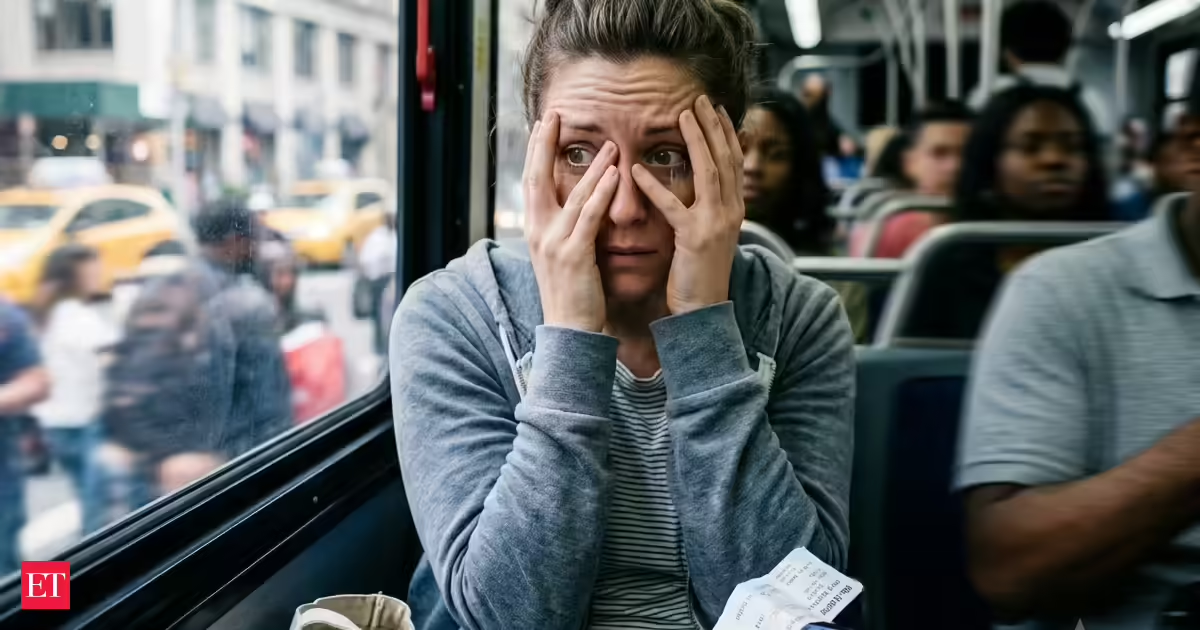
When crisis hits, the human brain undergoes an instant, violent shift. Imagine sitting in a boardroom or at a party when the person next to you suddenly slumps to the floor. Your heart rate spikes. Your vision narrows.
In that exact fraction of a second, your brain faces a critical choice. We like to believe our natural instinct is fight or flight. But in reality, the most common human reaction to a sudden medical catastrophe is far more dangerous: we freeze.
Good, deeply compassionate people freeze into complete immobility every day in Nigeria. It is not because they do not care. It is because panic is not an emotion. It is a neurological shutdown.
When an emergency occurs, the brain is flooded with adrenaline. If you do not have a practiced response ready to deploy, your brain struggles to process what is happening.