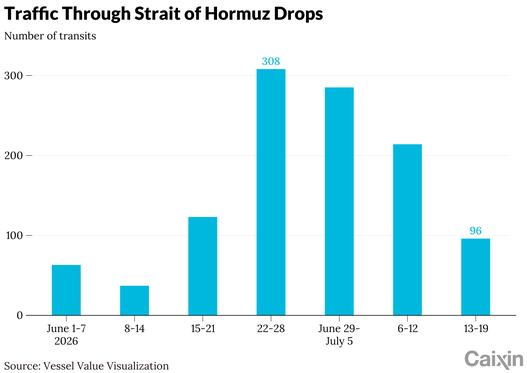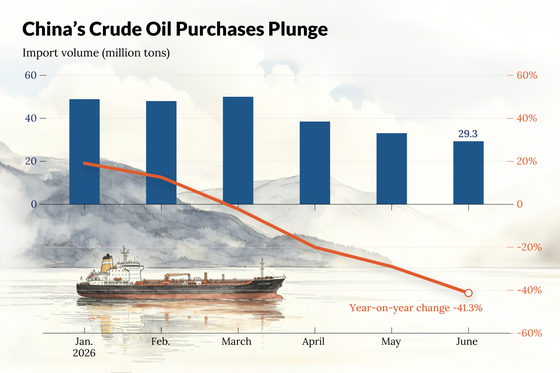
China has quietly become the global oil market's most important stabilizing force since conflict erupted in the Middle East five months ago — not by producing more crude or releasing emergency reserves, but by buying dramatically less oil. The world's largest crude importer has effectively acted as the market's "swing consumer," withdrawing millions of barrels per day worth of demand just as some 11 million b/d of Mideast crude oil supply and 5 million b/d of refined products and LPG disappeared from normal trade routes. That restraint helped prevent an even sharper price spike during the first phase of the crisis. But with renewed US-Iran hostilities again halting tanker traffic through the Strait of Hormuz and threats against shipping through the Bab al-Mandeb strait intensifying, the market is asking a different question: It is no longer whether China can keep drawing inventories, but whether Beijing wants to. The distinction is important because China's constraint may be political rather than physical. While inventories remain substantial, Chinese policymakers increasingly appear to view them as a strategic asset whose value lies in preserving energy security and policy flexibility — not simply insulating China from high oil prices. Analysts at JPMorgan estimate global liquids demand has fallen by roughly 5.1 million b/d since the Mideast conflict began — offsetting nearly one-third of the supply disruption — while inventory releases accounted for another 3.6 million b/d of the Mideast supply loss. China contributed most of that demand adjustment by slashing crude imports by some 5 million b/d, sharply reducing competition for available cargoes. In June, China ran 2.7 million b/d less crude in its refineries compared to pre-conflict levels, Energy Intelligence reckons.
How Much of Its Oil Cushion Is China Willing to Sacrifice?
As Mideast hostilities resume, all eyes are on China, which has become the world's "swing consumer" with its robust inventories and measured crude purchases.
277 words~1 min read