view more
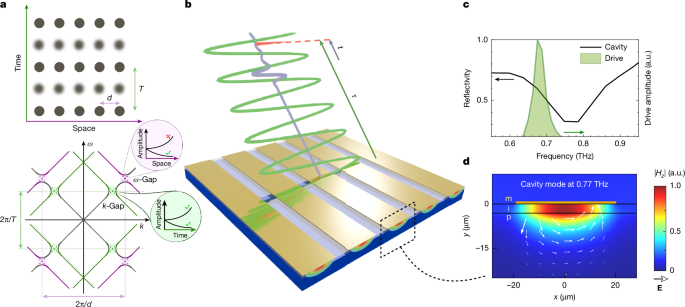
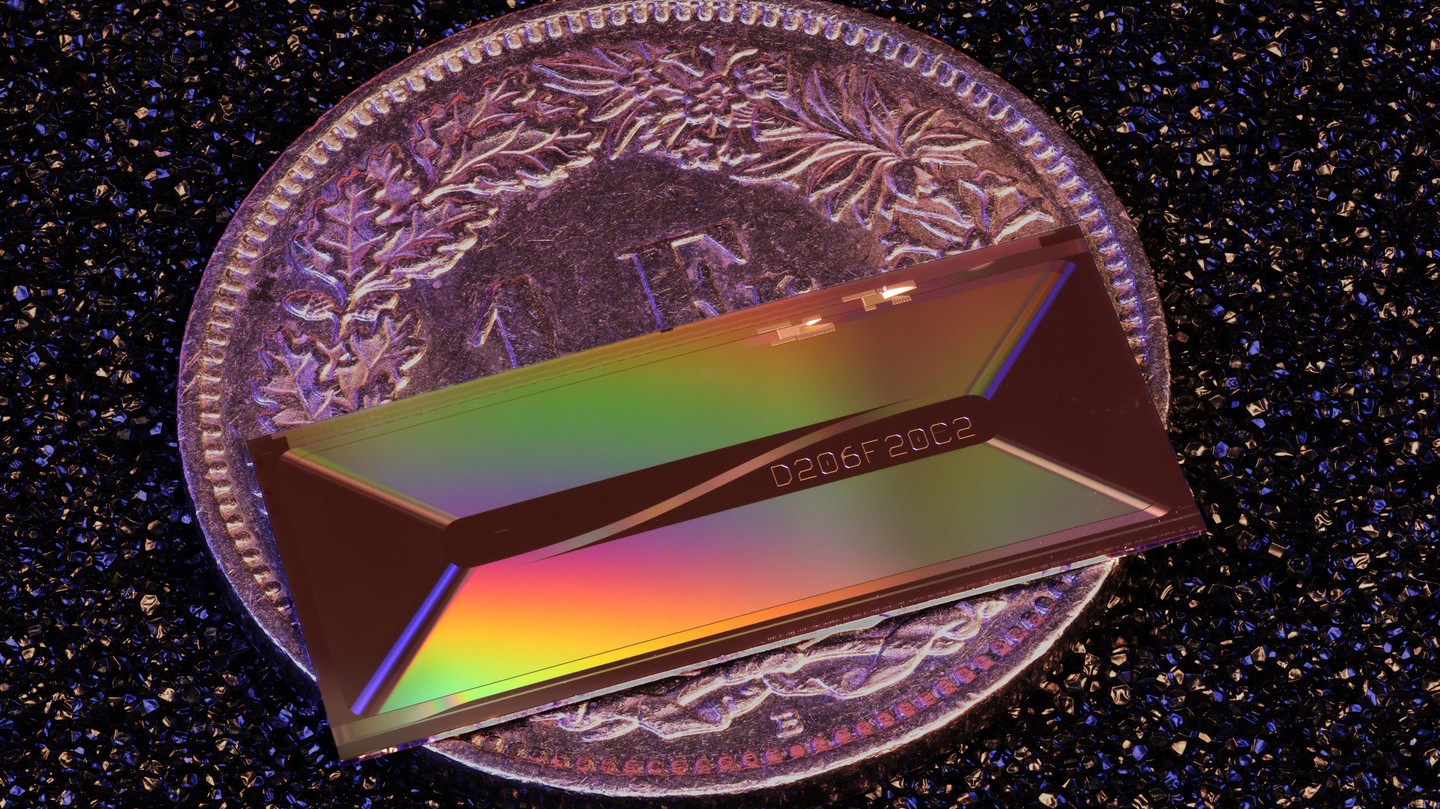
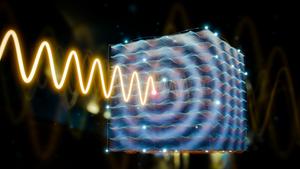
An international team of researchers from École Polytechnique, Collège de France, and Helmholtz-Zentrum Dresden-Rossendorf (HZDR) has achieved a world first: the experimental realization of an all-optical photonic time crystal (PTC), a material whose optical properties can be strongly and periodically modulated in time at ultrafast scales. Published in Nature, this breakthrough leverages HZDR’s TELBE superradiant terahertz source to drive the system into a new regime of light-matter interaction in the terahertz range. This discovery paves the way for ultrafast optical computing, new telecommunication systems and eventually new types of terahertz lasers.
Shaping the properties of light as it interacts with materials is the foundation of many discoveries and technological advances, whether optical fibers in telecommunications, lasers as light sources, or sensors for chemistry and biology.
At École Polytechnique, scientists are setting the groundwork for a technology that has yet to be widely exploited: Yannis Laplace, assistant professor at École Polytechnique and his team at the Laboratory of Irradiated Solids (LSI) are developing new photonic devices to control light in the terahertz (THz) frequency range. Research into this frequency band, 1,000 times faster than used for electronic components, is rapidly progressing and could unlock up new insights for observing and manipulating matter. “The THz range represents the frontier between electronic and photonic technologies,” explains Laplace. ”It is a range full of opportunities both for science and for the society, yet is still under-developed technologically compared to its electrical and photonic counterparts. Creating photonic crystals could lead the way to the closing of this gap.”