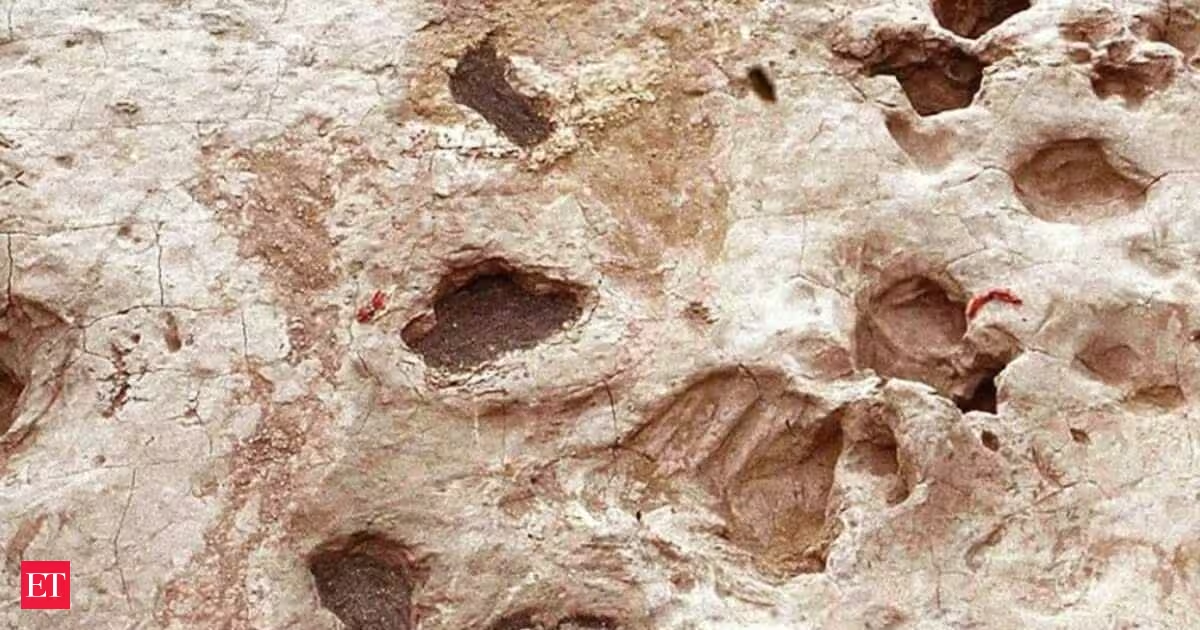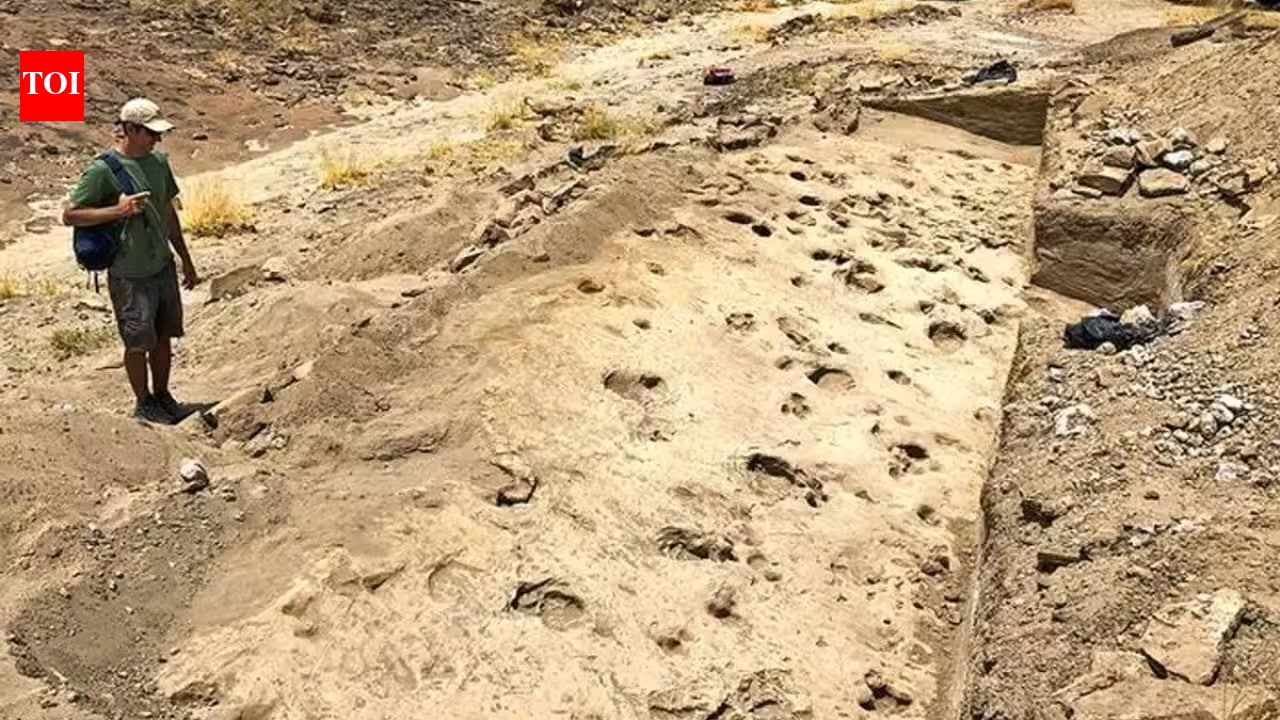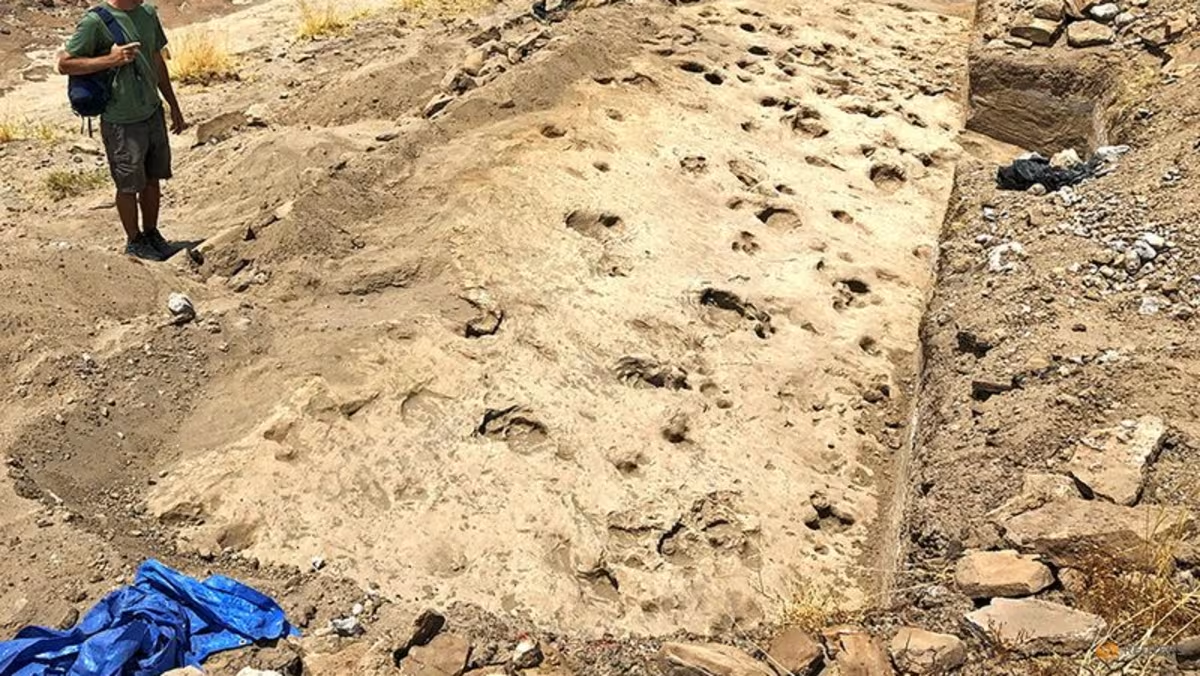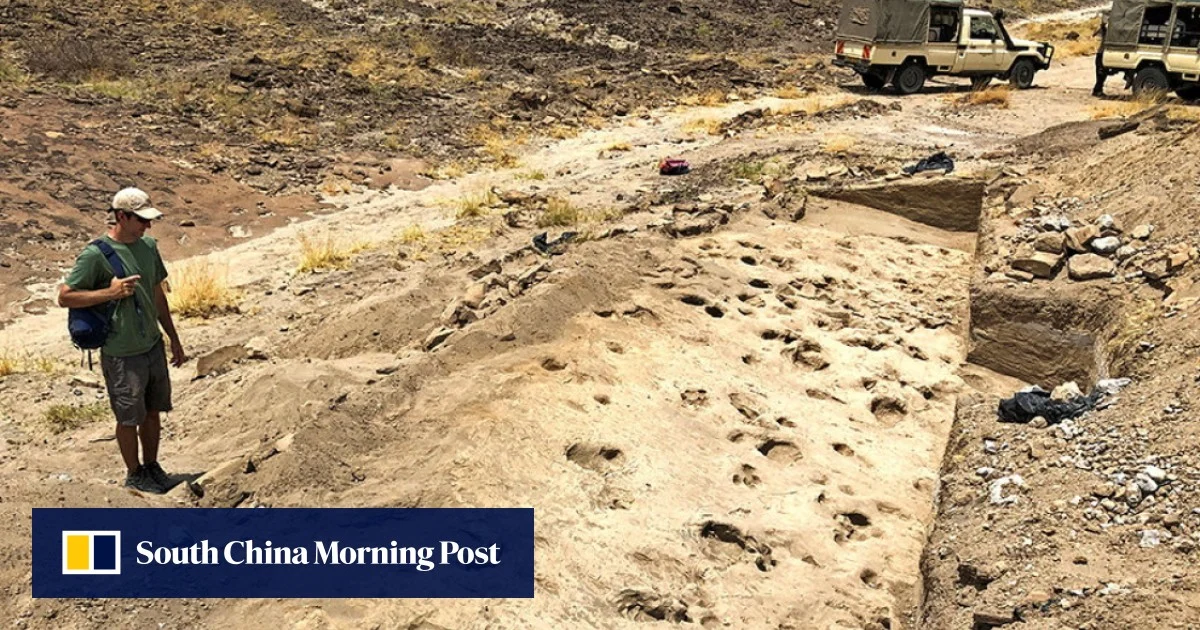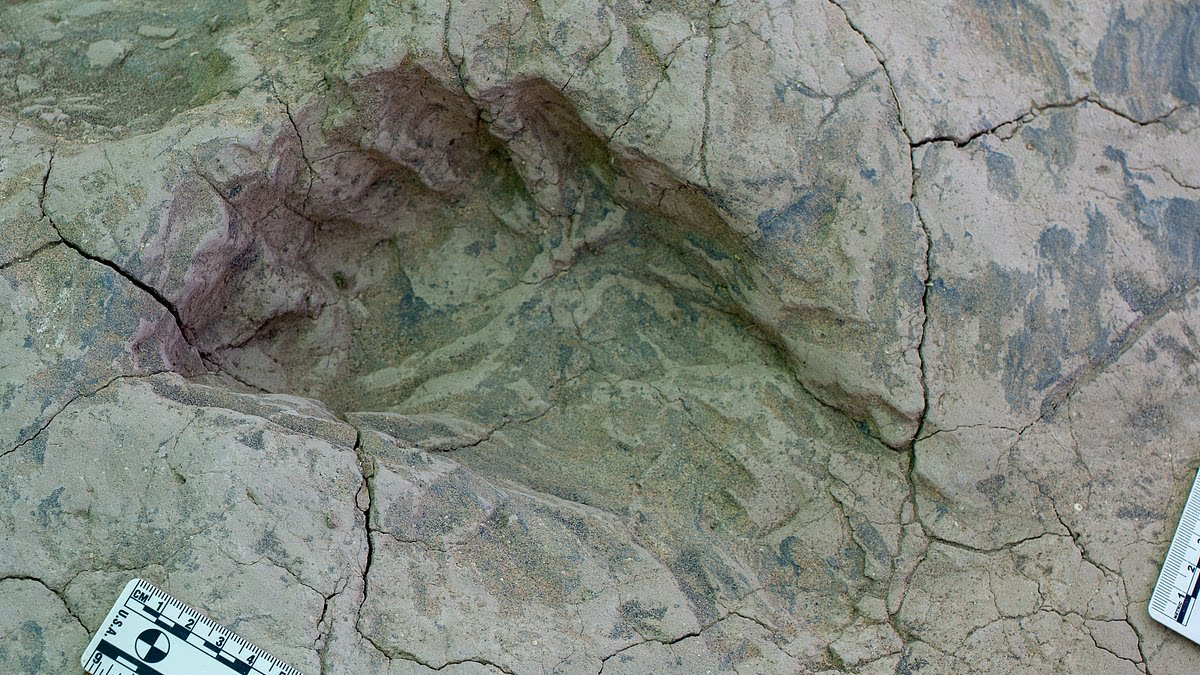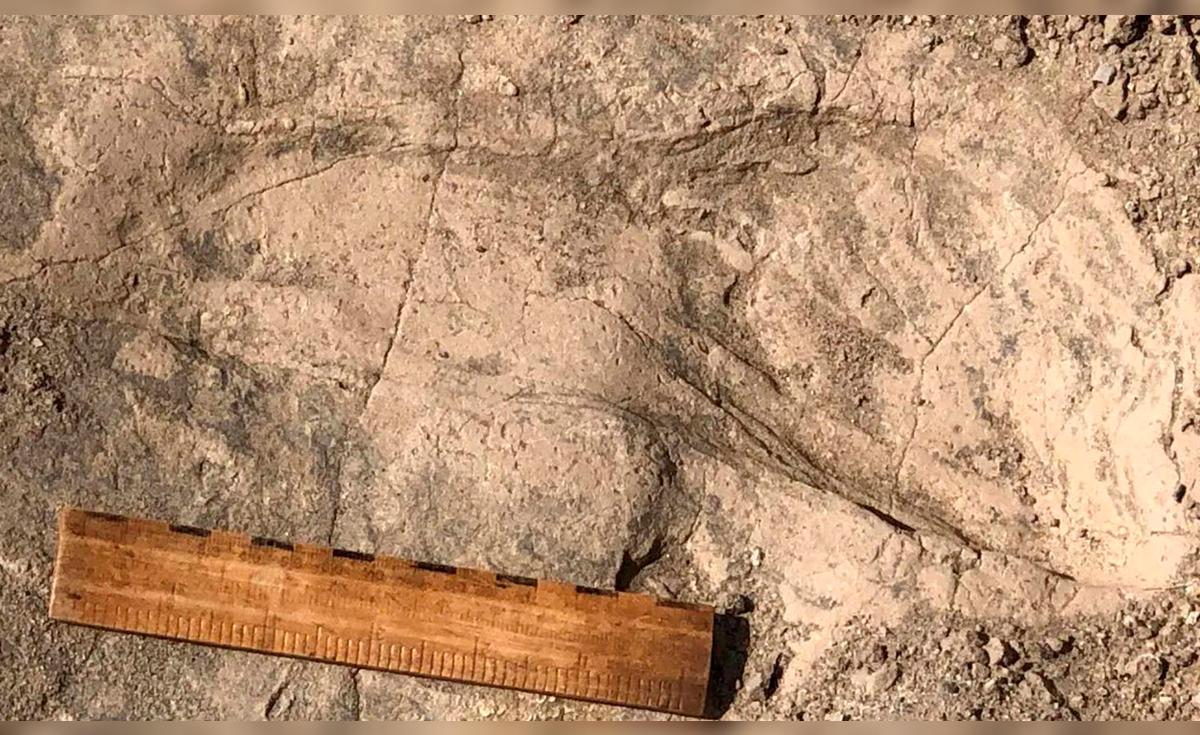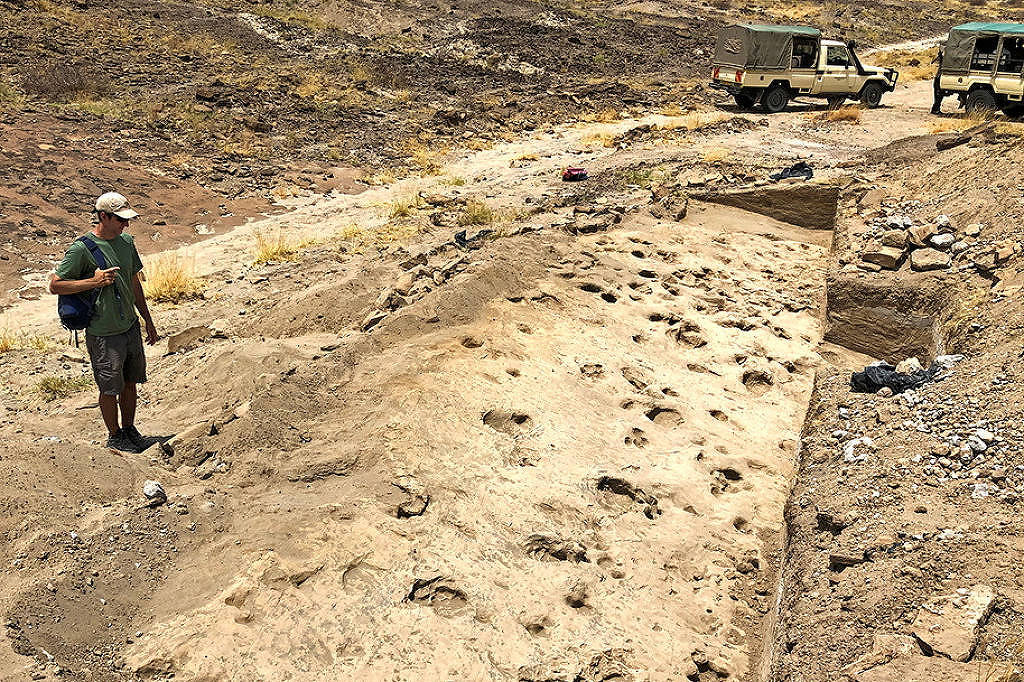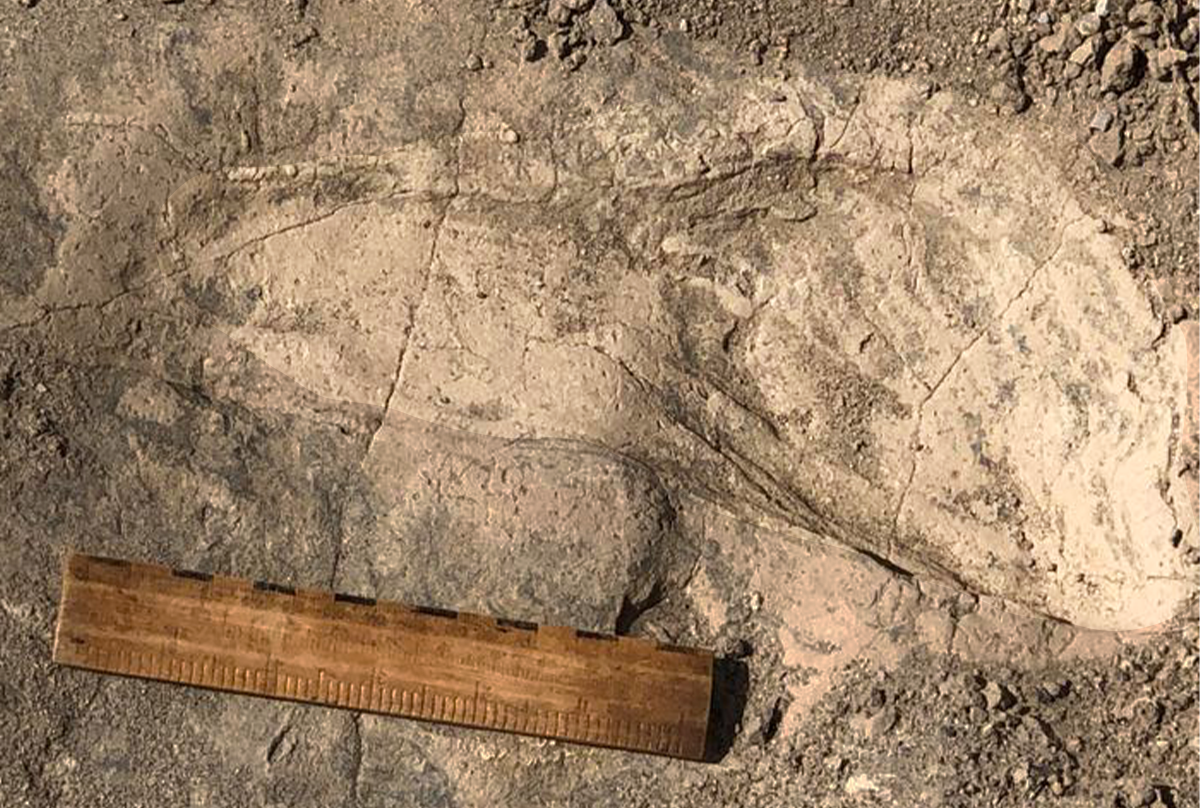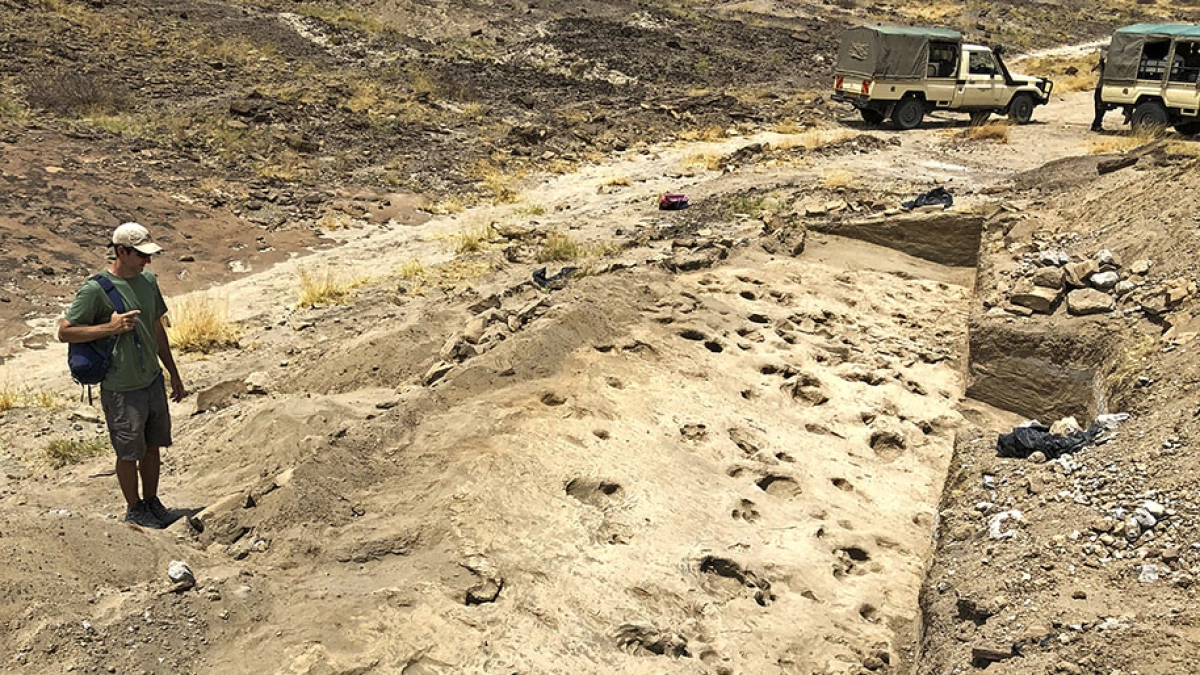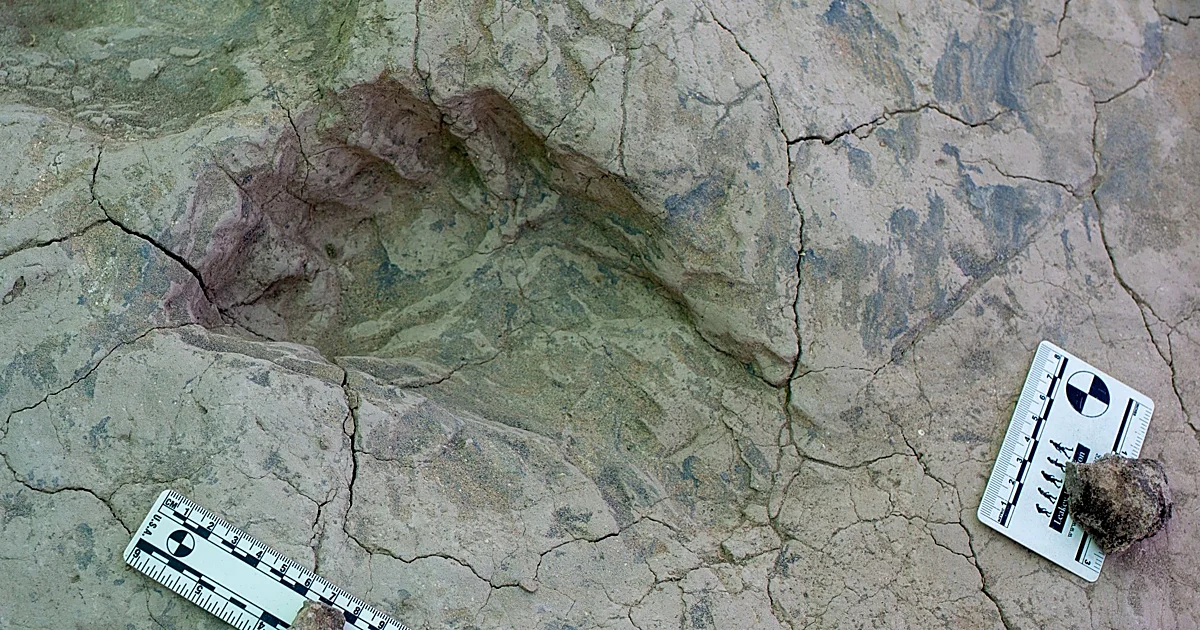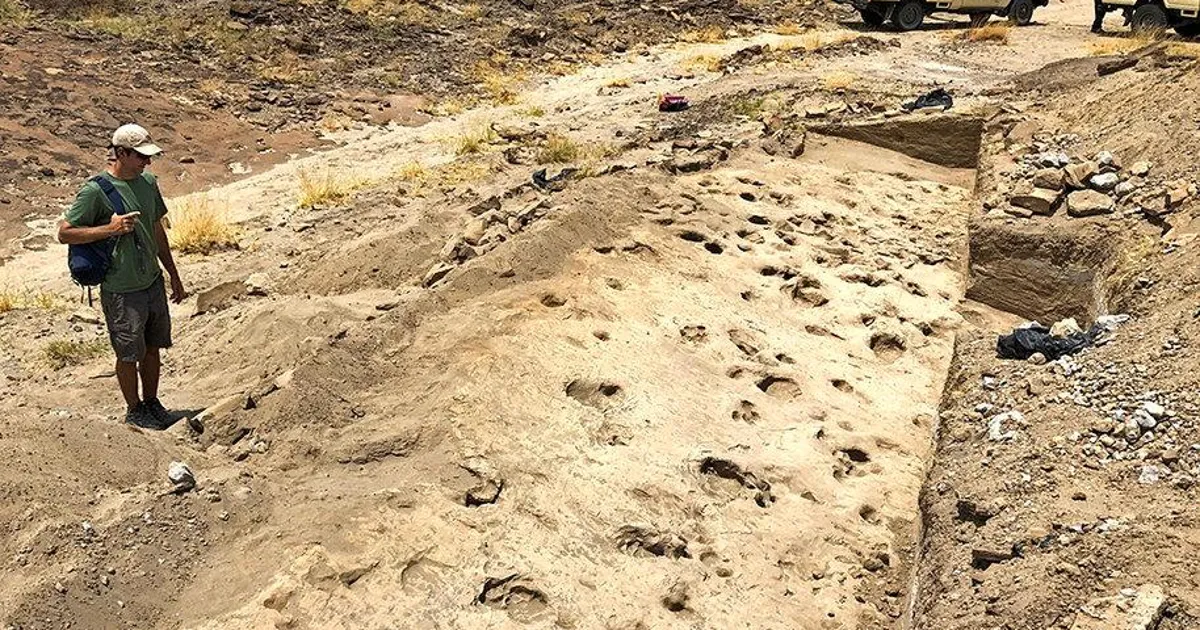
Marks left by eight hominins hoofing along a lake show an alternative erectus or huge australopithecine. They're a rare example of social life – the question is whose social lifeLong, long ago, a troop of hominins – those early humans – were treading in the shallows of a lake in northern Kenya, leaving behind their footprints. The burning question 1.43 million years later: Who were they? There are two main candidates, one more "advanced" than the other: the famous Homo erectus, whose 6-foot-tall males were already striding on their long legs around the world, and the beefy but smaller Paranthropus boisei, a subset of australopithecine. Homo erectus and Paranthropus boisei definitely coexisted in that neck of the woods for hundreds of thousands of years during the Pleistocene epoch, and it's plausible that they weren't the only hominins running around eastern Africa at the time. But the fossil record definitely places both there at roughly the same time.We can say they were heading east. One guy was going west but possibly also went east – he may have been counted twice. The conundrum now, explain Kevin Hatala and colleagues in the journal PNAS, is that the 21 tracks made by eight hominins or so – footprints that fossilized at Koobi Fora in Kenya's Turkana Basin – don't fit what we know about the footprints of either of the species involved.An approximately 1.43-million-year-old hominin footprint from Koobi Fora, Kenya. Credit: Kevin HatalaAn approximately 1.43-million-year-old hominin footprint from Koobi Fora, Kenya. Credit: Kevin HatalaBefore getting to the identity of these lakeside strollers, the scientists postulate possible group behavior, which if true means that hominins preexisting us by more than a million years had a social life. Evidence of socialization is rare in the fossil record but here we may have just that. It wouldn't be a shock given that monkeys and apes aren't known for living in brooding solitude, with the partial exception of male orangutans. Primates are social creatures, and it would be reasonable to assume that early humans like erectus and the australopithecines were too. But which gregarious hominins made the tracks? The footprints are confusing because they don't neatly fit the mold for either species, the researchers say. Homo erectus had a large brain and large body, like us, and we believe they walked like us. Australopithecines were bipedal but were still tree friendly, separate research suggests. Their brains weren't much larger than a chimp's.As for the australopithecine Paranthropus boisei, the thinking about its height has evolved. In 1991, estimates placed Paranthropus at a short 4.5 feet tall for the males. (Sexual dimorphism remains a thing in the hominin line, with the females being smaller.) By 2013, new fossil discoveries suggested that male boiseis could be at least 5 feet tall.So here's the rub. After comparing the fossil tracks with samples of modern human tracks and other Early Pleistocene hominin tracks, the heel-sole-toe rollover pattern in the newly reported footprints resembles that of other suggested boisei footprints, not that of the modern Homo (us!). Moreover, kinematic analysis suggests that the tracks resemble ones found at Laetoli in Tanzania that are commonly attributed to Australopithecine afarensis.A skull of Paranthropus boisei, a type of australopithecine, photographed at the Nairobi National Museum. Credit: Bjørn Christian TørrissenA skull of Paranthropus boisei, a type of australopithecine, photographed at the Nairobi National Museum. Credit: Bjørn Christian TørrissenThat sounds like the tracks were more likely made by australopithecines. But the newly reported footprints are too big to have been made by the Paranthropus we know. Walk like an australopithecine Which means what? That either the variation in foot anatomy and locomotion of dear erectus was greater than we had realized – in fact, far exceeding that observed in modern humans or any other fossil primate, the researchers say. Or, the variation in boisei sizes was greater than we had realized and, environmental conditions permitting, some of them could get as tall as about 6 feet.Adding to the frustration, "there are very few skeletal fossils confidently attributed to the feet of P. boisei or H. erectus," the scientists note, which constrains potential correlations between skeletal morphology and footprints.So the case is not closed. Either the newly reported prints were anomalous Homo erectuses with a hitherto unknown gait, or boisei reached dimensions we hadn't appreciated. Or maybe they were made by somebody we never did get to know.Moving on from morphology to existentialism, based on the sheer size of the footprints, the researchers postulate that the group were males. That feels like a stretch given that they lived, walked and died over a million years before our species even arose, but Halata et al. say the tracks indicate larger-than-average body sizes, which in the primate set smacks of masculinity. A skull believed to be from a female Homo erectus, found in Kenya, at the Natural History Museum in London. Credit: Emőke DénesA skull believed to be from a female Homo erectus, found in Kenya, at the Natural History Museum in London. Credit: Emőke DénesErgo, there may have been eight male hominins walking along the lakeshore together, presumably without fighting, because we can posit that they were looking for things to eat, and intra-hominin aggression would have frightened any right-thinking prey away. Let us just add that once upon a time, when hominin fossils were first discovered in the Koobi Fora Formation, the thinking was that only one hominin species could exist at any given time, mainly because of competitive pressures. But in 2024, Hatala and colleagues reported on co-occurring tracks of different hominins, which they attributed to both Homo erectus and Paranthropus boisei, found on a single surface in Kenya's Turkana Basin. The prints had to have been made within a few days of each other, at most. That was the first direct evidence of distinct ancient hominin species present at the same time in the same place. Note that the team didn't say that the erectuses and boiseis of Turkana were walking around hand in hand. But fossils of both were found in the area, too. Sure, maybe they didn't interact and cooperate. But maybe they did.How might footsteps in lakeshore sediment fossilize anyway? The hominins were big and heavy, so their prints sank deep-ish into the goo – not mud per se but in shallow water. This ground was firm enough to preserve the mark, which then filled with sand. The water on the shore would have been still, the researchers add. If the water had been frisky ("low energy"), the steps would have quickly vanished. Beyond hominin tracks, Halata's team also reported on 146 tracks of other animals during the 2023 excavations at Koobi Fara. Of these, 67 were attributed to Hippopotamidae, but the range of hippo tracks was so broad – from 15.5 to 42 centimeters (6.1 to 16.5 inches) wide – that the scientists suspect that two separate species made them: the larger Hippopotamus gorgops and the smaller Hippopotamus aethiopicus. So what do we have? We have no conclusion beyond observing that either the span of hominin size, or their gait, seems to have been wider and more variegated than we appreciated. Or maybe there was yet another hominin there in Koobi Fara coexisting with erectus and boisei, who was as big as an erectus but walked like an australopithecine. Only more fossils can shed clearer light.
Anomalous footprints made 1.43 million years ago in Kenya puzzle archaeologists
Marks left by eight hominins hoofing along a lake show an alternative erectus or huge australopithecine. They're a rare example of social life – the question is whose social life
1,223 words~6 min read