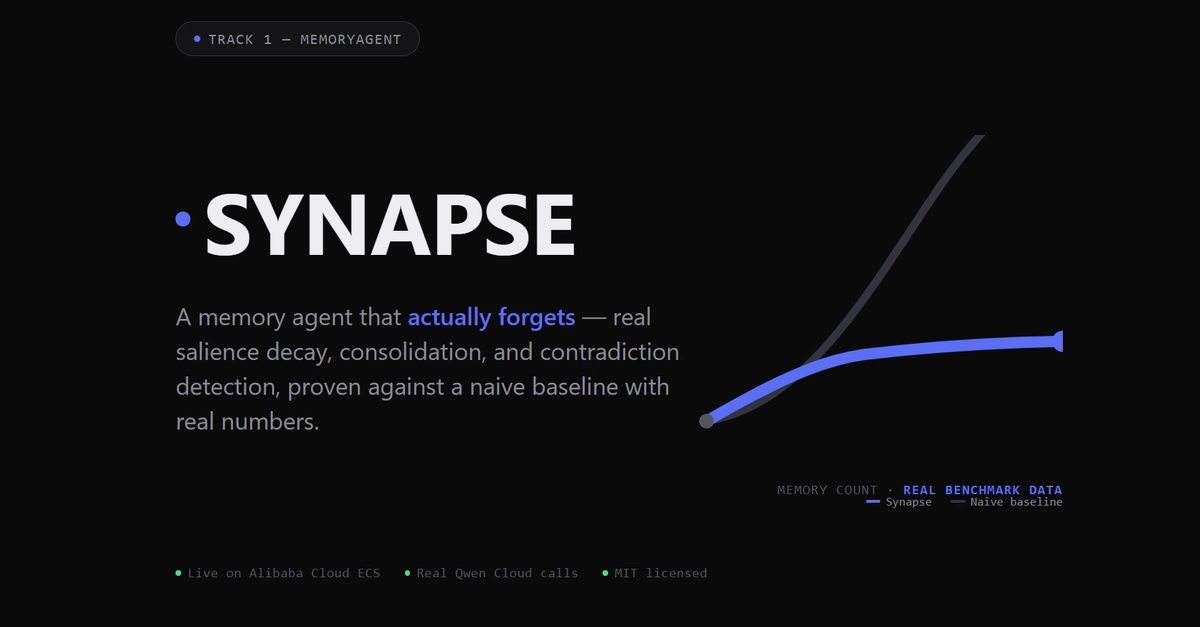
Most memory implementations for AI applications are append-only. New memories go in, nothing ever comes out, and every stored item stays equally retrievable forever. That works fine for the first few hundred entries. It stops working somewhere in the thousands, and the failure is quiet, because retrieval quality drops while every dashboard still looks healthy.
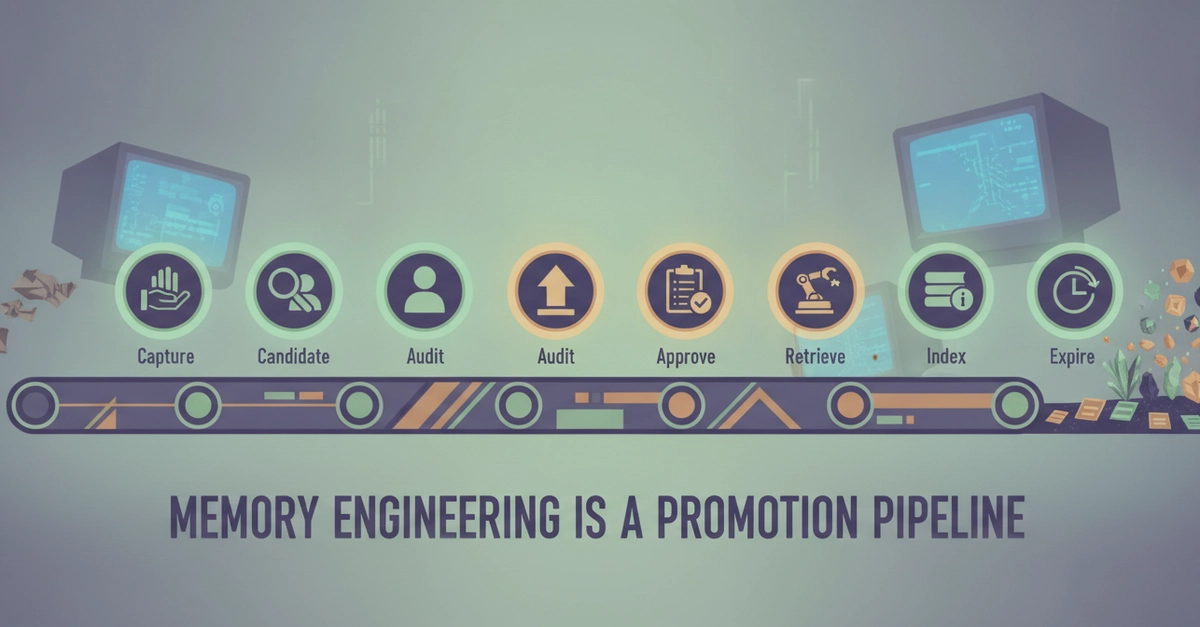
The fix is not a bigger vector index. It is a lifecycle, meaning a set of rules for how a memory gets created, strengthened, merged, and eventually dropped.
Why Append-Only Memory Degrades
Four problems compound as the store grows.
Contradiction. A user says in January that they prefer Python for new projects. In March they say they moved to Rust. Both memories sit in the store with equal weight. In April the assistant retrieves context for a coding question and may surface either one, or both. Nothing in a plain vector store knows that March supersedes January.