This post is co-written with Chris Dickens from OpenAI.
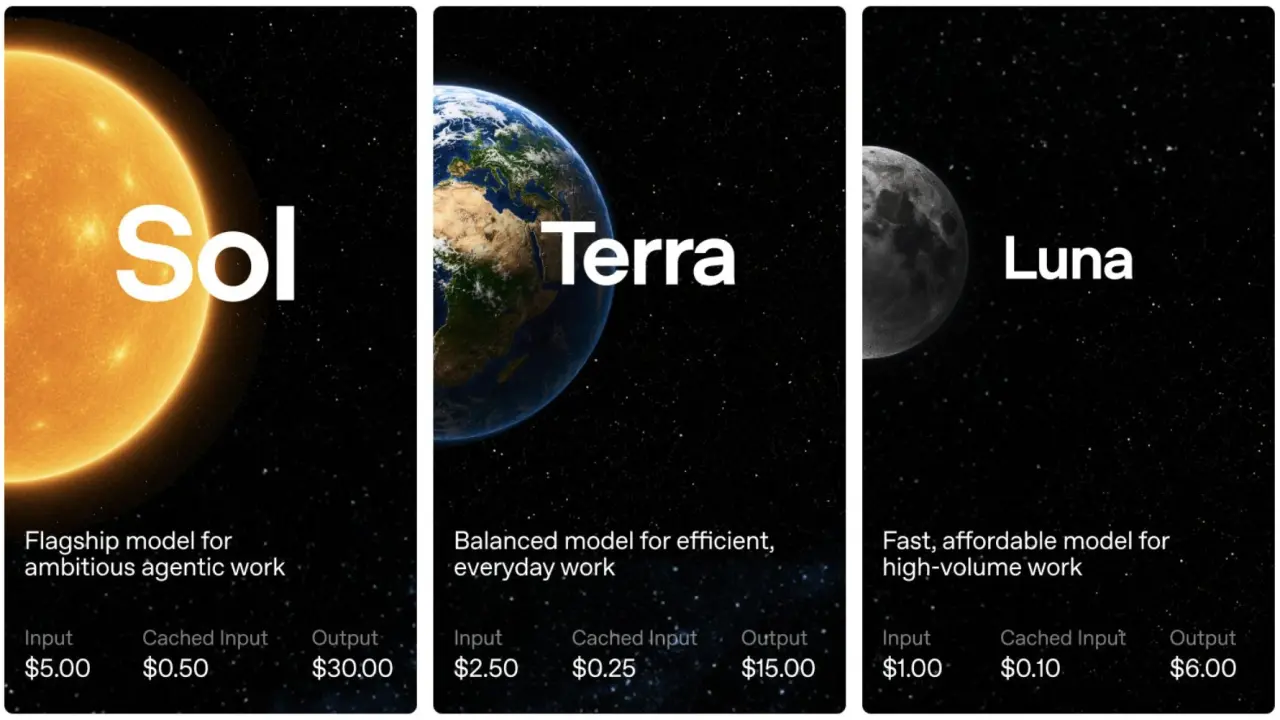
OpenAI GPT-5.6 Sol, Terra, and Luna are now generally available on Amazon Bedrock. With GPT-5.6 on Amazon Bedrock, you get the newest generation of OpenAI frontier models with pay-per-token pricing, AWS security and governance controls, and usage that counts toward your existing AWS commitments. The family covers three capability tiers: GPT-5.6 Sol for the most complex reasoning and agentic coding work, GPT-5.6 Terra for balanced everyday production workloads, and GPT-5.6 Luna for fast, high-volume tasks such as classification and summarization.
Alongside the new models, GPT-5.6 introduces explicit prompt caching on Amazon Bedrock, a new capability that gives you precise control over which portions of your prompt are cached and reused across requests. Cached input is billed at a 90 percent discount (see the Amazon Bedrock pricing page) and stays available for reuse for 30 minutes. You get the most value from this in agentic workflows, where system instructions, tool definitions, and reference documents repeat across many calls.
In this post, we introduce explicit prompt caching for GPT-5.6 on Amazon Bedrock, a new capability that gives you control over which parts of your prompt are cached and reused across requests. We show how it differs from implicit caching and when to use each mode, how to set it up and verify that it is working, and how it performs in an agentic workflow. We also cover how to migrate workloads from earlier GPT models onto GPT-5.6, whether they run on Amazon Bedrock today or on another platform.
 aws.amazon.com


 aboutamazon.com