This post is co-written with Chris Dickens from OpenAI.
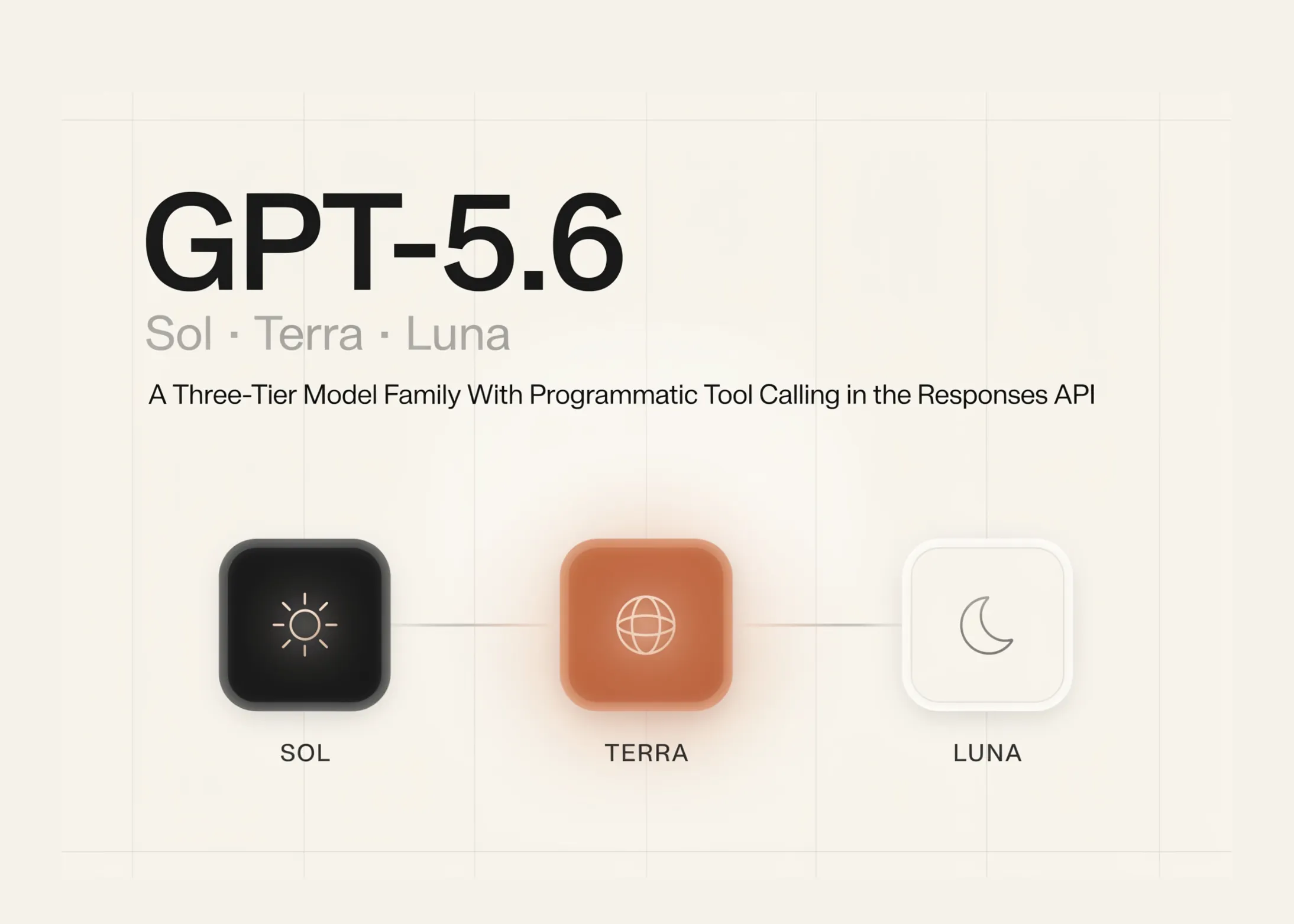
Developers building agentic coding, long-horizon reasoning, and high-volume inference workloads want frontier models they can call through familiar APIs, without operating separate model infrastructure. OpenAI GPT-5.6 Sol, Terra, and Luna are now generally available on Amazon Bedrock. The three models cover workloads from autonomous coding agents and long-horizon reasoning to high-volume, latency-sensitive inference, and they run with the security, Regional processing, and cost controls of AWS.
You access all three models through the OpenAI Responses API on the bedrock-mantle endpoint. Sol is the flagship reasoning model, Terra balances performance and cost for everyday production work, and Luna is optimized for fast, low-cost inference, so you can right-size capability and cost for each workload. Pricing matches OpenAI first-party rates, and usage counts toward your existing AWS commitments.
In this post, we show you how to select a model, run your first inference through the Responses API, reduce cost with prompt caching and measure cached-token usage, connect the OpenAI Codex coding agent, and plan for quotas and scaling. Your prompts and completions are not used to train any models, and are not shared with the model provider.
 aws.amazon.com