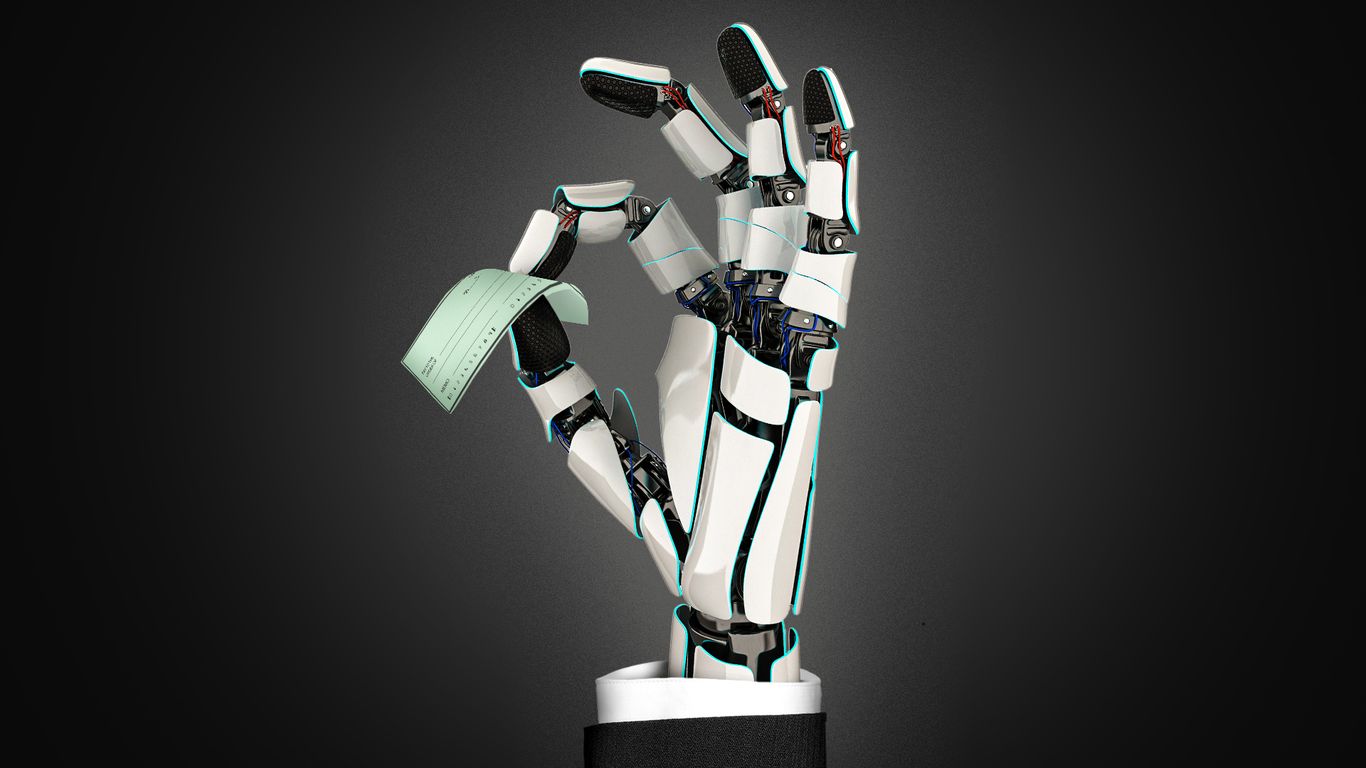
People are sick of AI; they’re sick of predictions that AI will take your job, and they’re sick of the supposedly smartest economists around failing to explain what is happening. Perfect timing, then, for a new theory that ties all of the threads together in an elegant explanation: AI isn’t wiping out jobs, but it is cutting wages. No wonder workers are in revolt.
New research from Apollo Global Management shows the technology’s earliest measurable damage isn’t job losses, but smaller paychecks. That finding arrives in the middle of one of the most fractured debates in economics right now — one where even the people building the AI systems can’t agree on what their own data shows.
An economist changes his mind
Apollo chief economist Torsten Slok has spent much of 2026 arguing that the macroeconomic impact of AI on the labor market was essentially invisible. In April, he wrote that “AI is everywhere except in the incoming macroeconomic data” and you just couldn’t see it in data on employment, productivity or inflation.
At the same time, the influential analyst, known for his Daily Spark blog and for his Chart of the Day in a previous stint at Deutsche Bank, has been predicting an “industrial renaissance” and a prediction that AI will lead to a boom of entrepreneurship for small businesses. As recently as May 29, he published a Spark titled “Zero Evidence of AI-Related Job Losses,” arguing AI was creating more jobs than it destroyed. He invoked the Jevons Paradox, as he has done since April, helping to popularize the idea that efficiency gains expand overall demand rather than shrinking the workforce. None other than Dario Amodei, the Anthropic CEO, started using the term shortly afterward, as he walked back his own predictions of the massive job-destroying impact of his technology.