The FTA monitoring committee’s review assumes significance as India pursues an ambitious strategy of signing comprehensive trade agreements with advanced economies
| Photo Credit:
iStockphoto
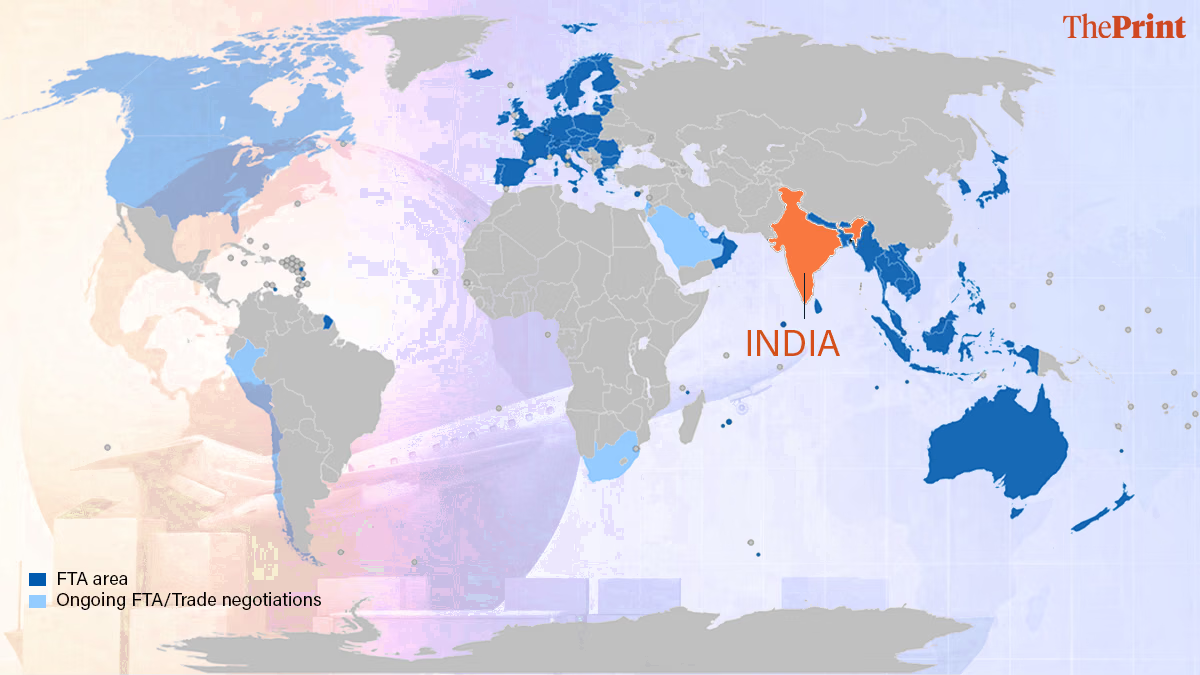
The Commerce Department’s FTA monitoring committee is scheduled to meet in August to undertake a comprehensive review of the implementation of the country’s 16 operational trade agreements, including the recently implemented pacts with the UK and Oman, and identify the challenges faced by exporters in availing of the concessions they offer.“The government is seeking detailed feedback from industry on the impediments in utilising the different FTAs. Sector-wise inputs are being collected so that the issues can be addressed,” a source told businessline.10 pactsOf the 16 trade pacts implemented so far by the country, 10 were implemented before the BJP government came to power in 2014. These include the India-Sri Lanka FTA, the Agreement on SAFTA , the India Nepal Treaty of Trade, the India-Bhutan Agreement on Trade Commerce and Transit, the India -Thailand FTA - Early Harvest Scheme, the India-Singapore CECA, the India-ASEAN CECA, the India-Malaysia CECA, the India - South Korea CEPA, the India-Japan CEPA.The ones signed by the present government include the India-Mauritius CECPA, the India-UAE CEPA, the India–Oman CEPA, the India-Australia ECTA, the India–EFTA (Switzerland, Iceland, Liechtenstein, Norway) TEPA and the India– UK CETA.FTA utilisatonThere are a range of factors flagged by industry that limit FTA utilisation. “The problems include the complex and stringent rules of origin that determine eligibility for preferential tariffs, especially the product specific rules, the cumbersome documentation and certification requirements, limited awareness among exporters, particularly MSMEs, and increasingly demanding technical regulations, sanitary and phytosanitary measures and quality standards in partner countries,” an industry source said.India’s overall FTA utilisation has been historically very low. “Only an estimated 20–30 per cent of India’s eligible exports take advantage of FTA preferences. Many small firms prefer to avoid the compliance burden for modest tariff savings,” according to a 2026 report on FTA challenges by research body Global Trade and Research Initiative.The FTA monitoring committee’s review assumes significance as India pursues an ambitious strategy of signing comprehensive trade agreements with advanced economies. Following the operationalisation of the FTAs with the UK and EFTA, New Delhi is negotiating similar agreements with the European Union and New Zealand, while discussions on a bilateral trade agreement with the US are also under way.Published on July 30, 2026