Pact provides for cooperation on verification of embedded carbon emissions, recognition of verifiers
| Photo Credit:
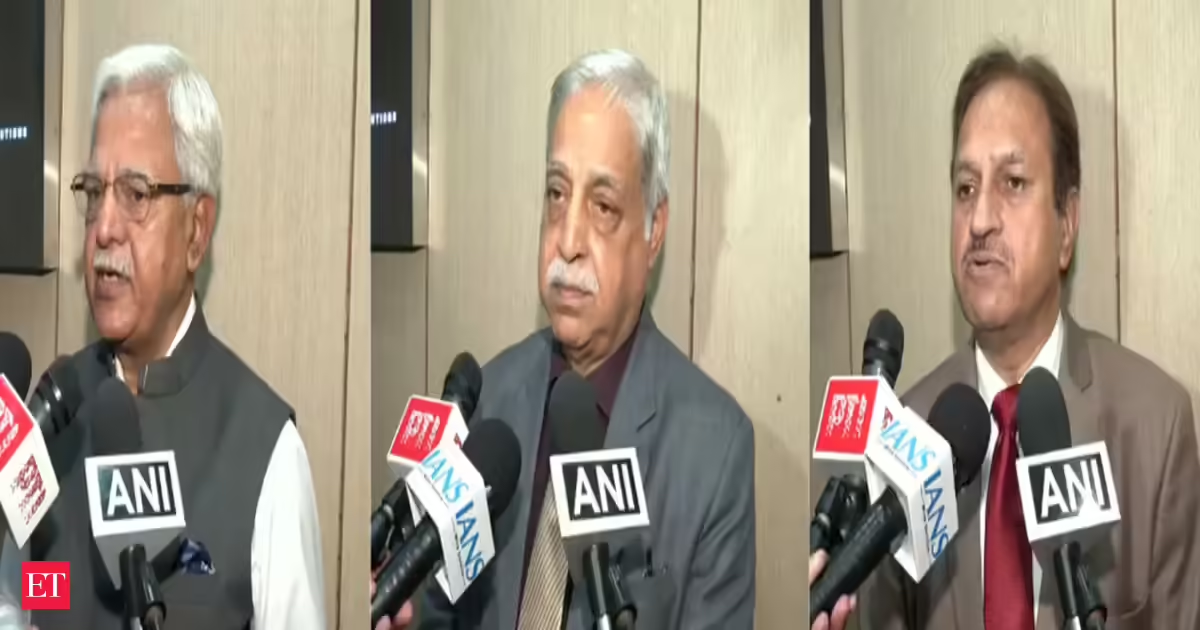
A comprehensive work plan built into the India-European Union free trade agreement (FTA) could help address concerns of Indian exporters, particularly small and medium enterprises (SMEs), over complying with the bloc’s Carbon Border Adjustment Mechanism (CBAM), a senior Commerce Department official has said.“CBAM compliances are a concern among SMEs in terms of verification, in terms of finding out what is the value of embedded carbon, in terms of ensuring that the verifiers are recognised by the EU authorities. So there is a comprehensive work plan under the annexure on CBAM and we are working on it. I am very hopeful that SMEs will not face any problem,” Commerce Department Additional Secretary Darpan Jain, said at the Indo-German Chamber of Commerce industry dialogue 2026 on Thursday.The EU’s CBAM, which is being phased in, will require exporters of identified carbon-intensive products, including steel, aluminium and cement, to pay for the embedded carbon emissions in the form of a levy, which would kick in from January 2027.Indian exporters, especially those in the MSME sector, have expressed concerns over the compliance burden and the additional costs associated with the mechanism.Jain said CBAM had consumed a significant part of the negotiations, with India pushing for provisions that would mitigate the impact of the EU’s new carbon levy on domestic exporters.Multiple pillarsThe agreement contains a dedicated annexure on CBAM with multiple pillars, he said. One of the provisions requires that if the EU grants any future flexibility under the CBAM regime, the same would also be extended to India.The pact also provides for cooperation on compliance-related issues, including verification of embedded carbon emissions, recognition of verifiers by EU authorities and capacity building for exporters, particularly SMEs, that may lack the technical expertise to comply with the new reporting requirements.Another important element of the annexure relates to India’s evolving domestic carbon pricing framework. “And we also have a provision in which we can engage with EU authorities on taking into account the carbon price which is paid in India. As you would know, India also is, developing its own carbon pricing mechanism. So, how to offset what is paid in India from what is paid in Europe,” he said.FTA implementationOn implementation of the India-EU FTA, Jain said the Commerce Ministry has already begun preparations to ensure that businesses across the country are able to fully utilise the agreement once it comes into force.The Ministry has planned an extensive outreach programme covering more than 700 districts, working with State governments to educate businesses on the opportunities available under the FTA. It is also developing digital tools to help companies, particularly small businesses, understand the agreement and access its benefits more easily, he said.India and the EU announced announced the conclusion of negotiations for the FTA in January this year. There are expectations within the government that it may be signed later this year while implementation may be sometime next year.Published on July 30, 2026