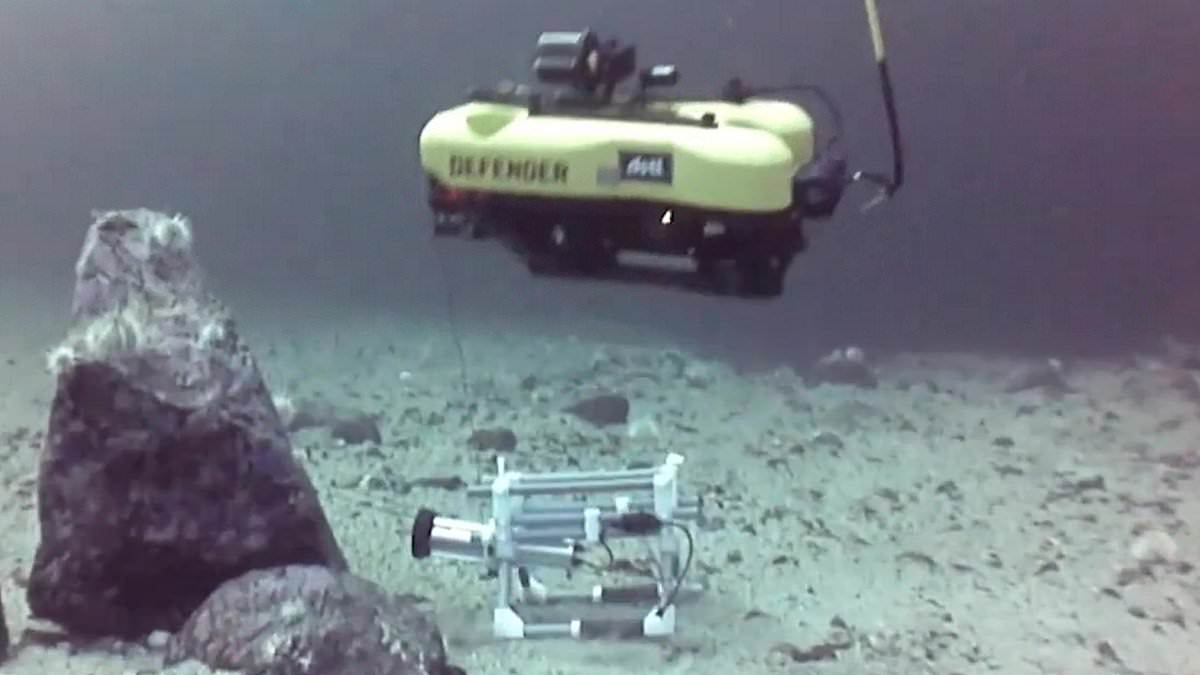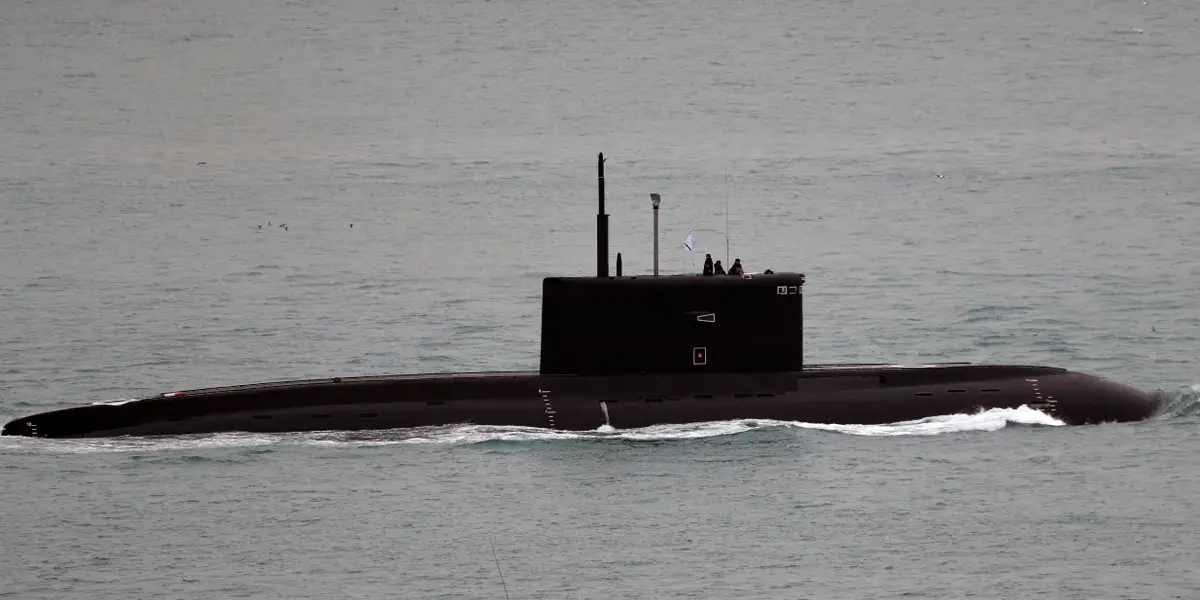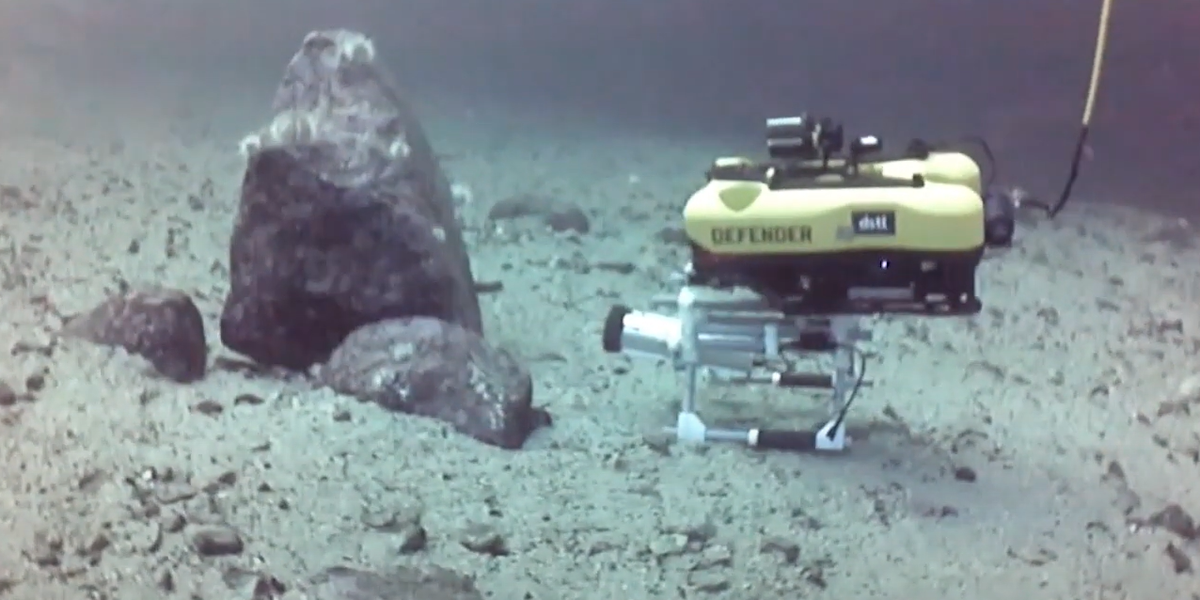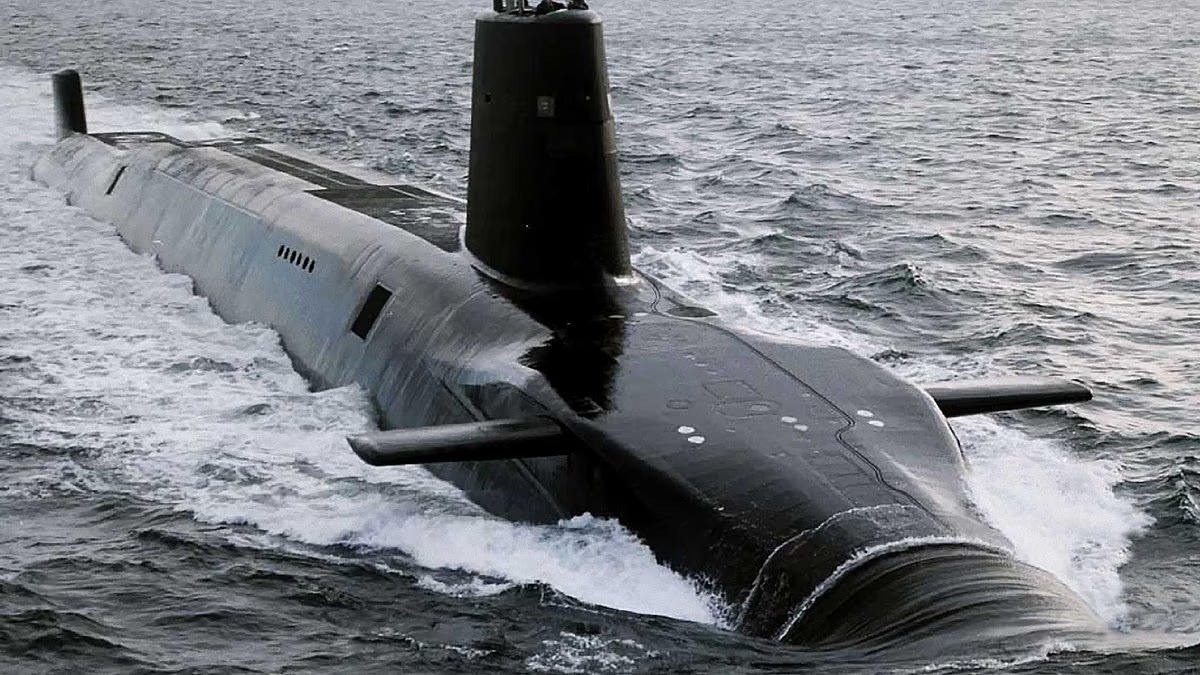
After Russian subs’ secret operation was foiled earlier this year, UK carries out training exercise to test protecting ‘critical seabed infrastructure'15:29, 30 Jul 2026Britain has showcased cutting-edge technology to protect the nation underwater – amid the threat posed by Russian subs.Only earlier this year it emerged Kremlin submarines took part in a secret op north of the UK. Now, in a show of force, the British Navy has carried out a training exercise with US and Australian allies to test protecting “critical seabed infrastructure”. The "latest technologies" were tried out in “Exercise Lanternfish”, which took place during May and June. It came after Britain earlier foiled a Moscow plot involving three submarines.The op prompted then Defence Secretary John Healey to warn Vladimir Putin: "We see you. We see your activity over our cables and our pipelines, and you should know that any attempt to damage them will not be tolerated and will have serious consequences."The Royal Navy said of the Lanternfish exercise: “Split between Virginia and Washington in the USA and waters off the southwestern coast of Australia over six weeks, Exercise Lanternfish saw Royal Navy divers and hydrographic experts run out remotely-operated systems alongside their American and Australian comrades.“The team from the Diving and Threat Exploitation Group demonstrated their VideoRay Defender – a small remotely-operated submersible used to locate mines and underwater explosive devices. And experts from the Hydrographic eXploitation Group (HXG), based in Devonport, launched their Autonomous Underwater System, the Teledyne Gavia. Thanks to its modular design, it can carry out varied AUKUS missions depending on its sensor fit.“They were used to carry out surveillance of Critical Undersea Infrastructure (CUI) and to rehearse responses to potential hostile activity in a realistic operational setting, operating as part of a wider ‘ecosystem’ of sensors and underwater vehicles to give greater understanding of the subsea environment.”The Royal Navy was involved in the part of the exercise in US waters. Lt Cdr Mark Wilton, from HXG, said: “We completed a number of Gavia missions on the exercise – acoustic calibration, night-time and independent, unaided.”In early April, the Ministry of Defence revealed weeks earlier that Britain identified a Russian attack sub entering international waters in the High North. The Navy deployed Type 23 HMS St Albans, RFA Tidespring and Merlin helicopters to track the Russian Akula class attack sub.The MoD said: “Service personnel quickly established that the submarine was deployed as a distraction and the UK worked closely with allies – including Norway – to identify and monitor other Russian undersea naval units from the Main Directorate of Deep Sea Research (known as GUGI) conducting nefarious activity over critical undersea infrastructure elsewhere.”The UK and allies embarked on “a campaign of overt action”, ensuring Russia knew it was being monitored, the MoD explained. The GUGI units and the sub were said to have ended up retreating.Article continues belowHealey said in April: “I want to pay tribute to the UK personnel who spent many days tracking these Russian submarines in extremely challenging and treacherous conditions.” Meanwhile, in December the Royal Navy disclosed it had tracked a Russian sub through the English Channel.
Britain showcases cutting-edge tech to protect against underwater Putin threat
After Russian subs’ secret operation was foiled earlier this year, UK carries out training exercise to test protecting ‘critical seabed infrastructure'
517 words~2 min read