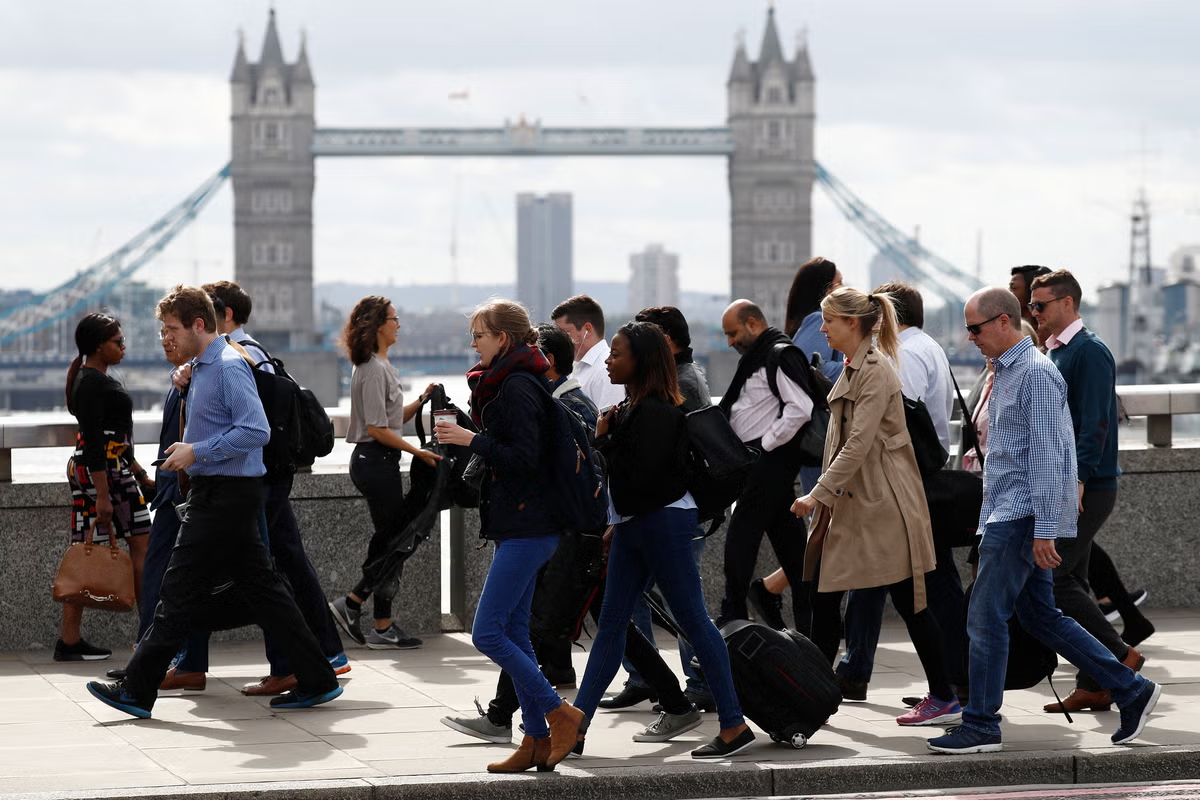
For many modern professionals, the daily office grind has become an overwhelming hurdle to everyday efficiency and personal well-being. Long, draining commutes, constant workplace distractions, and rigid desk schedules often leave employees physically depleted and mentally exhausted. Despite these growing challenges, many corporations enforce strict return-to-office mandates, refusing work-from-home flexibility even when employee performance suffers. However, a recent story about a Gen Z employee and her boss posted on X by career coach Simon Ingari highlights a refreshingly empathetic leadership approach. When empathy replaced workplace burnoutAs per the post, a struggling Gen Z employee requested an urgent work from home discussion with her boss due to severe mental exhaustion. She revealed that spending 3 to 4 hours commuting daily over several months had left her completely burnt out. When asked why she had waited so long to voice her struggle, the Gen Z profession told her boss that staff members who express fatigue are typically told to simply deal, with it. Realizing her limits, she stated that obtaining a remote work arrangement was her only alternative to resigning immediately.Rather than dismissing her concerns, the empathetic boss granted her full work from home privileges starting the very next day. He guaranteed the Gen employee full salary, eliminated mandatory office attendance, and removed intrusive supervision, expecting only strong results in return. Explaining this decisive action, the boss noted that keeping a tired individual in an office chair pretending to be productive benefits no one, and preserving a valuable team member was far preferable to losing them altogether.Trust over attendance, results over presence Over the subsequent 3 months, the Gen Z employee’s performance impressed the boss. A follow-up conversation revealed that the employee’s productivity, focus, and overall quality of work had significantly increased and improved once the burden of unnecessary work from office stress was removed. The Gen professional admitted that by stepping away from the traditional workplace environment, she found her creative energy renewed and her overall efficiency restored.On a final note, the boss agreed with the Gen Z employee stating that people tend to yield their finest output when those in leadership roles them genuine trust rather than pushing them to physical and mental exhaustion. The boss noted that numerous organizations remain fixated on physical presence at the workplace, measuring attendance instead of results as they remain under the belief that it equals productivity. However, progressive leaders recognize that meaningful outcomes generally come from faith and flexibility.
Gen Z employee requests WFH after feeling mentally exhausted. What her boss did next became a lesson on productivity. ‘People produce their best work when trusted’
A Gen Z employee feeling burnout led to a discussion about remote work options. Her boss granted full work from home privileges, eliminating commutes and supervision. This empathetic approach preserved a valuable team member and improved her performance significantly. Productivity and work quality increased substantially after the change. Trust and flexibility yield better results than mandatory office attendance.
406 words~2 min read