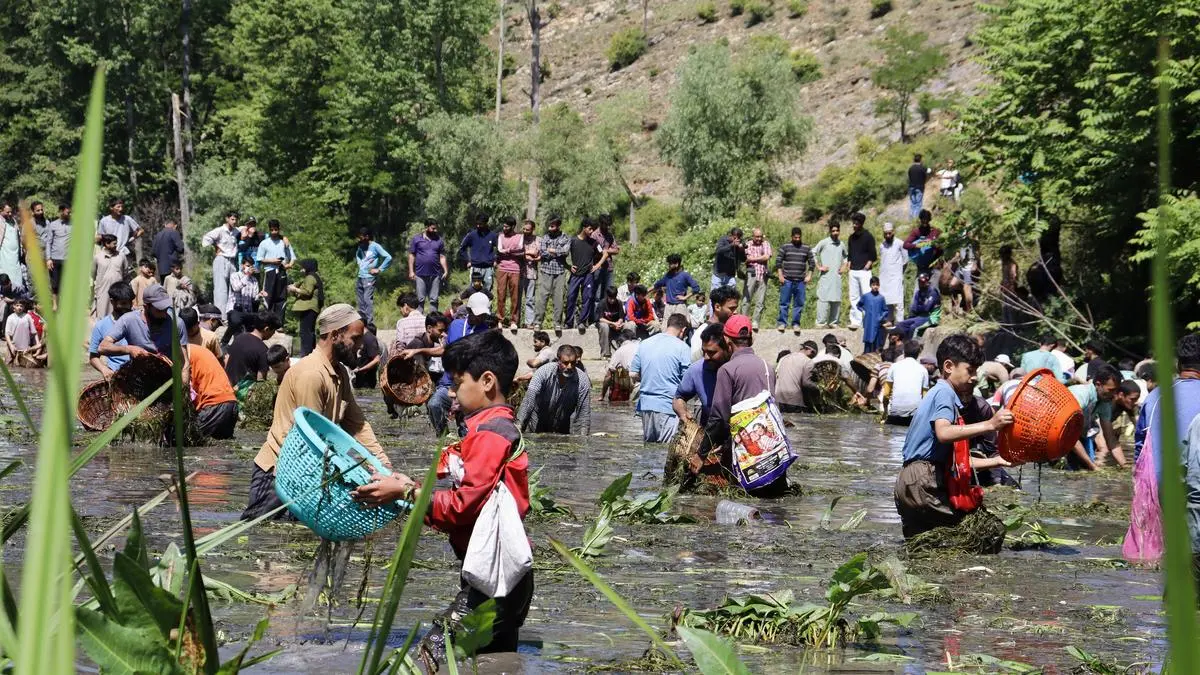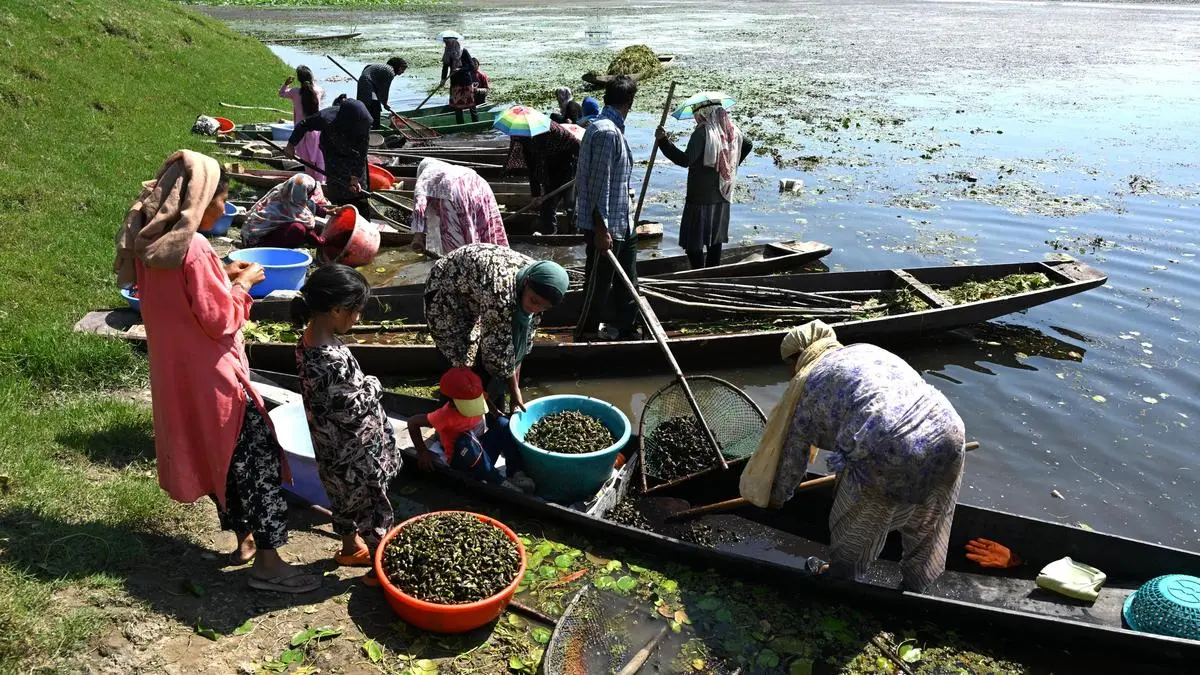
Women clean water chestnuts in a rivulet after harvesting them from mud and weeds of the marsh in Wular Lake
| Photo Credit:
Every morning, 20-year-old Shazia rows her boat across the serene waters of Wular Lake in SK Payeen, about 60 km north of Srinagar, to harvest water chestnuts.Like Shazia, many women from her village head to the lake each day to collect aquatic crops that supplement their families’ income.“The crop is comparatively better this season than last year,” said Shazia, who harvests around 20 to 25 kg of water chestnuts daily.Water chestnuts are harvested in two seasons each year. During the summer and autumn harvests, women constitute the bulk of the workforce, spending hours rowing boats and wading through the lake to gather the crop.The winter harvest, carried out in harsher conditions and colder waters, is largely undertaken by men. However, women remain at the heart of the trade even after the harvest, peeling the chestnuts, drying them, and even selling them in local markets. Their contribution extends across the value chain, making them the backbone of the water chestnut economy around Wular Lake.“This work is hard, but it helps us support our families. During the harvest season, we spend hours in the lake collecting chestnuts and then processing them,” said Raja Begum, another woman farmer.Spread across nearly 200 sq km, Wular Lake, one of Asia’s largest freshwater lakes, sustains thousands of people living along its banks. More than 30,000 families in over 35 villages depend on the lake for their livelihoods, with fishing and the harvesting of water chestnuts serving as their primary sources of income.The lake yields an estimated 4–5 tonnes of water chestnuts annually. However, production has declined in recent years due to prolonged dry spells that reduced water levels, while increasing siltation affected the crop.This year, however, farmers say the harvest has improved, attributing it to favourable weather conditions that kept the lake replenished.“The crop is much better this season because the water level remained good,” said Mushtaq Ahmad, another farmer from the village.Officials also attributed the improved harvest to favourable hydrological conditions.“Pollution levels in the lake are within the permissible limits, and water levels have remained optimal this season,” an official said.“We received good snowfall during winter and adequate rainfall later, which helped maintain the lake’s water level and supported better crop growth,” the official added.For women like Shazia and Begum, a good harvest means more than just higher earnings. It provides much-needed financial support to their households and reaffirms the lake’s enduring role as a source of livelihood for thousands of families who have depended on its waters for generations.Published on July 30, 2026