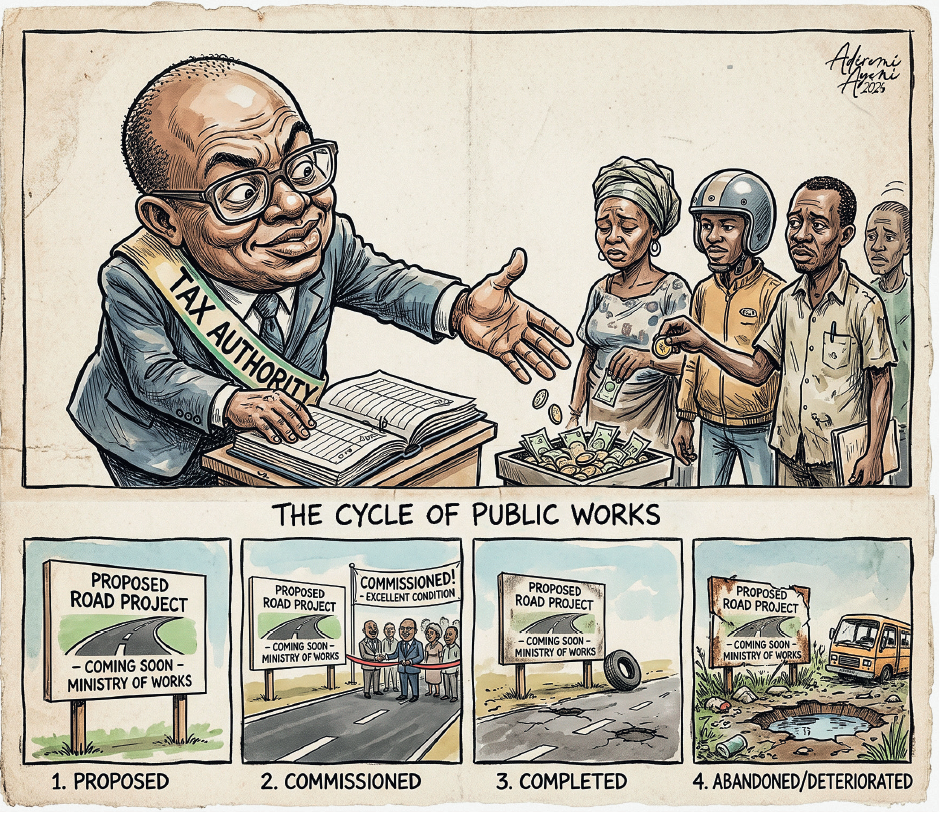
In my last two articles, I argue that Nigeria’s developmental challenge is less about the absence of ideas than the organisation of incentives. The first article contends that many of our governance failures are symptoms of a deeper organisational misalignment between authority, incentives and capability. The second traces the evolution of Nigeria’s fiscal federalism, showing how the gradual shift from rewarding production towards prioritising distribution weakened the incentive for governments to expand their productive base.
The third in the series has been divided into two parts: the first (the present one) continues on the incentive argument and lays the ingredients for productive rivalry among states, while the second attempts a definition of productive federalism and how it can be engineered in Nigeria.
Has the Nigerian Incentive Evolved in the Right Direction?
These arguments naturally raise another question: if Nigeria’s incentive structure has evolved in this direction, where should reform begin?
For many, the answer lies in restructuring the federation, rewriting the Constitution or renegotiating the revenue-sharing formula. These debates are legitimate and important. However, I take a somewhat different view. The task before Nigeria, and indeed before the country’s next generation of leaders, is not principally one of constitutional engineering. It is one of governance. More specifically, it is about aligning authority, incentives and institutional capability in ways that encourage every level of government to build productive capabilities rather than compete principally for distributable revenues.