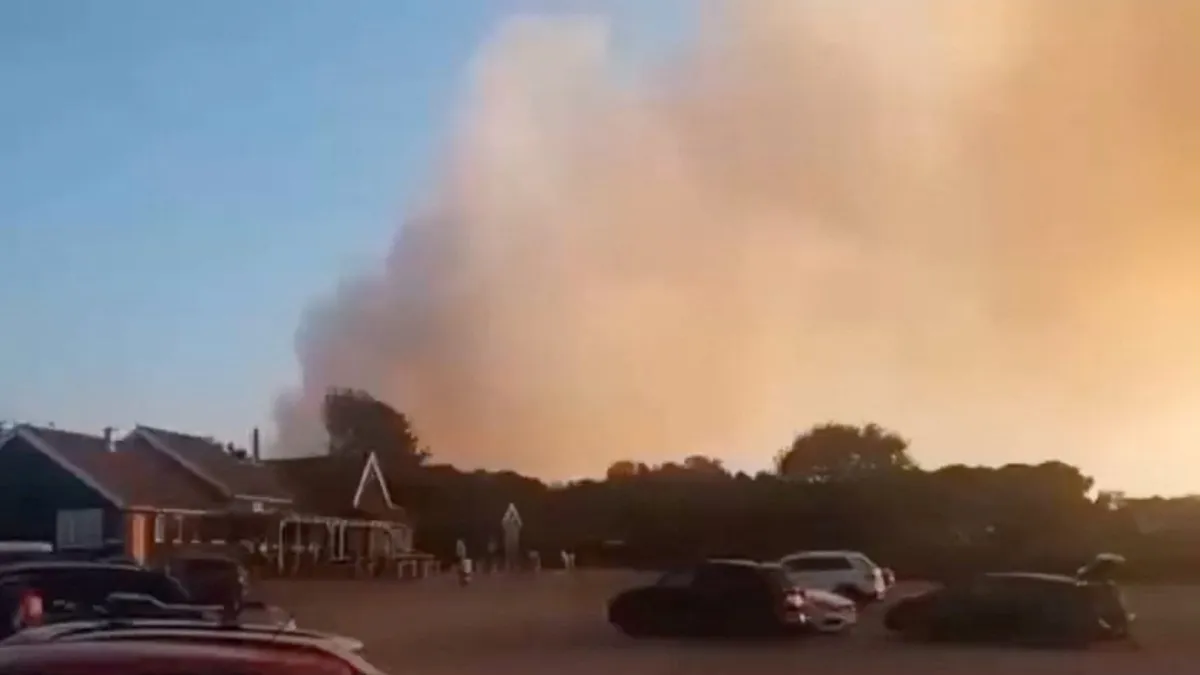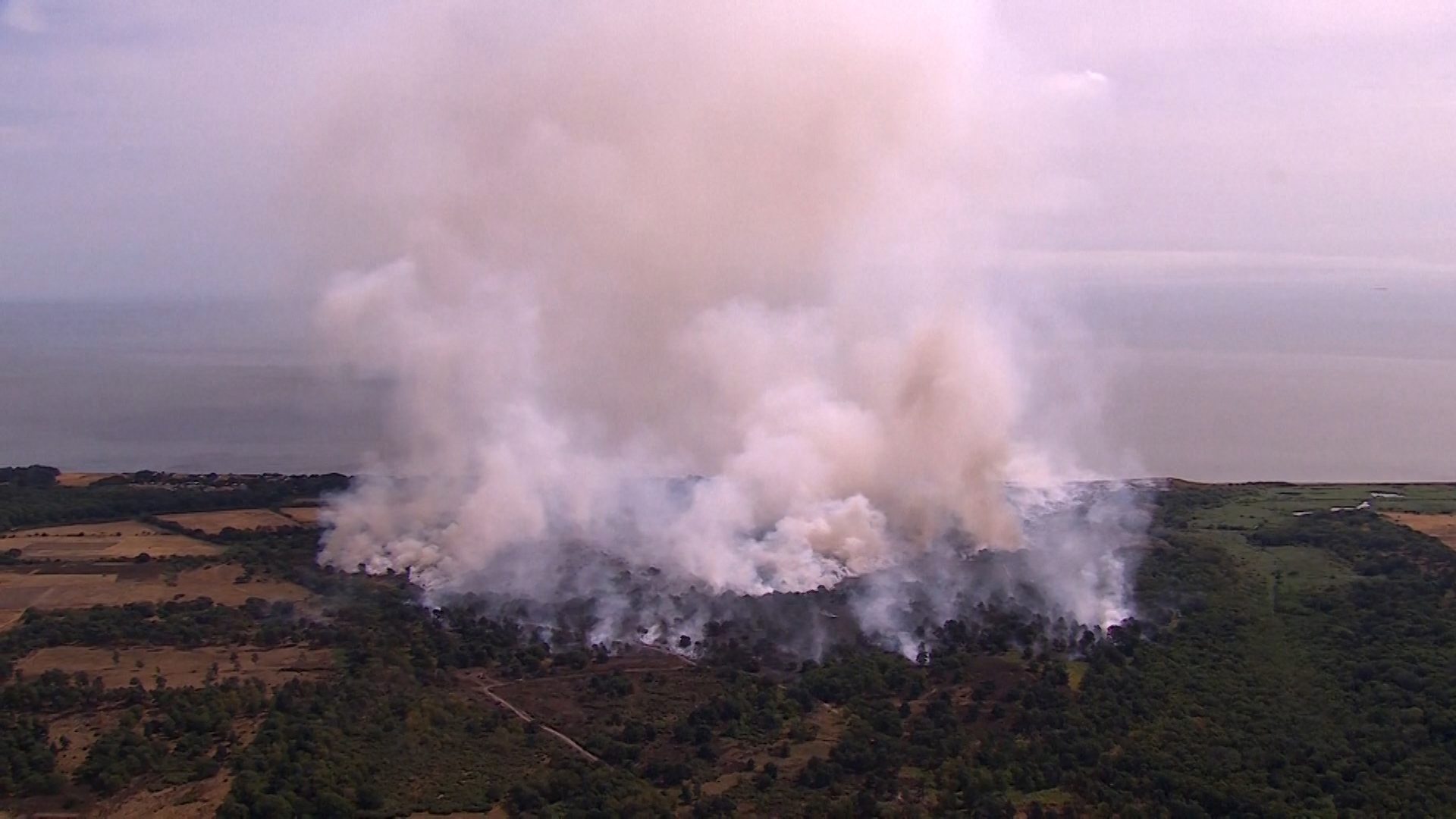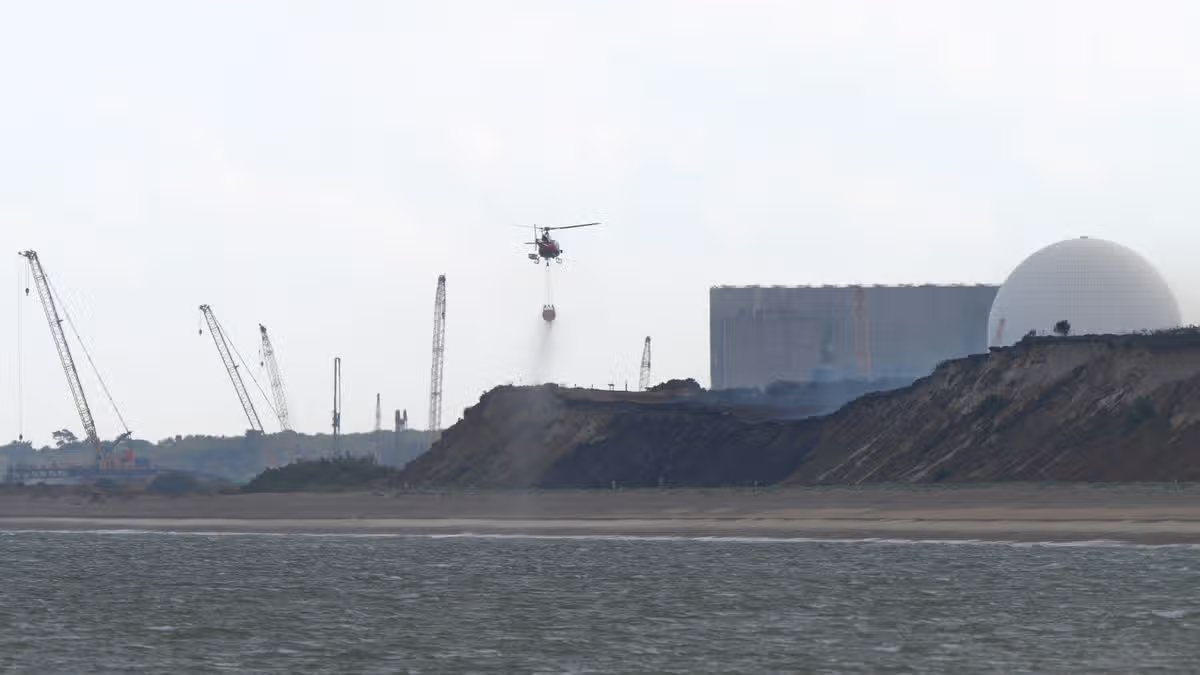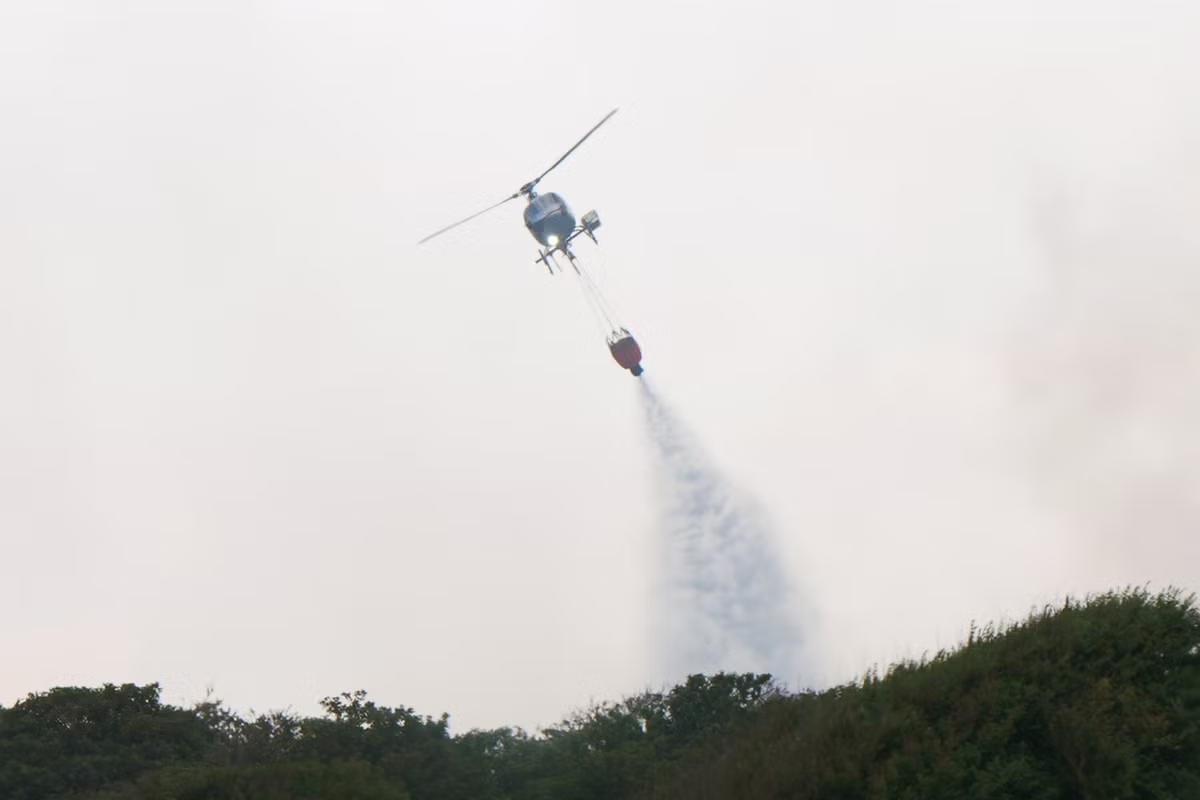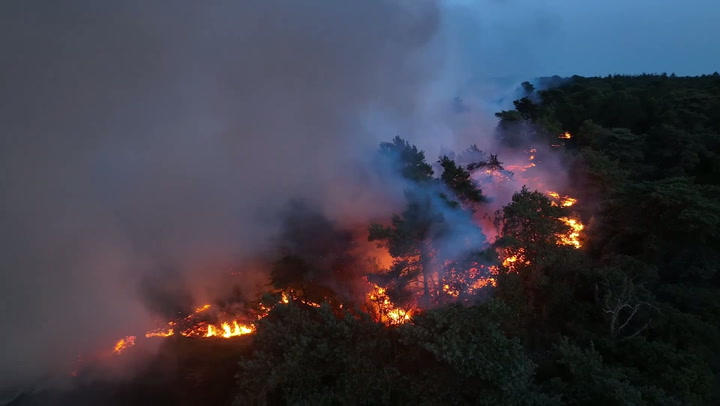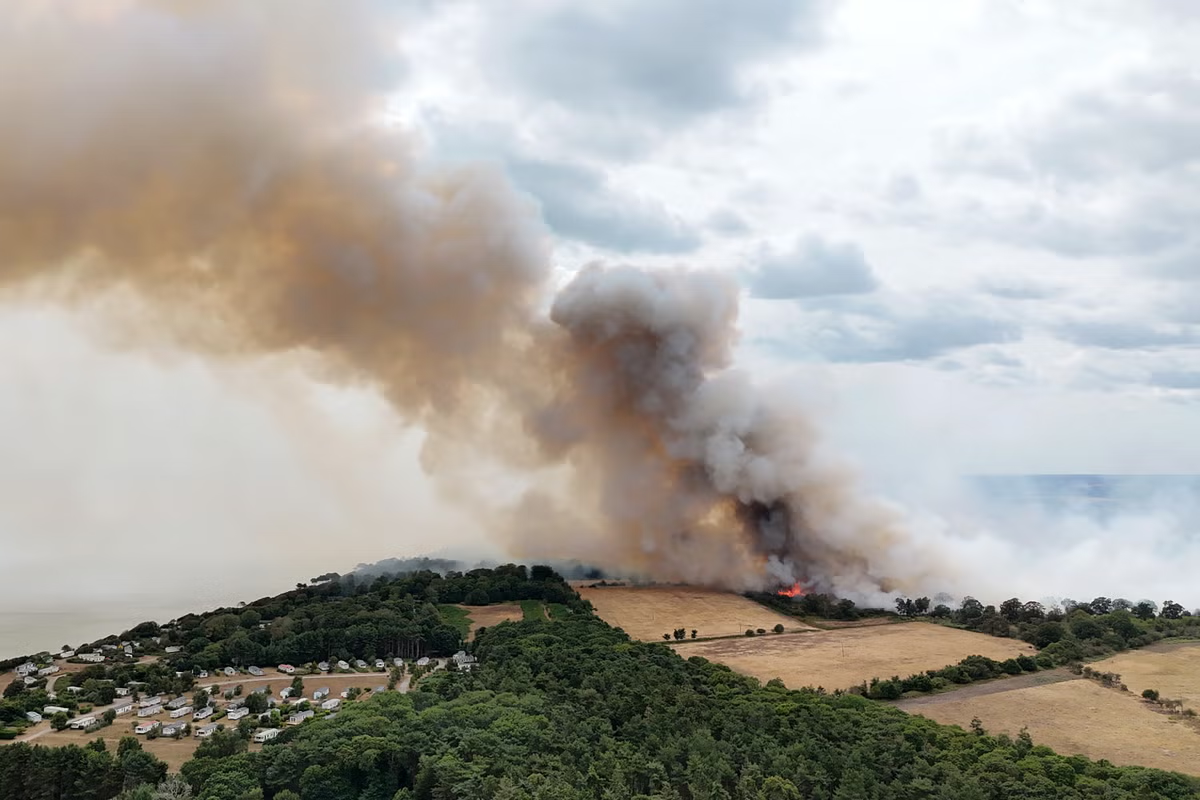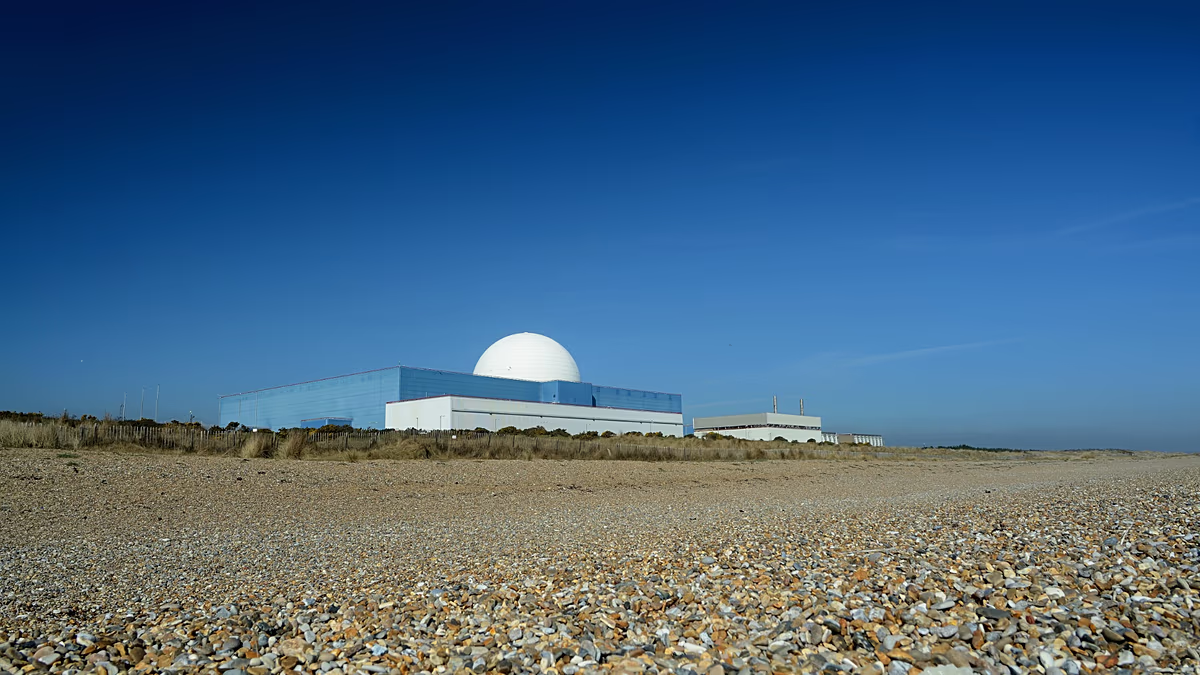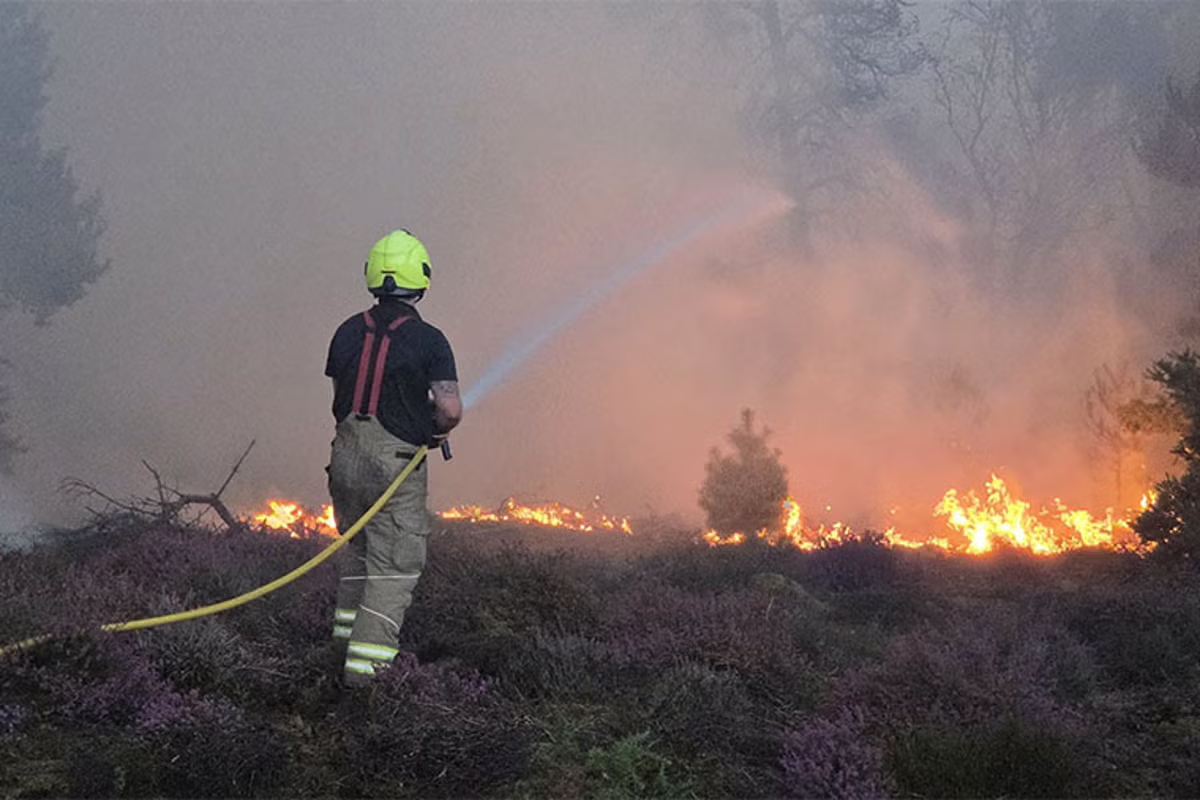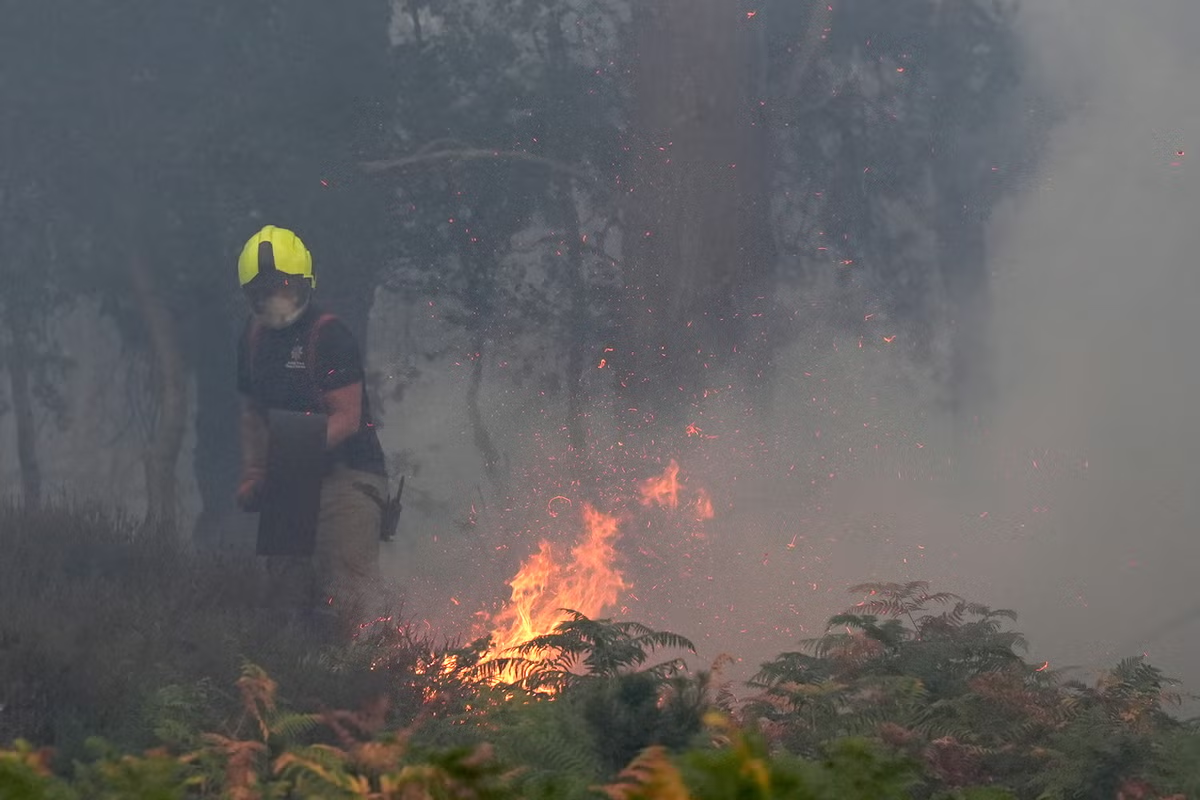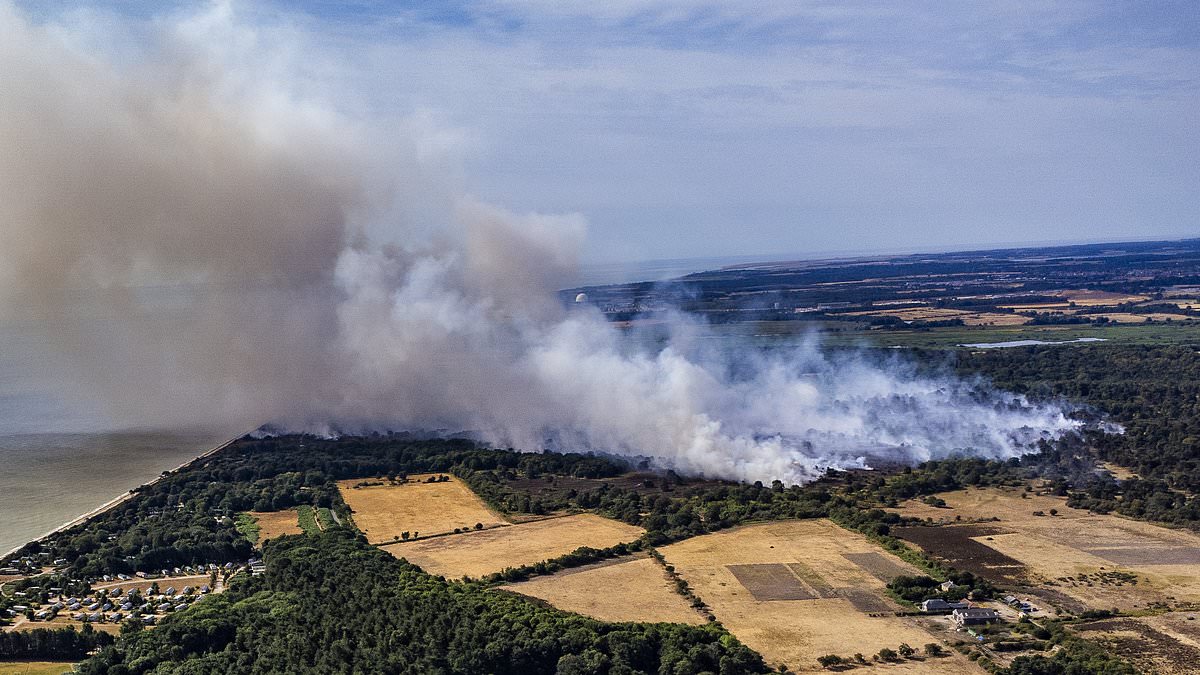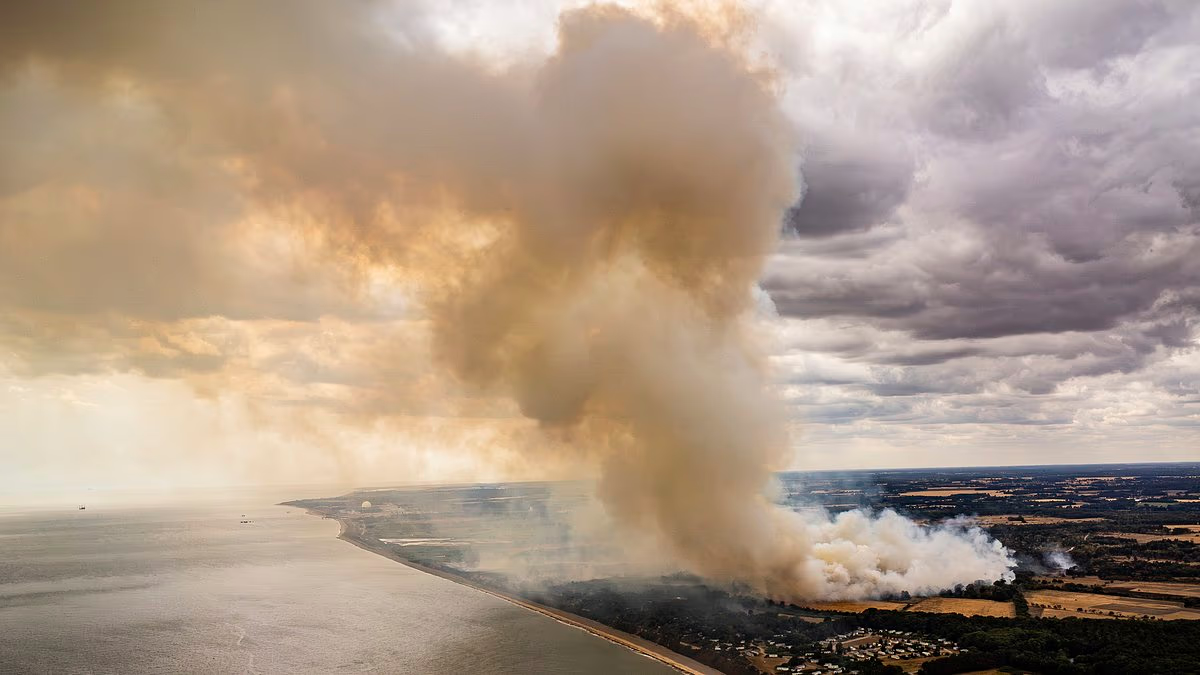
Scientists have revealed what would happen if the out-of-control Suffolk wildfires reached the Sizewell B nuclear power station, as firefighters continue battling the blaze.The inferno has already forced holidaymakers to flee campsites and prompted a major emergency response after flames spread across large areas of heathland near the coast.The nuclear site has been placed on high alert as a precaution, although experts stress there is currently no indication that the reactor itself is under threat.Professor Joel Turner, Rolls-Royce Chair in Nuclear Fuel Technology at the University of Manchester's Dalton Nuclear Institute, said placing the station on high alert was ‘a very sensible precaution’.He explained that if necessary, operators could rapidly shut down the reactor by triggering what is known as a SCRAM, in which control rods are inserted into the reactor core in less than a second.‘In practice a SCRAM would likely only be done because it was unsafe to keep the plant fully staffed, rather than because of physical danger to the reactor itself,’ he said.He added that the biggest concern would be maintaining the station's connection to the electricity grid, which helps power its cooling systems.But even if that connection were disrupted, he said the plant has multiple backup cooling systems and diesel-powered generators designed to keep the reactor safe. This morning Suffolk Fire and Rescue Service said the blaze at Dunwich Heath, Suffolk covered around 24 acres, but by midday this had increased to the size of 140 football pitches, or 247.1 acres Sizewell's reactor core is housed inside a 20cm-thick steel pressure vessel surrounded by a heavily reinforced concrete containment buildingProfessor Mike Bluck, Professor of Nuclear Engineering at Imperial College London, said the fire front is currently around three to four miles from the site, which remains unaffected.He said that although the surrounding countryside could allow a wildfire to approach the station, the industrial nature of the site and its network of large access roads would help act as natural firebreaks.Professor Bluck said the reactor was specifically designed to withstand a range of external hazards, including fires.He added that if the flames came any closer and there were specific concerns, the reactor could be safely shut down while extensive backup cooling systems kept it secure.‘The reactor core sits within a 20cm thick steel vessel, which is surrounded by a reinforced concrete containment,’ he said.‘Breaching of the containment and pressure vessel is unimaginable.’Professor Bluck explained that while other facilities, such as spent fuel storage areas, would also need protecting, the site has its own fully equipped fire service and specially trained emergency personnel.He also noted that Britain is not facing an unprecedented situation, pointing out that France has several nuclear power stations located close to areas regularly affected by much larger wildfires without any recorded nuclear incidents.
What would happen if wildfires reach Sizewell's nuclear power station?
Scientists have revealed what would happen if the out-of-control Suffolk wildfires reached the Sizewell B nuclear power station, as firefighters continue battling the blaze.
744 words~3 min read