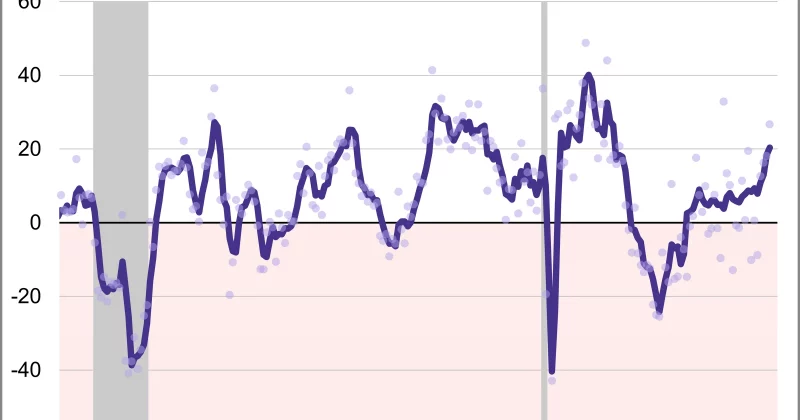
The Federal Reserve Bank of Chicago released its advance Labor Market Indicators for July on Wednesday, clocking in at 4.13%. That’s a modest decline from the 4.19% reading in the prior period.
The Chicago Fed’s LMI tracks three core components: layoffs and other separations, the hiring rate for unemployed workers, and a forecast of the BLS unemployment rate. The national unemployment rate has been hovering around 4.2% in recent months, including June’s reading of 4.2%. The LMI’s advance estimate coming in below that threshold suggests the official July number could print slightly lower when it drops.
The LMI uses a two-stage release format. The advance report landed July 30, and the final version is scheduled for August 6. For context, the Chicago Fed launched this indicator series in September 2025 specifically to fill a gap in the data calendar. By releasing LMI data approximately two weeks ahead of the BLS’s official report, the Chicago Fed enables economists, policymakers, and market participants to react to changing labor market conditions.
Employment figures are one of the Federal Reserve’s primary inputs when deciding interest rate policy. A tightening labor market, meaning fewer layoffs and more hiring, typically signals rising consumer confidence. Sectors most sensitive to employment conditions, like retail, hospitality, and consumer discretionary, tend to move on these readings.