Every post you write now goes to two readers.
The first is a person. They open it, read it, decide whether it was worth their time. Nothing new there — we've been writing for that reader forever.
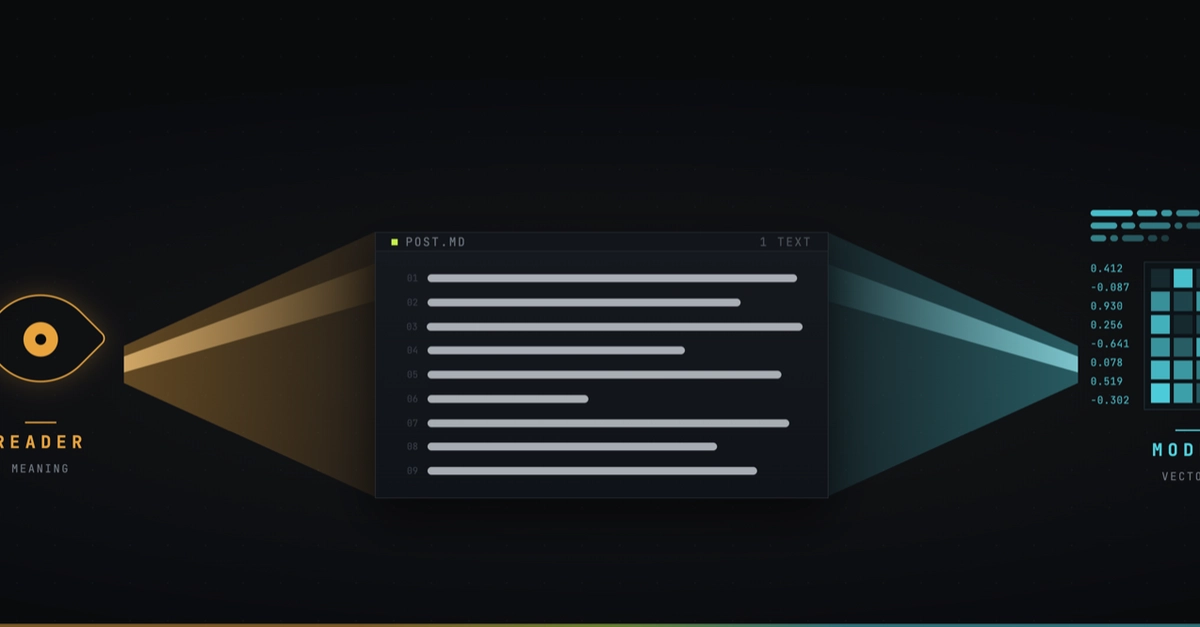
The second reader showed up recently, and it isn't a person. It's a model. It reads your text, works out what it's actually about, and decides whether to surface it or quote it in an answer. You're writing for both now. They want slightly different things — but less different than you'd fear.
LinkedIn is the easiest example because they published how it works. Their engineering post describes the new way content gets picked: instead of the old pile of separate pipelines, there's now an LLM retriever that turns every post and every profile into a vector of meaning, then pulls a couple thousand candidates out of millions by how close those meanings sit. That's the first point where a model reads your text. Before anything gets ranked, something has already worked out what you wrote about.
Here's the part almost every write-up got wrong. The retrieval runs on an LLM, yes. But the final ranking of those candidates isn't done by a language model — it's a separate transformer called Feed-SR. In their own paper, LinkedIn says plainly that they tried an LLM ranker and chose not to ship it: the transformer scored better and cost less to run. So "the feed is one giant LLM now" isn't what happened. The LLM sits exactly where it's decided whether your text gets considered at all — at the reading-for-meaning step.