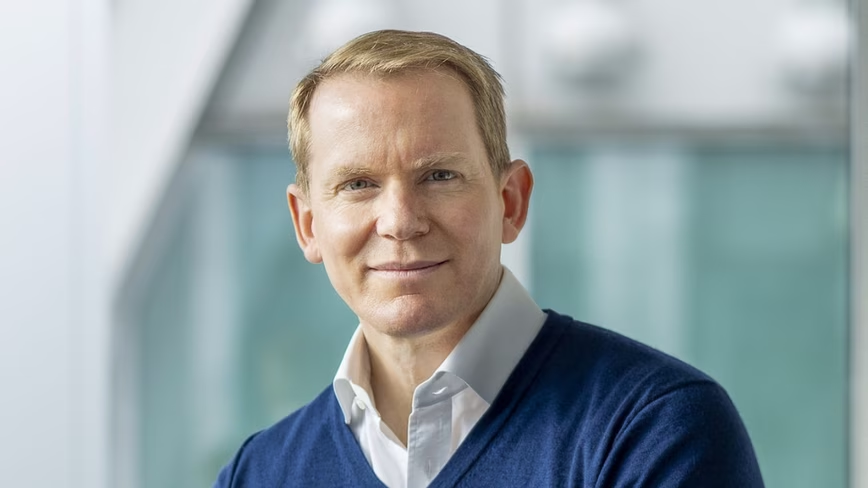
Lloyds Banking Group has reported a substantial jump in profits, alongside unveiling an ambitious new four-year strategy centred on artificial intelligence and digital transformation to unlock an additional £2 billion in cost savings.The banking group announced a pre-tax profit of £4.3 billion for the six months to the end of June, marking a 23 per cent increase compared to the same period last year. This figure surpassed analyst expectations, which had forecast profits around £4.1 billion.The strong financial results were driven by increased income and more controlled business costs, while customer lending and deposits also saw growth over the period. Lloyds confirmed it is on track to achieve more than £2 billion in gross cost savings between 2022 and 2026.Looking ahead, the group is now targeting a further £2 billion in cost reductions by 2030. This ambitious goal forms part of a new plan, set to begin in 2027 following the conclusion of chief executive Charlie Nunn's current five-year strategy, focusing heavily on digital transformation, technological modernisation, and the widespread deployment of AI across its operations.The banking group shared the new strategy which will come into effect from 2027 when the previous five-year plan under chief executive Charlie Nunn comes to an endMr Nunn said he hopes to use the technology to introduce digital services the bank has not been able to offer before, like more personalised advice.“We do think that there are new opportunities with agentic AI to both differentiate our services and grow more efficiently, i.e. provide services we’ve never been able to provide,” he said.“So being able to provide investment advice to anyone in the UK that wants to talk to us with really well-trained agents.“And also be able to do work differently and more efficiently internally.”The plans raised fears about potential job cuts as the banking group deepens its use of generative AI, which it previously said was expected to deliver a £100 million boost this year through revenue gains and cost savings.Mr Nunn said the bank does “not put targets around numbers of staff” but added that the shift will “impact work” across the group.“It is going to impact work, it is going to require us to continue to reskill people and hire new people,” he said.“But that’s been my history for 30-odd years in financial services.”Lloyds said it was on track to have found more than £2 billion of gross cost savings between 2022 and 2026The strategy, dubbed Accelerate 30, will also involve investing more than £13 billion over the four-year period in a bid to transform how customers engage with money.This will see the launch of new products and services such as the Lloyds Smart Wallet, unveiled on Thursday, to provide new payment options and rewards for customers.Since 2022, Mr Nunn has overseen significant changes including transforming digital banking and ramping up the use of AI, building up the bank’s wealth arm, and cutting hundreds of high street branches.More recently, Lloyds decided to scrap the Halifax brand and change it to Lloyds.Mr Nunn said: “We are successfully completing our 2022 to 2026 strategy, focusing on customer experience, pivoting the group to growth and laying the foundations for our exciting new strategy.“We have strengthened our market leadership, built our digital and AI capabilities, and enhanced our cost and capital leadership, while remaining on track to deliver our 2026 financial targets.“This ensures the group is well placed to launch our new strategy, Accelerate 2030, from a position of strength.”
Lloyds kickstarts £2bn cost-cutting strategy powered by AI
Lloyds recently decided to scrap the Halifax brand and change it to Lloyds
574 words~3 min read