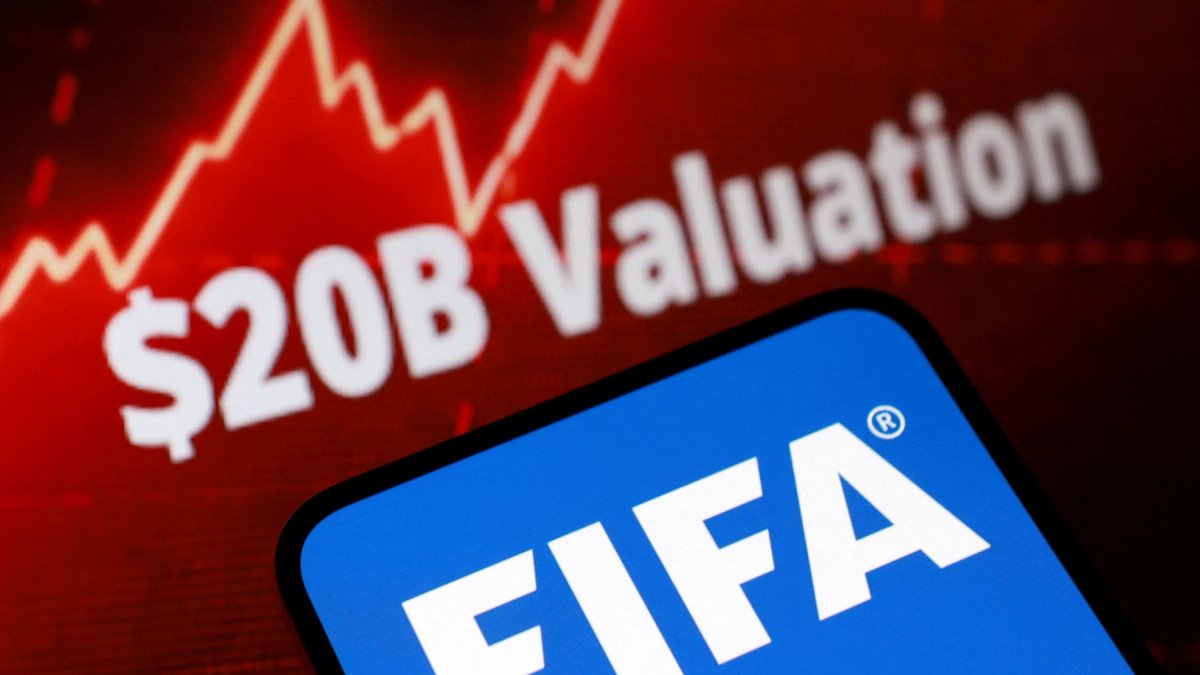
The news on Tuesday, first reported by the Financial Times, that FIFA is preparing to sell off part of its commercial operations spread shock and outrage across the sporting world.Football’s world governing body plans to sell a 21 per cent slice in FIFA Forward Enterprise (FFE), a new subsidiary under which commercial operations and events — such as the World Cup, which, as detailed recently by The Athletic, is the key driver in FIFA’s finances — will be consolidated. The intention is to raise $4.2billion (£3.2bn) from outside investors and the narrative quickly formed: FIFA wants to sell (part of) the World Cup.The rebukes have been swift. By Wednesday night, three of the six confederations under FIFA’s hand had criticised the move, as had several member associations — none of whom were apparently consulted before plans broke into the public domain. Shows of support have been a minority act.Money, as ever with FIFA and football generally, is central to the plot. But what, exactly, is FIFA proposing under these plans? How do they compare to other sports and other entities within football? And why all the controversy?What is the financial model being proposed by FIFA?As is often the case, FIFA led its argument on this with big numbers. FFE is designed to be a specific, purpose-built entity, maximising FIFA’s take from commercial and events operations.Citing valuation forecasts carried out by JP Morgan Chase, a global bank, FIFA reckons FFE will be worth $20billion. Of that, it hopes to raise $4.2bn via an equity sale — hence the 21 per cent stake on offer to external investors.Are FIFA really trying to sell the World Cup? An expert explainsChris WeatherspoonFIFA needs the majority of its 211 member associations to sign off on its plan, alongside the 37-person FIFA Council (which president Gianni Infantino sits atop), but the carrot to those associations isn’t the mere $4.2billion in proposed proceeds.Instead, FIFA is offering $10billion in development funding over the next four-year cycle, spanning 2027-30. It is a huge uplift. In the ongoing 2023-26 cycle, $3.86bn was budgeted for development purposes, a figure that was only previously set to increase by $127m under the original 2027-30 budget.Those latter figures include all development funds, not just the sums doled out under FIFA’s Forward programme. It is that programme that FIFA notably spearheaded Tuesday’s announcement with, saying this plan’s approval would ensure “football development in every corner of the world would benefit immediately from increased funding available to all 211 member associations”.Conspicuous by their absence in both that announcement and a follow-up ‘frequently asked questions’ (FAQs) document published by FIFA on Wednesday were the six continental confederations, with no clarity given on what might fall due to them under the new financial model. They each receive $15million annually, or $60m over the four-year cycle, but FIFA’s statements only made room for what the 211 member associations — who, crucially, will vote on whether or not to sell off a slice of FFE — will get.What they will get is quite a lot of money.When he was elected in 2016, one of Infantino’s big promises was to send much more money to every nation under the FIFA banner, and he has firmly followed through on it.Before his election, nations received around $3million each over every four-year cycle. Forward 1.0 (2016-18) increased that to $3.75m; Forward 2.0 (2019-22) almost doubled it to $6m. Forward 3.0, in operation until the end of 2026, confers at least $8m in entitlements across the cycle and, for 2027-30, Forward 4.0 budgeted to send members just under $10m each.This proposal blows those figures out of the water.To the 211 members, FIFA is proposing payments of $40million each over the next four years. That is comprised of $20million under Forward 4.0 and a further $20m under an optional new programme named FIFA Fast-Forward.Multiply that second $20million by 211 members, and you get to the $4.2bn FIFA hope to generate from an equity sale. Fast-Forward has caused even greater consternation following the revelation it can only be tapped by those members who confirm their wish to participate by September 19.As Fast-Forward is funded by the equity sale, agreeing to participate in it is akin to agreeing to the equity sale. Those who fail to opt in by that date won’t be offered the funds. UEFA, in a statement on Wednesday afternoon, declared: “This says everything you need to know about this plan.”A byproduct of the news leaking before FIFA could put a proposal out themselves is that it left several matters uncertain. Wednesday’s FAQs document sought to address those. For one, how does a $4.2billion equity sale translate to $10bn in development funding?That $10billion comprises a mix of new and existing funds — $4.2bn would be generated from the sale of a 20 per cent stake in FFE, but FIFA’s logic goes that simply by creating FFE, it will generate greater revenues even than the $15bn they now expect from the 2023-26 cycle.A professionalised commercial business, demarcated from governing football, would, its executives theorise, bring in even bigger bucks. As much as $2.7billion was already budgeted for FIFA’s Forward programme in 2027-30. Under new proposals, that amount would increase to at least $4.2bn, being that $20m due to each member association (in reality, the sum will be even greater, as confederations and zonal/regional associations receive payment under Forward too).
Breaking down FIFA’s stake sale, how it compares to other sports and whether it’s necessary
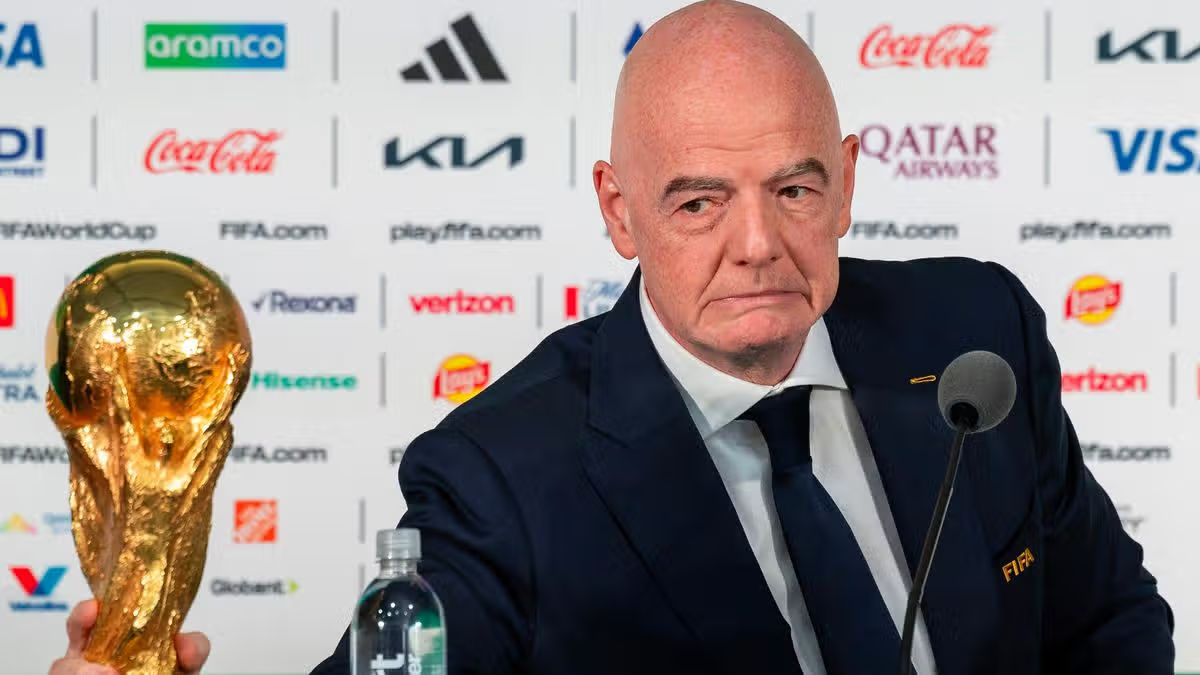
The intention is to raise $4.2billion from outside investors, which led to the narrative that FIFA wants to sell (part of) the World Cup
2,521 words~11 min read