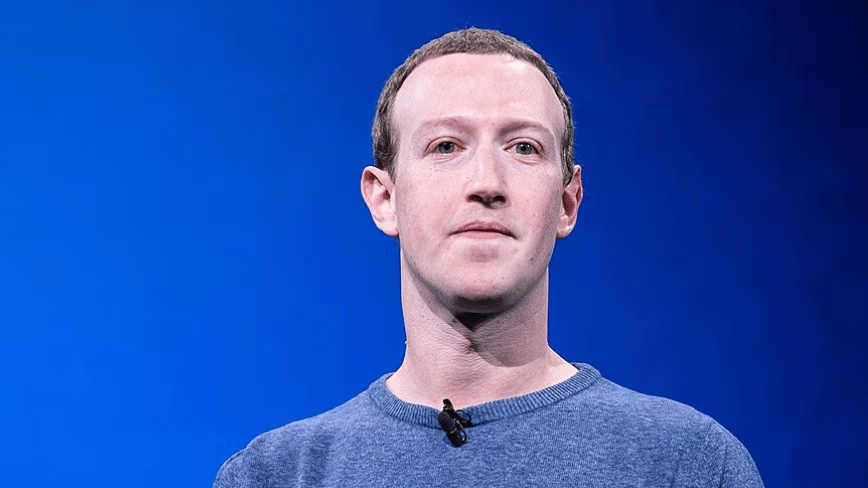
Mark Zuckerberg thinks almost everyone will soon have an AI that works for them. On Meta’s second-quarter earnings call on 29 July, he predicted that within five years “billions of people” will each have “a personal agent that understands your goals,” handling their finances, health, relationships, and homes.
It was the boldest version yet of a pitch he has been sharpening for months. Mark Zuckerberg has cast personal AI agents as the next mass-market computing platform, and Meta’s own apps, WhatsApp and Messenger, as the place most people will meet them.
The prediction is also a business plan. Meta already runs AI agents for companies on its messaging apps, reaching more than a million business users this quarter, and the consumer version is meant to become a revenue stream large enough to justify the money going in.
That money is the uncomfortable backdrop. Meta’s free cash flow fell 91% in the quarter, to $784 million, and its Reality Labs division lost another $4.6 billion, bringing its cumulative losses since 2021 to roughly $88 billion.
The infrastructure bill keeps climbing on top of that. Meta and BlackRock announced a $14 billion data-centre partnership in El Paso this quarter, one more sign that the company is building for the agent future long before the revenue exists to pay for it.