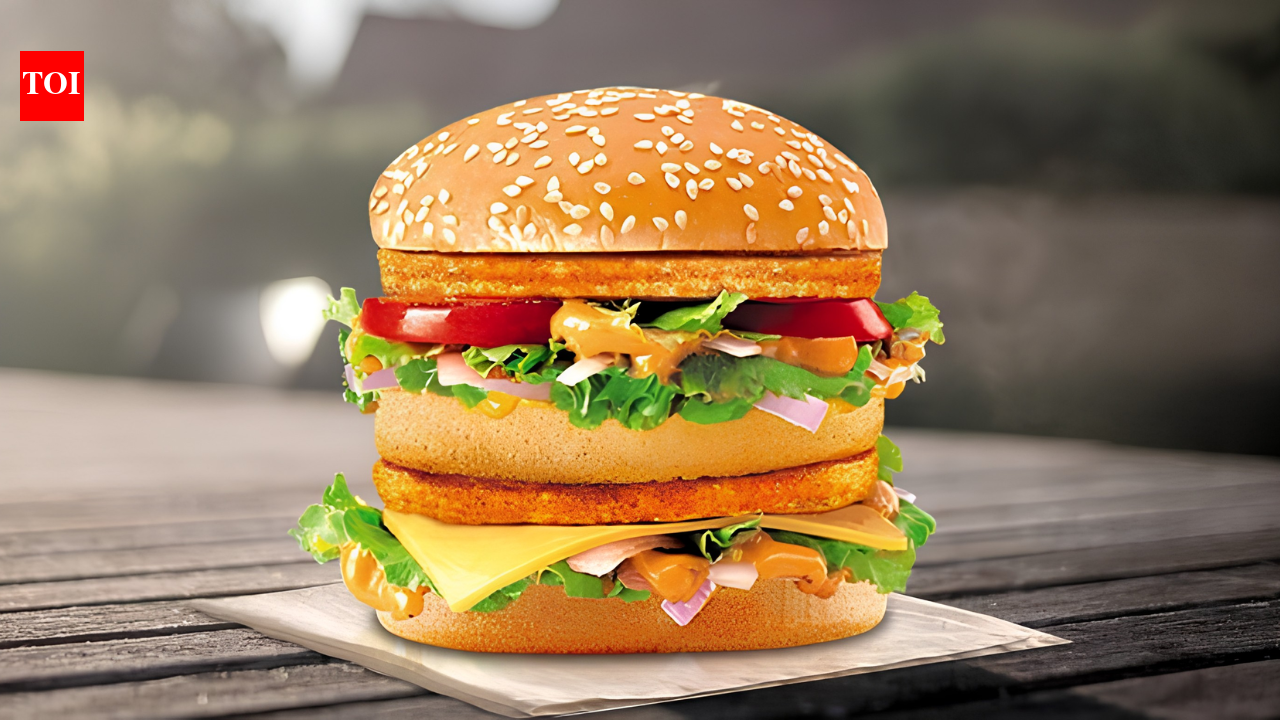
Burgernomics at 40When Pam Woodall, then economics editor at The Economist, decided in 1986 that a hamburger might explain something serious about the global monetary order, she was not, one suspects, expecting the thing to outlive four decades of floating currencies, three financial crises, and the arrival of an entire generation of readers who have never once folded a printed edition of the paper. Yet here we are. The Big Mac index, which the paper is dressing up for a fortieth-birthday turn on this week's digital cover, has proven the rare economic gimmick that refused to die of its own cleverness.The premise remains disarmingly simple, and that is the whole trick. The index tests purchasing-power parity, the notion that in the long run a currency should buy roughly the same basket of goods everywhere. A Big Mac, assembled to the same specification from Zurich to Jakarta, makes a passable stand-in for that basket. If the burger costs meaningfully more in one country than another once you convert into dollars, the argument goes, the currency is either eating too well or going hungry.Here is where things stand in the paper's own January 2026 dataset, the freshest reading it has published. Note the American benchmark has climbed to $6.12, up from $5.79 a year earlier, which tells its own quiet story about where inflation has and has not gone to die. According to The Economist’s January 2026 Big Mac Index, India’s Maharaja Mac costs $2.51, compared with $6.12 in the United States. On this measure, the rupee is undervalued by 58.9% against the dollar, while the Swiss franc is overvalued by 48.4%.The spread is the story. A burger that costs $9.08 in Switzerland costs $2.47 in Taiwan, a gap of more than six dollars, which is larger than the entire American price. Nobody seriously believes the Swiss cook it three and a half times better. What they are paying for is a strong franc, expensive real estate, and wages that would make a Mumbai franchisee weep.Which brings us, inevitably, to the rupee. India occupies a slightly awkward corner of this exercise because the country does not sell the beef Big Mac at all, for reasons anyone who has grown up here does not need explained. The paper substitutes the Maharaja Mac, made with chicken, as the closest available proxy. The substitution is honest, and it changes nothing about the conclusion, which is that the rupee looks perpetually, almost stubbornly, cheap. On the raw index it now reads 58.9% undervalued, second only to Taiwan.The raw number, though, is the lazy one. The more instructive measure is the GDP-adjusted index, which accounts for the awkward fact that wages are lower in poorer countries and wages are a large part of what you pay for a sandwich. On that measure the rupee is 44.8% undervalued as of January 2026, a record in the series and a steady worsening from the 6.9% reading of January 2018. The Maharaja Mac's price has risen from ₹180 in 2018 to ₹227 in 2026. Yet, on the GDP-adjusted Big Mac Index, the rupee’s estimated undervaluation against the dollar has widened from 6.9% to 44.8%. The rupee's adjusted discount has deepened almost without interruption since 2018.There is a temptation, particularly among a certain kind of dinner-table patriot, to read this as evidence that the rupee is being held down by dark foreign forces. The reality is duller and more useful. A burger in Bandra is not a burger in Basel, whatever McDonald's would like you to believe, because the labour that flips it is priced by an entirely different economy. When a country grows richer faster than its prices catch up, its currency will read cheap on this measure almost by construction. The rupee's widening discount is less a conspiracy than a footnote to two decades of respectable growth against a persistently firm dollar. The raw line (grey) asks only what the burger costs. The adjusted line (red) accounts for the fact that a poorer country should have cheaper burgers anyway. The narrowing distance between them says the rupee's discount is becoming harder to dismiss as a mere function of low wages.This is the index's great virtue and its great limitation folded into one greasy wrapper. It flatters no one and it explains a little. It cannot tell you where the rupee will close on Tuesday, and it was never built to. What it does, rather beautifully, is remind the reader that an exchange rate is not handed down from a mountaintop but is the sum of a thousand mundane facts, of which the price of a chicken sandwich is merely the most edible.Forty years on, the index survives for the same reason the burger does. It is standardised, it is everywhere, and it asks nothing of you except that you notice the price. Woodall built a joke that turned out to be a lesson, which is the highest thing a joke can aspire to. The paper will put it on the cover this week, and somewhere a first-year economics student will grasp purchasing-power parity for the first time because a hamburger explained it. That is not a small thing. It may, in fact, be the whole point.SOURCE NOTE: All figures from The Economist's published Big Mac index dataset, January 2026 edition (54 countries). The repository carries no July 2025 reading, so January 2026 is the latest available.
The Big Mac index: The sandwich that explains the Rupee
When Pam Woodall, then economics editor at The Economist, decided in 1986 that a hamburger might explain something serious about the global monetary order, she was not, one suspects, expecting the thing to outlive four decades of floating currencies, three financial crises, and the arrival of an entire generation of readers who have never once folded a printed edition of the paper. Yet here we are.
897 words~4 min read