Asia Defense | Security | Southeast Asia
President Prabowo Subianto’s hyper-hedging may preserve his country’s diplomatic flexibility, but it risks military fragmentation and regional uncertainty.
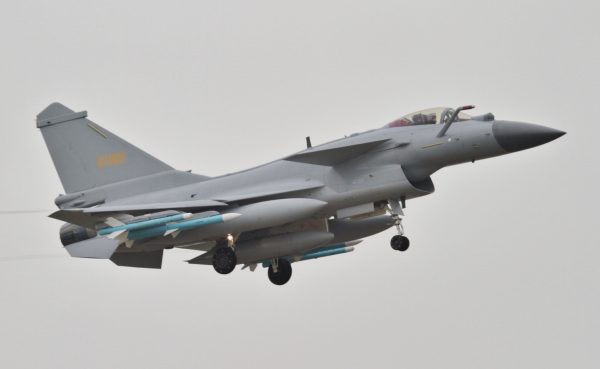
A J-10B fighter aircraft carrying PL-8 and PL-12 air-to-air missiles.
Indonesia’s foreign policy has long rested on the simple idea of “bebas aktif”: i.e., to remain free and active, avoid permanent alignment, and keep relations open with competing powers. President Prabowo Subianto has expressed that instinct through a familiar proverb: “A thousand friends are too few, one enemy is too many.”
In diplomacy, the formula is attractive. However, building an air force is a much more difficult proposition. Indonesia publicly announced plans in October 2025 to acquire at least 42 Chinese-made J-10C fighters. A few months later, Jakarta was also reported to be in advanced talks with Pakistan over more than 40 JF-17s, a fighter jointly developed by Pakistan and China. The practical status of these possible acquisitions remains unclear. Still, together they show that Chinese-origin combat aircraft have moved beyond the realm of speculation and now play a serious role in Indonesia’s military modernization plans.