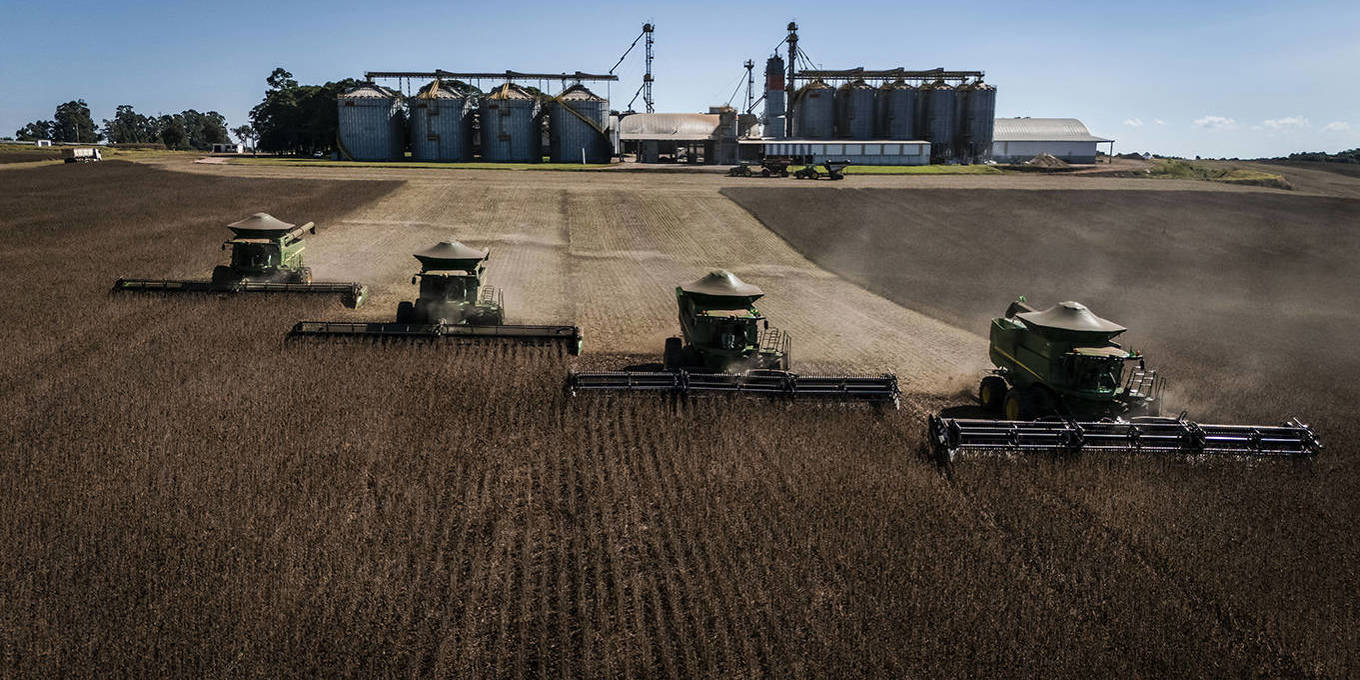
Latin America has spent decades trapped in a cycle of disappointing economic growth that contrasts sharply with its enormous potential. File Photo by John Angelillo/UPI | License Photo
July 30 (UPI) -- Latin America has spent decades trapped in a cycle of disappointing economic growth that contrasts sharply with its enormous potential. The World Bank projects the regional economy will expand by only 2.1% in 2026, the lowest rate among global regions.
This low-growth trap is not inevitable. It is the result of recurring external shocks and weak institutions, compounded by an enduring dependence on commodities. To understand how the region arrived here, we must revisit one of its brightest, yet most instructive, chapters: the commodity boom of the 2000s, which emerged after two difficult decades.
The 1980s became Latin America's "lost decade." A foreign debt crisis, aggravated by rising U.S. interest rates, pushed the region into stagnation and painful fiscal adjustment. In Argentina, Brazil, Peru and Bolivia, hyperinflation destroyed savings and wages alike.
The 1990s brought a dramatic change in direction. Under the broad framework of the Washington Consensus, governments opened their economies, privatized state enterprises and adopted stabilization programs.