Published Jul 30, 2026, 3:00 AM EDT
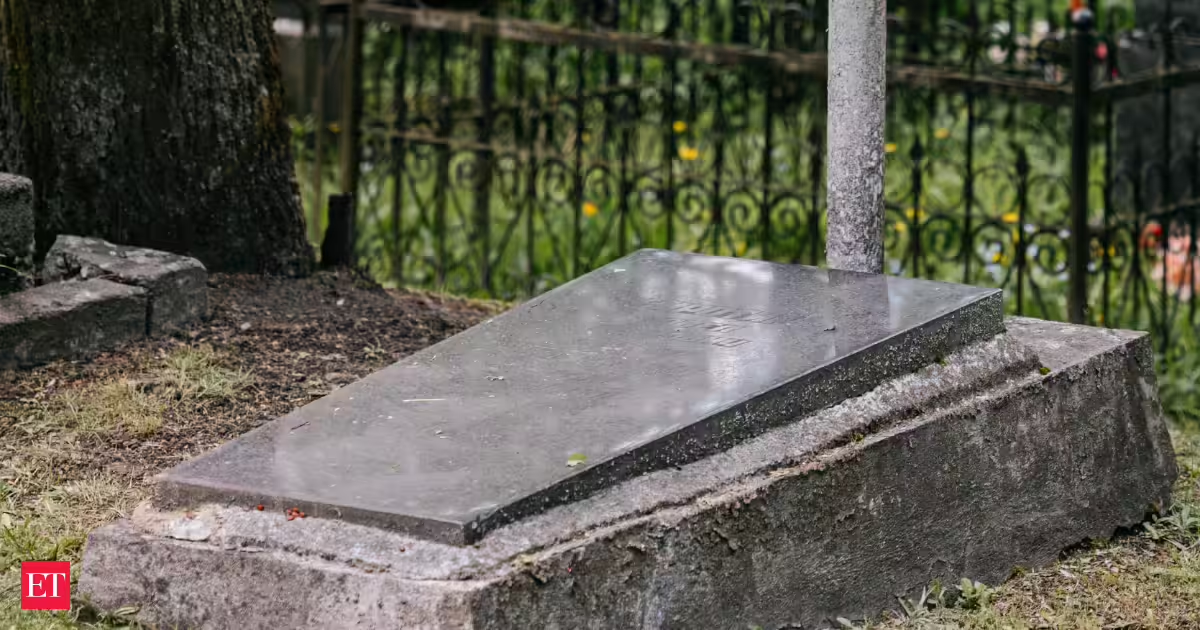
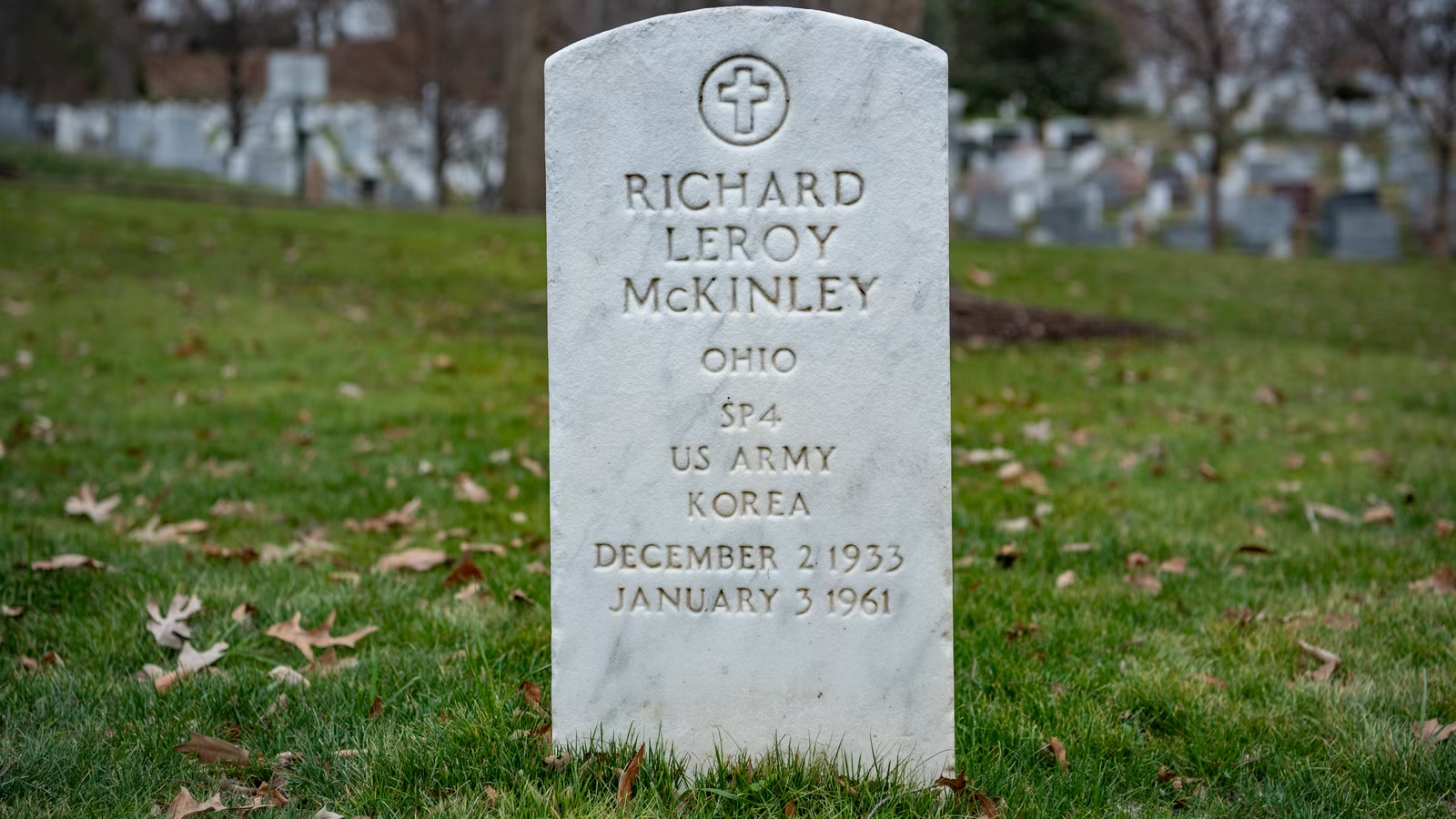
His headstone looks like every other one at Arlington, but the man beneath it is sealed in lead and concrete, and still faintly radioactive.
White marble, rounded top, a name and a pair of dates, one of thousands in the long rows of Arlington National Cemetery. Section 31, Grave 472. A visitor could walk past it a hundred times and never know. Beneath it, a soldier is buried in a lead-lined casket, sealed in concrete, lowered into a metal vault, and covered with more concrete still. His body cannot be moved without the federal government's permission. Sixty-five years after his death, it is still faintly radioactive. His name was Richard Leroy McKinley, and he died running one of the first machines the U.S. military ever built to make nuclear power portable. The military is now building another.
A Reactor in the Desert
On the night of Jan. 3, 1961, McKinley and two other servicemen were at work inside a squat cylindrical building in the high desert of eastern Idaho, about 40 miles west of Idaho Falls, at what was then called the National Reactor Testing Station. Their reactor was named SL-1, for Stationary Low-Power Reactor Number One. Experimental and small, but built to prove that a compact nuclear plant could generate electricity at remote military outposts, without the long fuel-supply lines that diesel generators required. It was the kind of idea that sounded like future tech. The three men had come back from a holiday shutdown and were reassembling the reactor. That night's job involved manually lifting a central control rod a few inches to reconnect it to its drive mechanism, but someone pulled it too far. In roughly four milliseconds, the reactor surged to thousands of times its normal power. The water inside flashed to steam, and the pressure hurled the entire 26,000-pound reactor vessel more than nine feet into the air before it dropped back into place. Two of the men were killed instantly. McKinley, gravely injured, was still alive when rescuers finally reached the building more than an hour later, held back by radiation readings that pinned their needles. He would pass on the way to the hospital. The other two were Army Specialist John Byrnes and Navy construction electrician Richard Legg. All three had absorbed radiation on a scale almost nothing in American life had produced before.