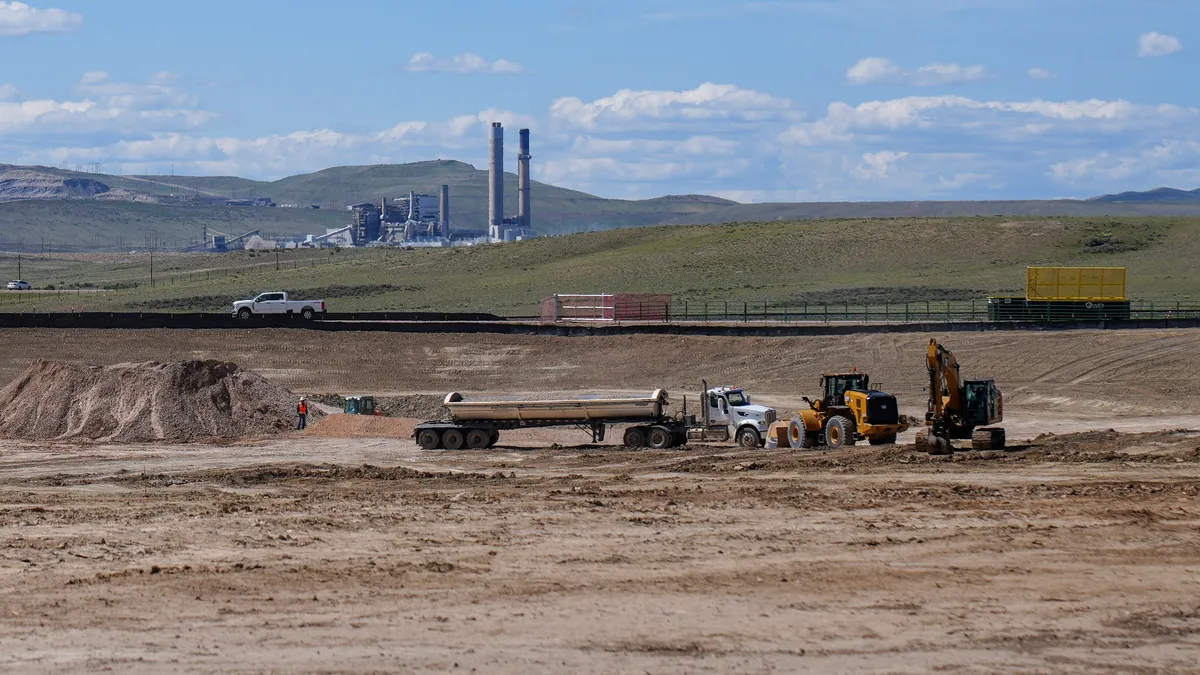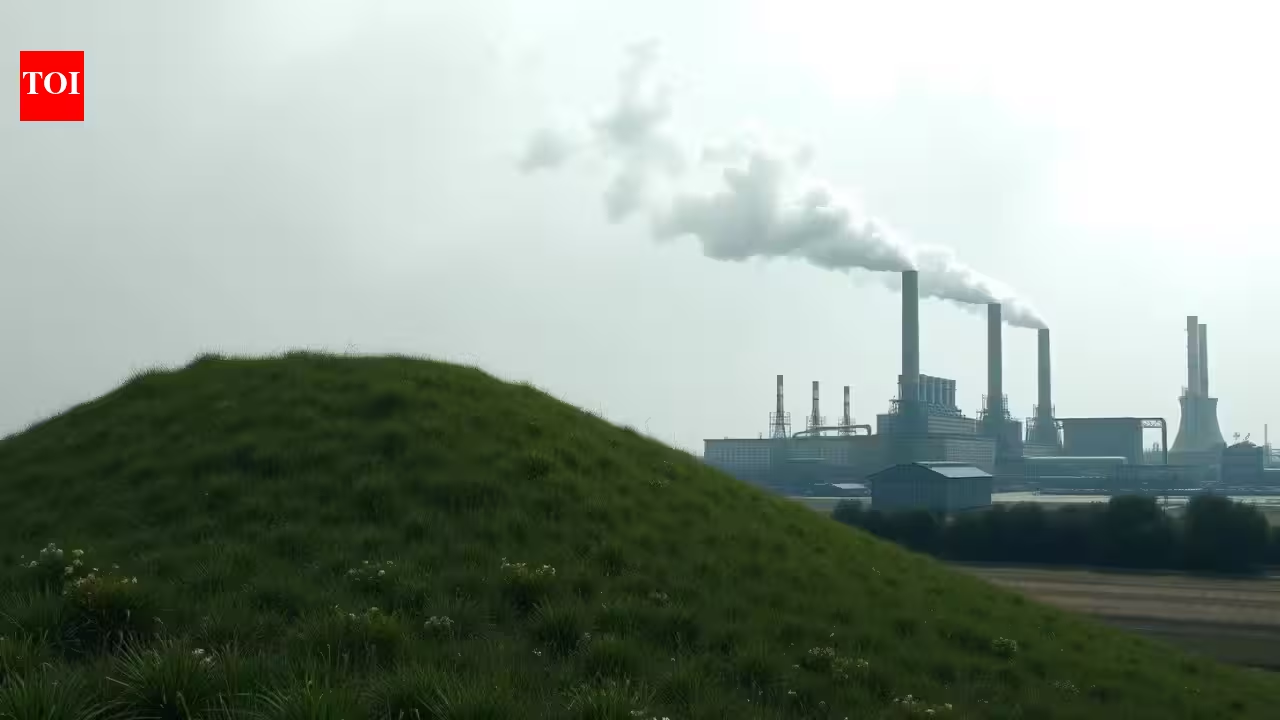
Representative Image of a grassy mound concealing a decommissioned nuclear reactor beside an active coal power plant (AI-generated image)In the late 1950s, the United States Atomic Energy Commission built an experimental nuclear power plant near the small town of Hallam, Nebraska, hoping to prove that a sodium-cooled, graphite-moderated reactor could reliably generate electricity for the commercial grid. It never quite worked as planned. Persistent technical failures forced operators to shut the reactor down after less than two years of active operation, and by 1969, decommissioning crews had dismantled the aboveground facility entirely, sealed the reactor's most contaminated components in place, and covered the entire underground structure with six feet of earth. What remains today is a 1.4-acre, flat-topped mound of grass sitting on the edge of an active coal power plant, quietly containing a reactor vessel that federal regulators expect to keep monitoring for more than a century after the plant went dark.Why the Hallam reactor was built in the first placeThe Hallam Nuclear Power Facility formed part of the Atomic Energy Commission's wider Power Demonstration Reactor Program, an effort launched in the 1950s to test whether various experimental reactor designs could realistically compete with conventional coal-fired power plants. According to an official fact sheet published by the United States Department of Energy, the original facility used a 240-megawatt thermal reactor cooled by liquid sodium and moderated by graphite, a design the Atomic Energy Commission operated from 1962 to 1964 as part of that broader demonstration effort. The plant sat on the grounds of what is now the Sheldon Power Station, an active coal-fired facility roughly 19 miles south of Lincoln, still owned and operated by the Nebraska Public Power District today.How technical problems ended the reactor's short working lifeThe Hallam reactor's operational record turned out to be brief and troubled almost from the start. After reaching criticality in 1962, the plant was shut down within just two years because of persistent problems with its graphite moderator, according to a technical report on the facility filed with the Department of Energy's Office of Scientific and Technical Information. Although the Atomic Energy Commission formally declared the reactor's research objectives fulfilled by 1966, the technology itself never demonstrated the kind of reliable, sustained performance needed to justify continued operation, and the commission ultimately moved toward shutting the project down rather than attempting further repairs.What decommissioning crews actually did to seal the siteDecommissioning and dismantling work ran from 1967 through 1969, and the process involved carefully separating what could be removed from what needed to stay permanently sealed underground. Crews demolished nearly all of the facility's aboveground structures, removed all bulk sodium coolant from the site, and extracted the reactor core along with most other radioactive materials for disposal elsewhere. What could not be safely removed remained entombed within the underground reactor building itself, spread across three separate contamination zones, one holding the reactor vessel and its surrounding containment structures, a second containing fuel storage thimbles, and a third housing damaged moderator elements sealed inside storage cells. Engineers used steam to deactivate any residual sodium left in the structure, guarding against the risk of hydrogen gas forming if groundwater ever breached the sealed chamber.Why officials chose to bury rather than fully remove the reactorRather than attempting a complete removal of every contaminated component, a costly and technically demanding undertaking even by today's standards, engineers opted to entomb the reactor's remaining radioactive material in place and cover the entire underground structure with soil. The result was the distinctive 1.4-acre, flat-topped mound that still defines the site today, engineered with sloped sides specifically to promote water runoff and reduce the risk of erosion exposing the sealed structure beneath. Documents describing the exact layout, dimensions and precise location of the buried reactor vessel remain sealed inside stainless steel boxes secured at two separate points on the property, preserved specifically so future generations retain accurate records of what lies underground long after anyone involved in the original construction is gone.How long the site will remain under federal watchResponsibility for the site now falls to the Department of Energy's Office of Legacy Management, which conducts regular surveillance and environmental monitoring to confirm the entombed materials remain safely contained. That oversight includes periodic groundwater sampling around the mound to check for any sign of radiological contamination migrating away from the sealed structure, alongside routine visual inspections of the grass cover and surrounding erosion controls. Based on radioactive decay calculations, the Department of Energy estimates the site could potentially be released for unrestricted use around the year 2070, roughly a century after decommissioning was completed, though continued monitoring commitments extend even further, with some agreements calling for oversight to continue until 2090.What the Hallam site says about America's early nuclear experimentsHallam was never an isolated case. Similar sodium-cooled test reactors built under the same federal demonstration program, including one in Piqua, Ohio, met comparable fates, shut down after a handful of operating years and entombed on-site rather than fully dismantled. Together, these early experimental plants represent a formative and often overlooked chapter in America's nuclear power history, a period when engineers tested a wide range of reactor designs to see which technologies might scale into commercial use and which would not. Hallam's grassy mound stands today as a quiet, largely unnoticed monument to that uncertain era, a reminder that some of the twentieth century's boldest energy experiments left behind consequences still being carefully managed generations later, hidden in plain sight beneath an ordinary-looking field.
In 1969, US engineers buried an experimental nuclear reactor under a grassy mound in Nebraska; the reactor still lies underground today
In the late 1950s, the United States Atomic Energy Commission built an experimental nuclear power plant near the small town of Hallam, Nebraska, hoping to prove that a sodium-cooled, graphite-moderated reactor could reliably generate electricity for the commercial grid. It never quite worked as planned.
914 words~4 min read