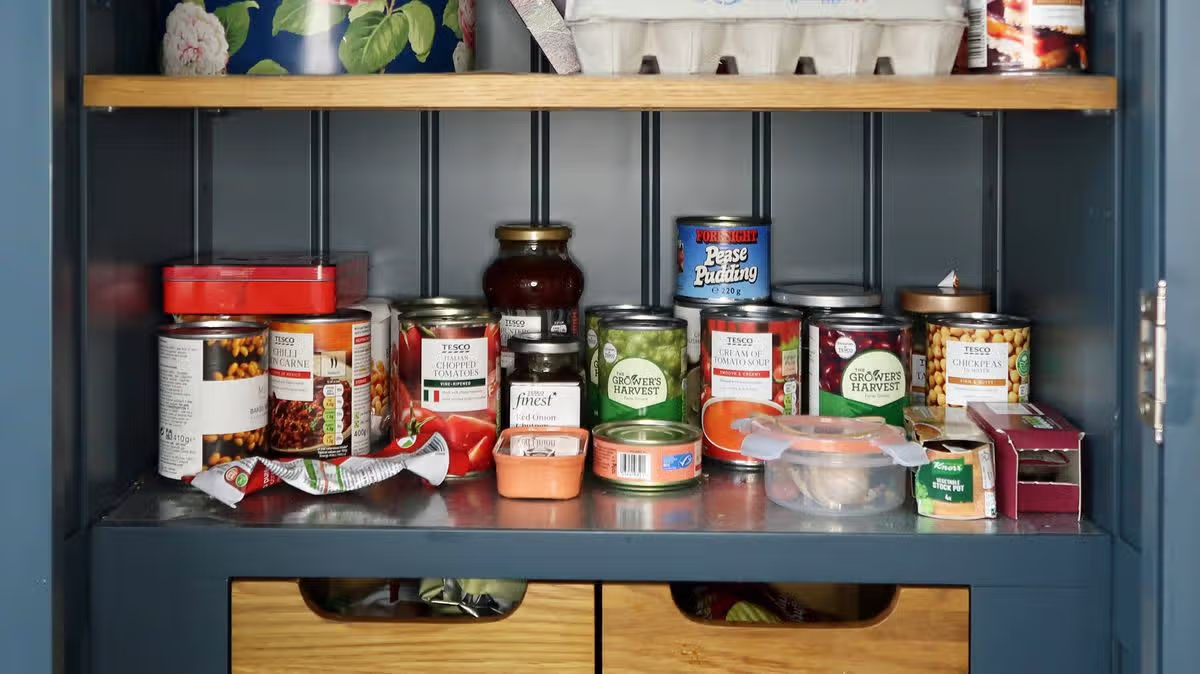
A brain health expert has named the everyday item lurking in millions of kitchen cupboards that he refuses to go near — and the reason why could save your life.07:33, 30 Jul 2026Most of us don't give a second thought to the tins and cans stacked in our kitchen cupboards. They're convenient, long-lasting and always there. But according to one neurologist, a damaged can could be harbouring one of the most lethal toxins known to man — and you'd have no way of knowing until it was too late.Dr Baibing Chen, a double-board certified neurologist widely known on social media as Dr Bing, has made it his mission to translate complex brain science into everyday advice. With a medical degree from Shanghai Jiao Tong University, a residency at the University of Mississippi, and fellowships at both Emory University and the University of Mississippi, he is well placed to know what poses a genuine risk to the human brain.In a video shared on TikTok and Instagram, Dr Bing revealed three foods he would never personally eat as a neurologist. One of them — damaged tinned or canned food — shocked many of his followers, and the reason is alarming.What makes a damaged tin so dangerous?A minor scuff from a supermarket shelf is one thing, but Dr Bing warns that certain types of damage are a serious red flag.He said: "If a can is bulging, cracked or severely dented, that's a red flag for botulinum contamination."This bacteria produces botulinum toxin, which is one of the most potent toxins that we know. And just a small amount can block acetylcholine release at the neuromuscular junction, meaning your brain can't tell your muscles to move."In plain terms, the toxin essentially cuts off communication between the brain and the muscles with devastating consequences.What makes botulinum toxin especially terrifying is that it offers no warning. It is completely tasteless and odourless, meaning contaminated food looks, smells and tastes entirely normal. By the time symptoms begin to emerge, the toxin has already taken hold.Even cooking the food offers little reassurance. Dr Bing warned that heating contaminated food before eating it may not be enough to destroy the toxin, so the standard assumption that "cooking kills bacteria" does not necessarily apply here.The health consequences can be severe. Dr Bing warned that botulinum toxin exposure can lead to flaccid paralysis, blurred vision, respiratory failure, and even death if the patient is not treated promptly with an antitoxin.What is botulism and how does it develop?Botulism is a rare but potentially fatal illness caused by the toxin produced by the bacterium Clostridium botulinum. The Food Standards Agency (FSA) explains that foodborne botulism occurs when a person consumes food that already contains the toxin - most commonly because the food has not been properly canned, preserved or cooked during the manufacturing process.The bacterium thrives in low-oxygen environments, which is why improperly sealed or damaged cans create such ideal conditions for it to flourish. A bulging can, for instance, is often a sign that gas has built up inside as a result of bacterial activity — a clear signal that something has gone dangerously wrong.Should you be worried about cans from UK supermarkets?The good news is that the UK has some of the strictest food hygiene standards in the world. The FSA says that the risk of contracting foodborne botulism from food purchased in this country is considered 'low', thanks to rigorous production and safety controls applied throughout the supply chain.That said, the FSA fully supports the advice Dr Bing has been sharing with his online following. It stresses that consumers should avoid eating food from any can that is bulging, heavily rusted or deeply dented – regardless of where it was purchased, including major supermarkets.The agency also advises that if you have any doubt about whether food has been correctly preserved or packaged, if you are unsure about the use-by date, or if the product has not been stored properly, you should not eat it. Instead, dispose of it safely in the bin.What else does Dr Bing avoid for his brain health?Also in the video, Dr Bing says he avoids eating reef fish, like groupers and barracuda, because they can also carry a neurotoxin that can cause tingling in the body, dizziness and recurring nightmares. It can also lead to chronic neuropathies.Article continues belowHe also tries to avoid eating undercooked pork, especially from unregulated sources. This can sometimes cause a kind of tapeworm that is one of the leading causes of acquired epilepsy in the world.
Neurologist issues warning about common deadly food
A brain health expert has named the everyday item lurking in millions of kitchen cupboards that he refuses to go near — and the reason why could save your life.
754 words~3 min read