(Image credit: Future/Getty/Edited by Adobe AI)
Astronauts on the International Space Station experience sleep inertia (grogginess upon waking) because they work in shifts, are rolling a chronic sleep debt, and see 16 sunrises and sunsets every 24 hours, among many other factors.I experience sleep inertia because my pre-schooler doesn’t believe in sleeping through the night. And that build-up of broken sleep makes me feel punch-drunk some mornings.I tried easing the grogginess with caffeine, but it didn’t work. And after speaking with Dr. Erin Flynn-Evans, Director of the Fatigue Countermeasures Laboratory at NASA Ames Research Center, I now know why…“Caffeine takes time to take effect, so it’s not the best tool to use if you have to wake up and act quickly,” Dr. Flynn-Evans explains, whereas light activates retinal pathways immediately.Well, my job doesn’t require me to perform complex tasks straight after waking. But my son is full bore from the moment he opens his eyes — sitting on the couch to watch him play while I'm still struggling to wake up fully is not an option.
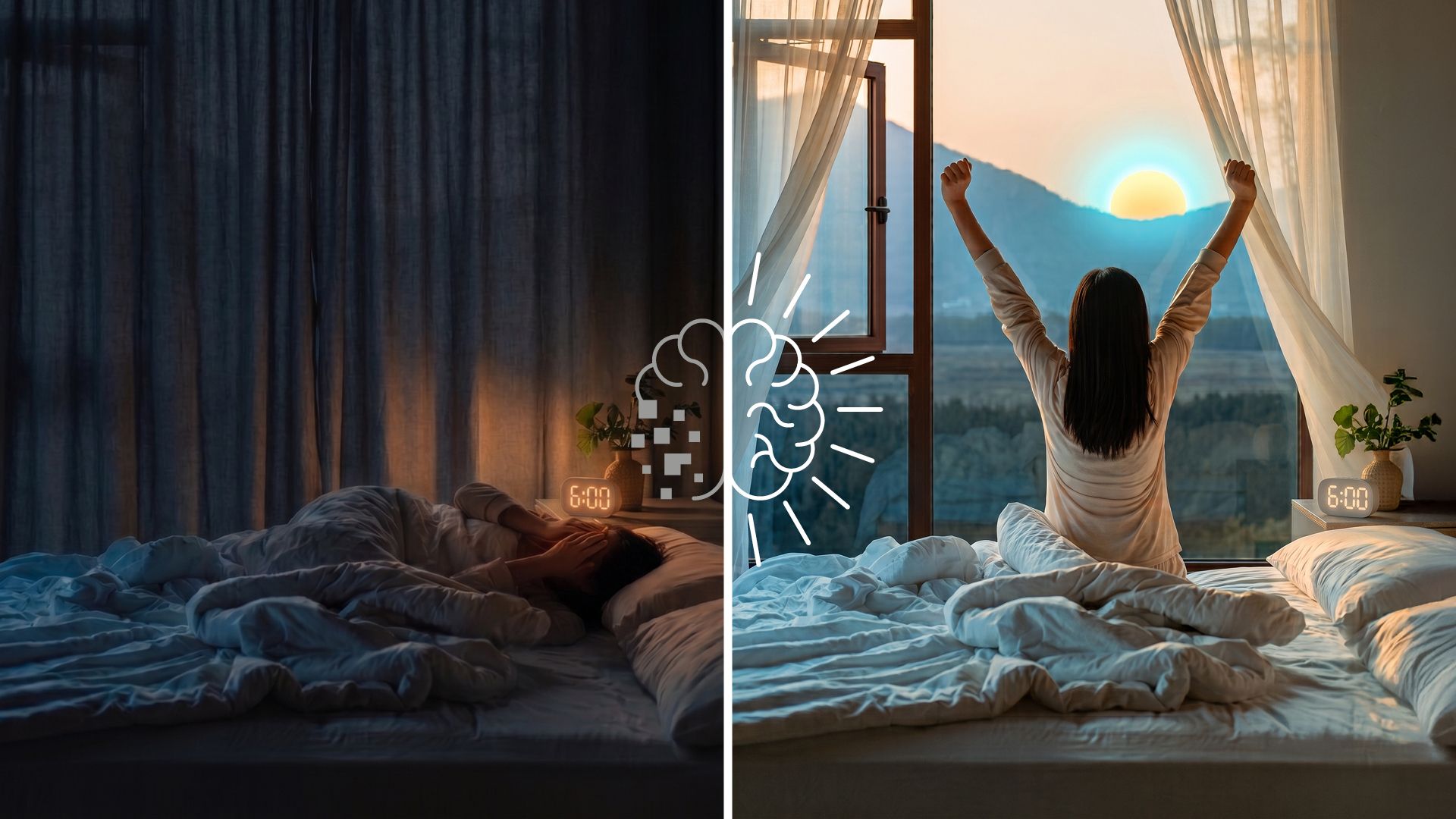
These are the AYO Blue Light Therapy Glasses I've been using since earlier this year. My three year old calls them "robot glasses" (Image credit: Future)Let there be (blue) lightWhile caffeine isn’t a fast-acting off-switch for post-sleep grogginess, the right type of blue light within 30 minutes of waking is.Get instant access to breaking news, the hottest reviews, great deals and helpful tips.Yes light therapy glasses and lamps can help to reduce sleep inertia, but devices cost money. For a $0 solution, Dr. Flynn-Evans says to step outside your front door: “Going outside when the sun is out will expose you to blue light from the sun naturally.”Even though it looks yellow from Earth, the sun contains blue light (and many other colours). “There are specialized photoreceptors in our eyes that are very sensitive to blue-wavelength light that are different from the rods and cones that we use for vision,” explains Dr. Flynn-Evans.Sleep inertia is the groggy feeling when you wake up from a deeper part of sleep, and the body is still transitioning from 'sleep to wake'Dr. Lindsay Browning, Chartered Psychologist and Neuroscientist“They are most sensitive to blue-enriched light, because the light that we receive from the sun has a strong blue component. When these photoreceptors detect light, they send a signal to our internal clock (circadian rhythm) to indicate that it’s daytime.“This initiates a cascade of other effects throughout the body that promote alertness. For example, our bodies immediately stop producing melatonin when the photoreceptors detect light.”Little wonder that blue light is being studied as a powerful off-switch for melatonin production (a master sleep hormone), and a powerful on-switch for wakefulness signals.Key takeaways: At a glanceThe biological switch: Natural morning light triggers specialized photoreceptors in your eyes. These instantly signal your brain to stop producing melatonin.The $0 NASA solution: While blue light therapy devices are helpful for night-shift workers and in the darker months of the year, natural light outside contains all the blue-cyan light you need to help ease sleep inertia.Blue light isn’t a 24/7 enemy: Reduce your exposure at least one hour before bed, then embrace it soon after waking to reduce grogginess.The weekend trap: Sleeping in creates ‘social jetlag’, which throws off your circadian rhythm and makes your sleep inertia worse on Monday.6 a.m. cement brain