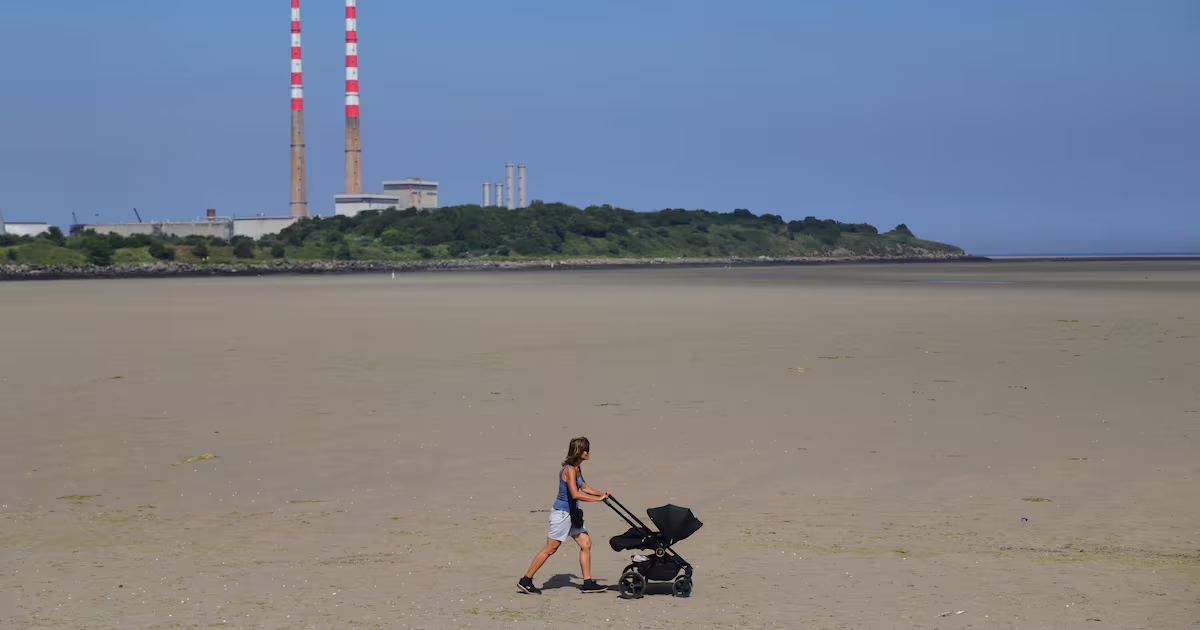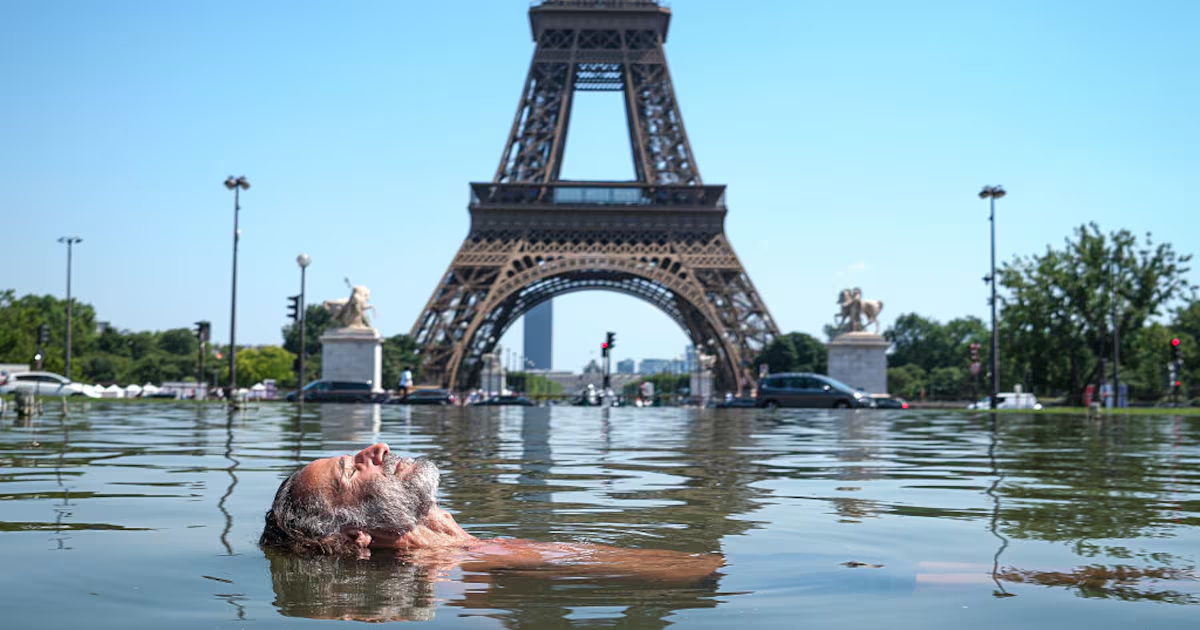
At the time of writing, it has been a lovely summer in Ireland, with several weeks of sunshine in June and July. Although temperatures could be unusually high in the middle of the day, they rarely exceed 28 degrees and welcome relief is provided when the air cooled at night. It was a different story in many other European countries. France, Spain and Portugal all experienced multiple heatwaves, during which daytime temperatures exceeded 40 degrees on many occasions. Such heat has serious consequences – quite apart from thousands of deaths due to heat stress, it resulted in the outbreak of many wildfires throughout southern Europe. Excessive heat also plays havoc with the tourist industry. As has happened for several years now, some holidaymakers on traditional sun holidays were forced to return home due to high temperatures. One of my lasting memories of this summer will be reports of tourists returning from the south of France in their beachwear, having been forced by forest fires to abandon their holiday without returning to their hotel. Such experiences at summer resorts are becoming more common each year, yet the penny still hasn’t dropped. According to a great many commentators on social media, the problem is simply a lack of air conditioning in France and Spain. It doesn’t seem to have occurred to such writers that air conditioning becoming an issue is a signal of a warming world. The keyboard warriors also ignore the fact that air conditioning uses a large amount of electric power and is expensive – yet another separator between rich and poor. Another trope favoured by conservative media commentators is that the number of the number of deaths annually caused by heat is dwarfed by the number of cold-related deaths. This is factually correct, but it reflects the fact that excess deaths from cold are counted in a different way from excess deaths from heat. Indeed, the latter are only recorded if they were the direct result of heat - such as death from heat stroke or cardiovascular failure. It doesn’t include death from conditions exacerbated by severe heat or from thirst or hunger, including common outcomes of excess heat in climate-challenged nations. As ever, the problem is partly a confusion between weather and climate – a confusion between what we experience daily in our locality and what is happening in large regions over the long term. For example, Europe is warming faster than any other continent. You might expect this to result in an increased effort at EU level to reduce greenhouse gas emissions. In fact, EU legislation to reduce emissions has been greatly diluted in recent years. Glistra beach in Greece was ravaged by wildfire that also destroyed the up-market Pizzaria that once stood in 2023. Photograph: Dan Kitwood/Getty Images A man cools himself with water on a hot day near Bizerte, Tunisia, on July 21, 2026. Photograph: Fethi Belaid / AFP via Getty Images This behaviour is mirrored in individual nation states. In Ireland, the greenlighting of several recent infrastructural initiatives will hinder efforts to reduce carbon emissions: the lifting of a cap on the number of flights at Dublin Airport, the installation of a liquefied natural gas terminal in the Shannon estuary and the construction of yet more data centres. In the United States, the Trump administration remains firmly in the grip of climate change denial and acts accordingly, from the cancelling of offshore wind projects to the removal of subsidies for solar power; from the issuing of new drilling licences to the rolling back of a great many environmental protection laws. One ray of hope is the success of renewables in the US despite the efforts of the federal government. For example, in Texas, about 30 per cent of electric power was supplied by renewables in the month of June. In California, renewables supplied 60 per cent of electric power in the same month. The real question is one of time. As greenhouse gases emitted from human industry remain in the atmosphere for many years, how much warming will occur before fossil fuels are replaced by renewables? Climate scientists predict that anything over a 1.5 degree increase from pre-industrial times in global average temperature may result in irreversible change, such as permanent drought in some countries and widespread flooding in others. Current projections are now that we may cross this threshold by 2030. In the meantime, media continue to associate good weather with happy times on the beach. It’s understandable, but a consideration of events outside our own island suggests a grim view of the future. Cormac O’Raifeartaigh is a Senior Lecturer in physics at the South East Technological University (SETU) in Waterford and a Fellow of the Institute of Physics
We’re feeling the heat across Europe but failing to heed the cause
The problem is partly a confusion between what we experience daily in our locality and what is happening in large regions over the long term
786 words~4 min read