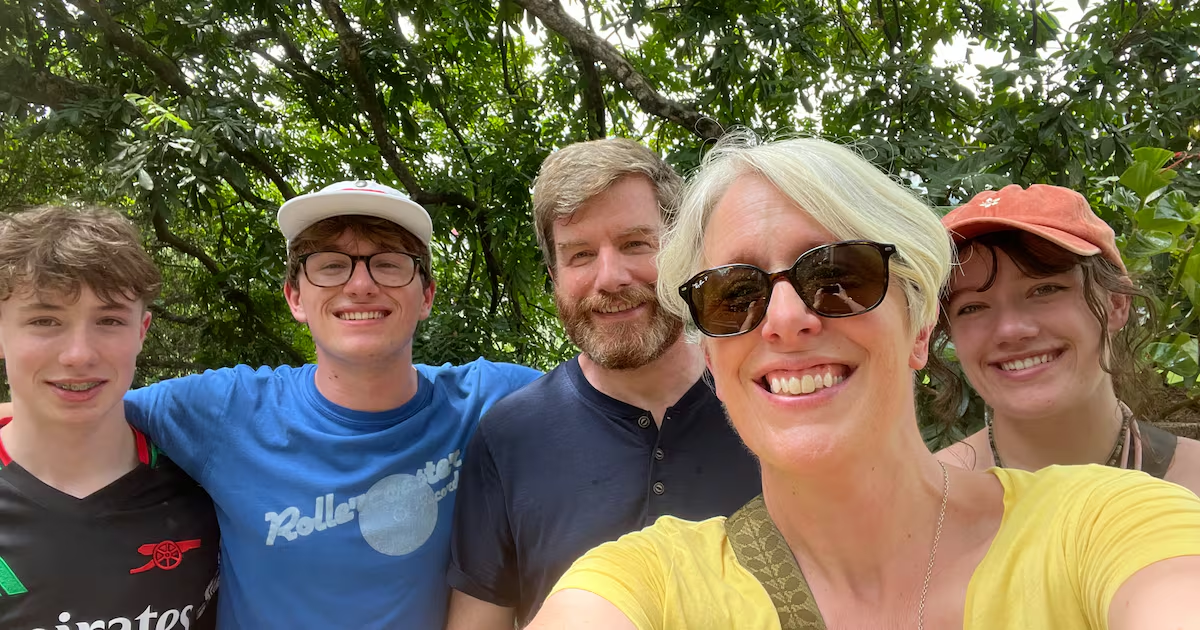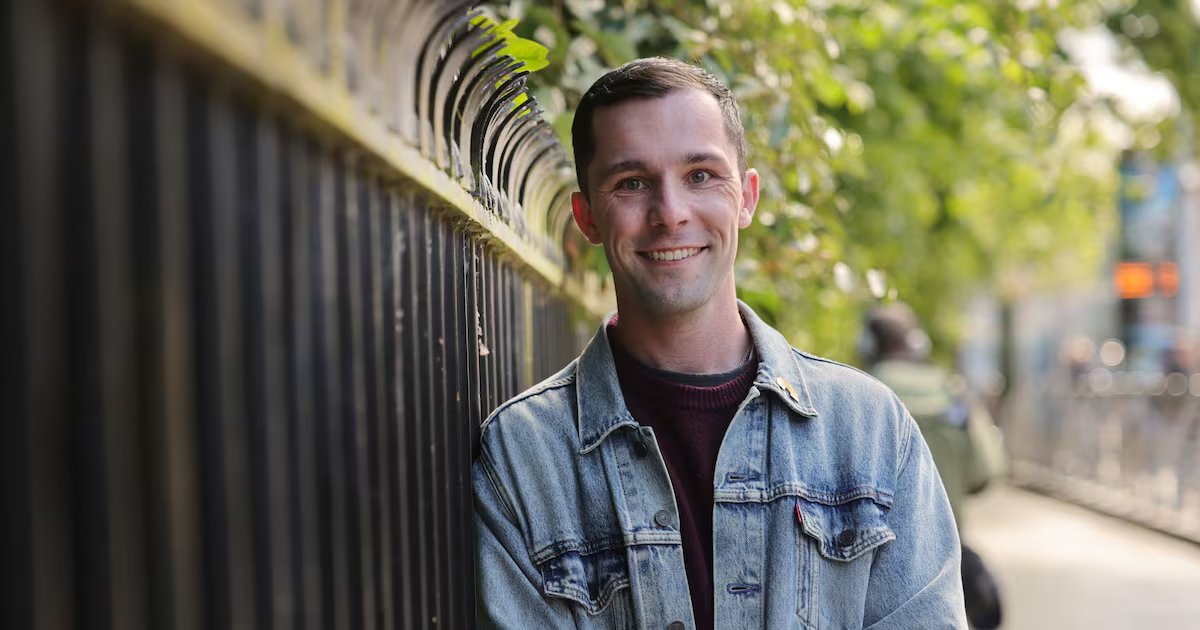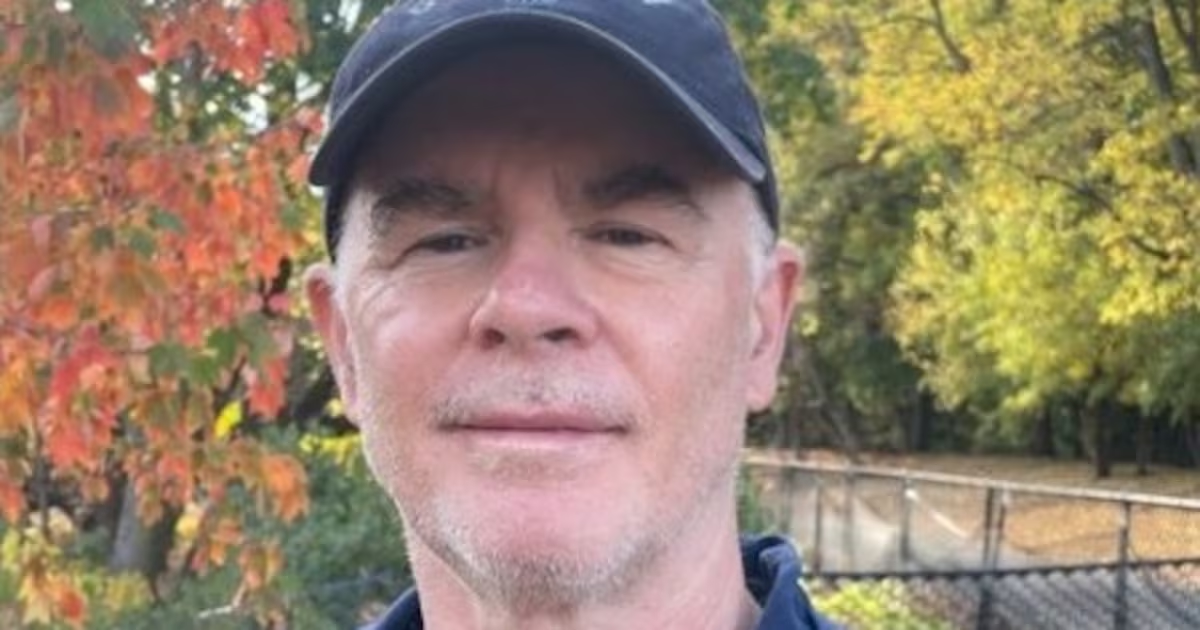
I emigrated from Finglas, Dublin, late in the last century. Not for economic opportunities but for psychological space and healing. An escape from depression. I had just torn my ACL (anterior cruciate ligament) and my glittering football career, already a tad late in arriving, was now gone, over and kaput. I needed something else.A lottery win in the Morrison green card extravaganza allowed me to legally emigrate. To Boston.What a welcome!Where my Finglas brogue may have been derided elsewhere, my accent and ancestry were admired and appreciated. People liked to hear the way I talked, righ’.I work in finance, not behind a cement mixer, and so it wasn’t easy “getting the start”. At one point, my wintertime finance job involved a commute by train, bus, and boat to my office on an island in Boston Harbour.But then Harvard, Mother Harvard, took me in and took care of me. I worked in grants management, meeting and helping researchers from all across the globe and beyond.I had a foothold. I could catch my breath. Breathe. Heal. Try things as strange as Yoga and Zazen.My depression began to lift. I began to improve, to borrow a bit of that American secret sauce called optimism.Ireland also improved. The Celtic Tiger. The Belfast Agreement. Divorce. Same-sex marriage. Abortion. Immigration. Ireland became a destination, not a point of departure. A land of opportunity. A sanctuary.On March 17th, in the year 2000, at 9.01am precisely, I met my future wife, Jennie, at the gates of Harvard. She, too, was a minute late for the punctual shuttle bus. She was half-Irish, adorned in a green coat and endowed with a “Greene” last name. A few years and many shuttles later, I proposed aboard the same bus. Jennie was a writer, a professional, whereas I had become a devoted scribbler, writing fiction as if nothing depended upon it.We thrived.My depression softened, comforted through the practice of Zen meditation. Eamon and Molly, son and daughter, soon joined us on our annual trek to the gates of Harvard every March 17th. In college and close to being in college, and both Irish citizens, they now prompt the question of Ireland, and whether a generous part of our retirement years should be spent in Ireland.This question has become sharpened with the publication of my first novel, The Great Wall of Ballygall. It is a tribute to the progressive inclusivity of Ireland, showing how the fictional Ballygallians – Irish, Nigerian-Irish, Polish-Irish, etc – battle and possibly defeat (no spoilers!) the divisive wall built around their town.It would be nice to spend more time in Ireland. Its temperate seasons, its warm and garrulous people, its tolerance, its compassion, its bright economy.Is it now better than the USA? Or as good as?Maybe.It’s like that old joke: “How many Irish mothers does it take to change a lightbulb?” Except the answer now is something brighter than the old response: “Ah, sure we’re grand in the dark.”Seamus Boshell from Finglas, Dublin, lives in Boston where he works at the Weatherhead Center in Harvard University. His first novel, The Great Wall of Ballygall, was published by Resource Publications (CA)Are you Irish and living in another country? Would you like to share your experience in writing or by interview? You can use the form below, or email abroad@irishtimes.com. Irish Times Abroad submission guidelines here. Follow us on Instagram to keep up with the latestSign up to The Irish Times Abroad newsletter for Irish-connected people around the world.
My Finglas accent was derided at home – but in Boston, the way I talked was admired
I emigrated to the US, not for the economy, but psychological space
578 words~3 min read