Story audio is generated using AI
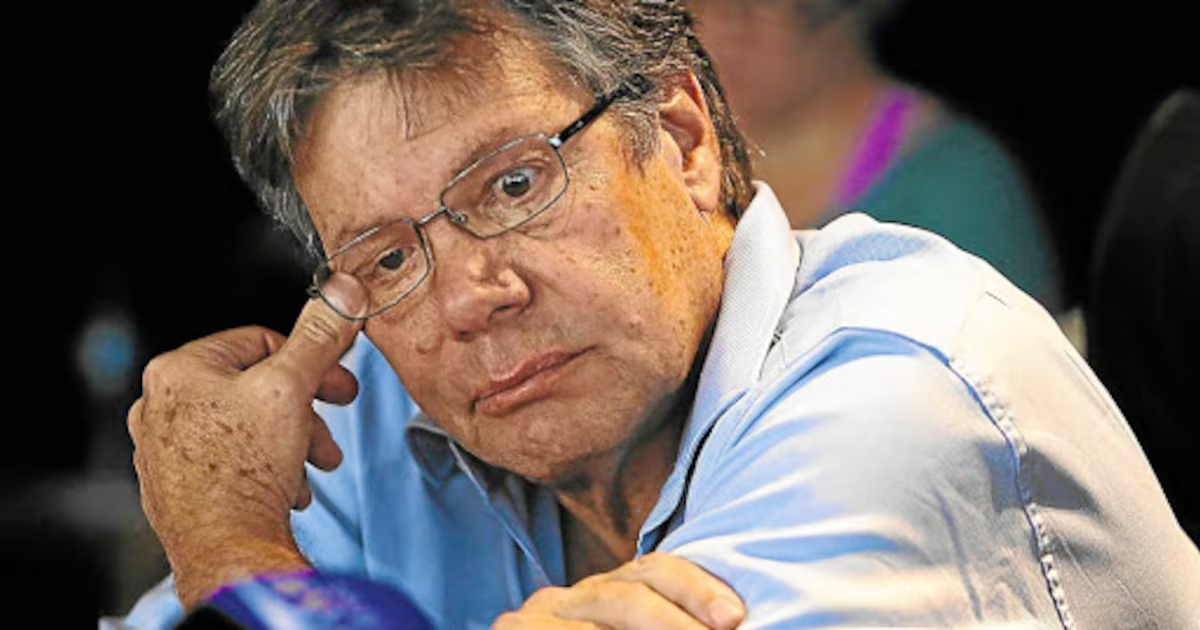
Trade unionist-turned-business person Johnny Copelyn, one of the longest-serving CEOs on the JSE, has indicated his intention to retire from Hosken Consolidated Investments (HCI) in a move that will end his 30-year stay at the helm of the group.Copelyn has played a key role in building HCI’s portfolio, which includes stakes in eMedia, Southern Sun, Tsogo Sun, Platinum Group Metal, HCI Coal and Canadian oil and gas, among other investments.“I have advised the board that it is my intention to retire as the CEO of the company during the course of FY2028. To ensure an orderly succession, the board has appointed Kevin Govender as joint CEO, together with me, with effect from the coming AGM,” Copelyn wrote in his annual letter to shareholders. (Dorothy Kgosi) “Kevin has already been with the company for a long time, and I have every confidence he will quickly grow into a steady hand with many new ideas in this role and take HCI into the next phase of its development.“It has been a great honour to have held the post of CEO of HCI for the past 29 years, and I wish Kevin and the incoming board members only the best in their new roles.”Copelyn has been a larger-than-life figure at HCI, which is majority owned by the Southern African Clothing and Textile Workers’ Union (Sactwu), a union he previously led before going into business.Copelyn in the letter also reflected on a mixed bag of fortunes the group endured in the 2026 financial year. He said despite reporting a 46.5% surge in headline earnings to R1.776bn in the year, with Southern Sun getting out of debt, among other achievements, other forces rained on the group’s parade.It has been a great honour to have held the post of CEO of HCI for the past 29 years, and I wish Kevin and the incoming board members only the best in their new roles.— Johnny Copelyn“FY2026 was by any standards a good year for HCI … Nevertheless, it certainly didn’t feel like a great year … In November 2024 the share price of our largest established asset, Tsogo Gaming, commenced a significant decline from R12 a share to less than R7 over the next seven months,” Copelyn said.“HCI’s share price followed quickly, descending from R195 to R135 over the same period. Simultaneously with this fall, a hail of criticism was unleashed from Aktiv Management calling for the unbundling of all HCI assets and the closing of the company.“In short, its view was that the growth projects of the company were complicated, dim and distant, while the discount to its known asset value was enormous. Its advice effectively was to abandon the vague upside promised in future years and grab the short-term gains of eliminating the discount,” Copelyn said. Aktiv contends that HCI has a complex corporate structure and fails to accurately disaggregate and disclose holding company–level information. “Aktiv Management did, however, hit on an obvious weakness in HCI’s shareholding, namely that Sactwu had sold down a significant number of HCI shares. Essentially its difficulties were that it needed more cash than HCI dividends offered, particularly as we passed through the Covid-19 pandemic and its aftermath. “Aktiv Management quickly identified this as an opportunity for an unidentified consortium to buy Sactwu out for R135 a share with the hope of cheaply becoming HCI’s largest shareholder. Unfortunately for our would-be raiders, Sactwu had absolutely no desire to abandon its holding in HCI,” Copelyn said.Business Day